

Most weekends, a wide expanse of Melbourne’s CBD, usually alive with buskers, shoppers and families, is transformed into a theatre of division.
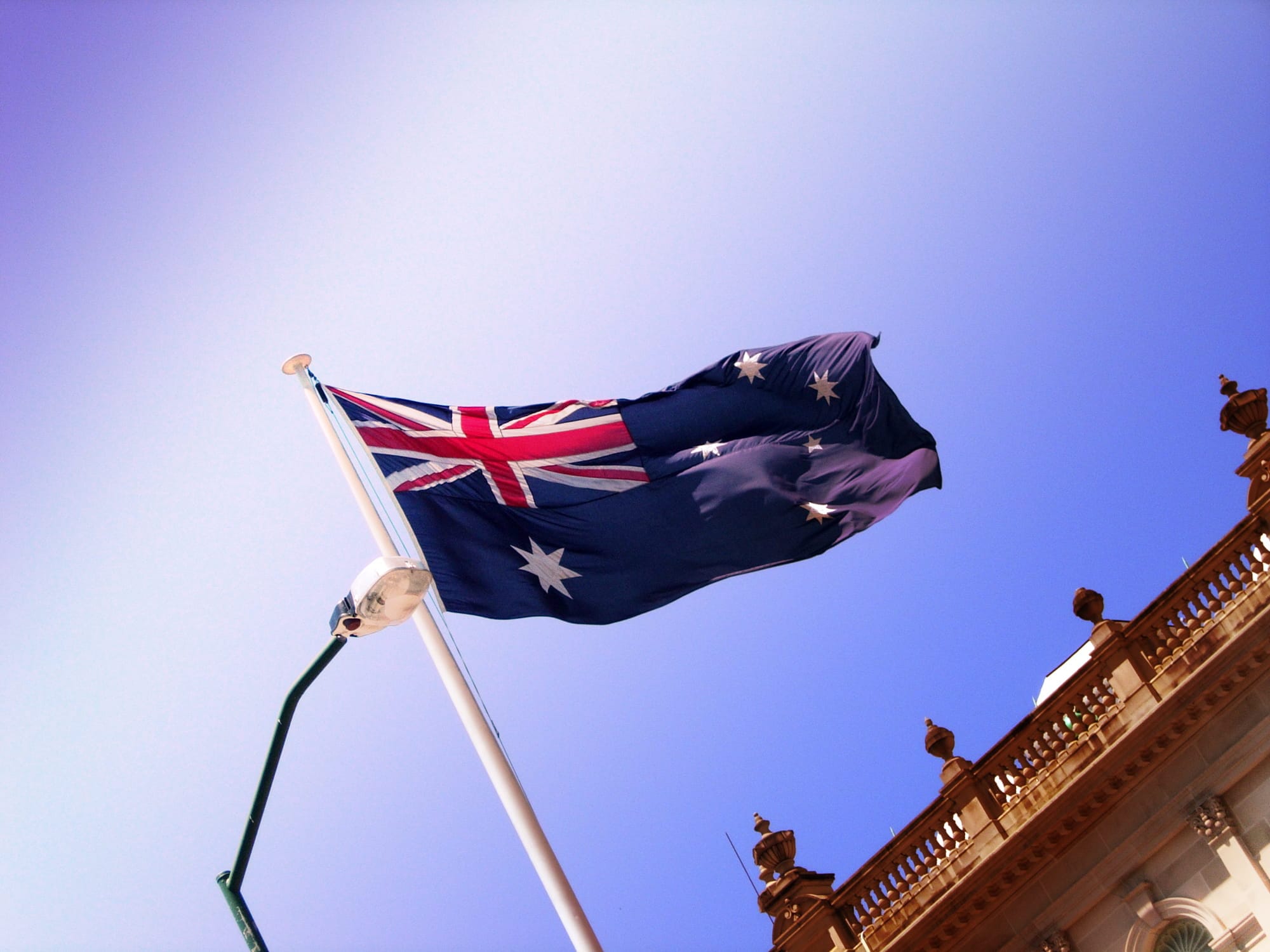
Banners demanding “Australia for Australians” and “March for Australia” ripple above crowds chanting slogans that cut through the spring air.
The same civic space that has hosted festivals, vigils and protests for justice now carries a different energy – one that unsettled the city’s sense of itself.
For many Melburnians watching from the footpaths or behind screens, the scene is more than a march; it’s a performance of belonging that draws its boundaries in exclusionary lines.
Public spaces, like the societies that animate them, tell stories about who we are. Through collective acts, symbols and words, communities continually write and rewrite their social scripts.
Melbourne’s recent anti-immigration marches are part of that rewriting – a reminder that social scripts are never fixed but contested.
These rallies reveal not only a rejection of immigration policy, but also a deeper anxiety about national identity and the fragile myth of egalitarianism that has long underpinned Australian self-understanding.
When the rhetoric of fear becomes normalised, it seeps into everyday encounters – in schools, workplaces, and neighbourhoods – reshaping how people imagine who truly belongs.
Yet these moments of rupture also invite reflection and renewal. They urge educators, policymakers and communities to ask: What do these marches tell us about who gets to belong in Australia today? And how might we collectively intervene to rewrite the story, towards one grounded in empathy, justice and shared humanity?
The altered script
For decades, Melbourne has prided itself on being one of the world’s most liveable and multicultural cities, a place where immigration was celebrated as part of the city’s DNA.
From the post-war influx that shaped the suburbs of Footscray and Coburg to the more recent settlement of refugees and international students, the social script of Melbourne has long been one of diversity, solidarity and civic coexistence.
Yet that narrative is being rewritten in troubling ways. The vocabulary of belonging has shifted, and with it the emotional temperature of the public sphere.
Phrases such as “protecting our borders”, “taking back Australia”, and “defending Australian values” have moved from the closed circles of party politics into the chants of the street.
What once functioned as strategic political rhetoric has become a public performance, a spectacle that legitimises exclusion as patriotism.
Identity formation rituals
The marches are not only about policy; they’re rituals of identity formation, where participants rehearse who counts as Australian and who does not.
This performative nationalism echoes through social media feeds and talkback radio, where repetition hardens prejudice into common sense.
Melbourne’s streets have long been a stage for contesting social meanings, whether in union rallies, the anti-apartheid movement, or the global climate strikes led by young people.
Protest has been integral to the city’s democratic rhythm. The recent populist surges, however, invert that tradition. Instead of expanding rights and recognition, they narrow them.
The same streets that once resounded with calls for justice now host slogans that fracture community trust. This paradox sits uneasily with Melbourne’s progressive self-image – a city that celebrates cultural festivals on one weekend and witnesses xenophobic placards on the next.
Media coverage has further complicated the script. In pursuit of balance or spectacle, outlets often amplify fringe voices, granting visibility and legitimacy to extremist views.
Online echo chambers then magnify those soundbites, recirculating fear and resentment. The result is a feedback loop in which exclusionary speech becomes normalised, its moral weight diluted through repetition.
The altered script is not only linguistic but affective – it shapes how people feel about one another in public space. Suspicion replaces curiosity, defensiveness replaces dialogue.
These shifts remind us that language is never neutral. It creates the conditions under which some stories can be told and others are silenced.
If Melbourne is to reclaim its narrative of inclusion, it must first recognise how deeply the language of division has infiltrated its civic imagination. Only then can we begin to re-author the city’s story toward a future where diversity is not a slogan to defend, but a truth to live.

The consequences of rhetoric
The reverberations of public hostility don’t stop at the city square. When exclusionary rhetoric fills the air, it filters quietly into classrooms, staff meetings and office corridors, reshaping how people relate to one another.
Schools that once celebrated Harmony Day with uncomplicated optimism now face new tensions – students repeating fragments of online slogans, teachers unsure how to intervene without inflaming debate.
Nor are universities insulated. Lecture theatres become spaces where discussions of migration or race are met with unease, where international students weigh every comment for risk, and where academic freedom must coexist with emotional safety.
In workplaces, jokes about “fitting in” or “real Australians” gain a sharper edge, emboldening some while silencing others. These subtle shifts mark the migration of racism from the streets into systems.
What begins as a chant can crystallise into hiring biases, curriculum omissions, or policy decisions framed as neutrality.
Institutions often pride themselves on diversity statements, yet struggle to name racism when it appears in everyday practice. This is why racial literacy – the capacity to read, interpret, and respond to race and racism in context – is essential.
Without it, well-meaning policies risk reproducing the very hierarchies they claim to dismantle.
The burden of constantly proving one’s legitimacy erodes trust in institutions meant to protect and nurture. The anti-immigration marches thus serve as both symptom and signal.
Racial literacy moves beyond awareness; it demands institutional responsibility, equipping leaders and educators to recognise how power circulates through words, norms and silences.
For immigrant communities, and especially for young people who straddle multiple cultural worlds, the consequences are deeply personal. They must negotiate belonging amid mixed messages – told that multiculturalism is Australia’s strength, yet witnessing hostility towards those who embody it.
Many respond with creative resilience, forming peer networks, youth collectives and digital spaces where new languages of inclusion emerge. Yet resilience should not be mistaken for acceptance of inequity.
The burden of constantly proving one’s legitimacy erodes trust in institutions meant to protect and nurture. The anti-immigration marches thus serve as both symptom and signal.
They expose the unfinished work of building a society confident enough in its diversity to confront discomfort rather than deny it.
How we teach, lead and engage in these times will determine whether fear continues to script our public life, or whether we can rewrite it through education, empathy and collective accountability.
Rewriting the social script through courage
If Melbourne’s social script is being rewritten through exclusion and fear, it can also be rewritten through courage and care.
Public discourse doesn’t shift only through political decrees. It changes when educators, community leaders and institutions model a different language of belonging.
To rewrite the script, we must reclaim both the words and the spaces where meaning is made. Education holds a particular power in this process.
In schools and universities, the daily interactions between teachers and students can either replicate social hierarchies or disrupt them. Teachers who intentionally teach racial literacy – encouraging students to question whose stories are told and whose are silenced – are planting the seeds of civic renewal.
When universities embed racial equity not only in policy but in curriculum design, mentoring structures and leadership accountability, they model the inclusive future they espouse.
This requires moving beyond tokenism to authentic engagement, inviting communities into dialogue, acknowledging pain and celebrating complexity.
Rewriting the script also means changing how institutions respond when harm occurs. Instead of defensiveness, there must be responsiveness – clear pathways for reporting racism, restorative processes that repair relationships and leadership that speaks publicly against hate.
Silence from authority figures allows the old script to persist; voice, by contrast, signals new authorship.
Communities and local governments have a role, too.
Across Melbourne, initiatives such as intercultural festivals, storytelling workshops and anti-racism walks have demonstrated how public space can be reclaimed as a site of connection rather than division.
These are not symbolic acts alone. They reassert that the city’s identity is built on coexistence, not conformity.
Civic rituals of inclusion can be as powerful as the marches of exclusion, provided they’re sustained through everyday practice.
At the heart of rewriting lies language itself. The phrases that dominate public debate – “Australian values”, “border protection”, “integration” – can be reimagined through empathy and shared purpose.
What if “protection” meant safeguarding human dignity? What if “values” referred to our collective responsibility to care for one another?
The task is not merely to correct words, but to restore the moral imagination that gives them life.
Reclaiming the social script requires the participation of all sectors – educators who teach with equity in mind, journalists who refuse sensationalism, policymakers who listen before legislating and citizens who see one another as part of an interdependent story.
In the face of divisive narratives, rewriting becomes an act of hope, an insistence that Australia’s plural future is still being written, and that each of us holds the pen.
The social script as a ‘living text’
Every society tells a story about who it is. Australia’s current unrest reminds us that these stories are neither permanent nor benign; they can be rewritten through intention and care.
The anti-immigration marches expose our fractures, but also remind us that the social script is a living text, constantly in draft. Each of us holds a pen, whether as educator, policymaker, neighbour or citizen.
What we choose to write, or erase, shapes the moral landscape we inhabit. The challenge before us is not simply to condemn exclusion, but to author a different ending, one where belonging is not earned through sameness, but extended through recognition, empathy and shared responsibility.


