


Walk into any school staffroom in Australia and ask what has changed over the past decade and the answer is strikingly consistent.
Teachers describe students arriving less able to regulate their emotions, sustain attention or navigate peer conflict without adult support.
What’s unfolding in classrooms reflects a convergence of forces – a generation whose early years coincided with ubiquitous touchscreens, and whose developmental experiences differ in important ways from those of previous cohorts. Their needs are now presenting simultaneously to schools, clinics and families that are all, in different ways, trying to keep up.
The appropriate first response is not a new diagnostic label; it is humility.
The risk of rushing to diagnose
Across history, societies have responded to unfamiliar behaviour in two ways.
First, by trying to explain it – often through the creation of new diagnostic categories.
Pathological Demand Avoidance (PDA), for example, has gained traction despite not being recognised in major diagnostic manuals and ongoing debate about its evidentiary basis.
Similarly, proposals for “social media use disorder” remain contested, with questions about whether they identify genuine pathology or risk labelling everyday behaviour.
Second, having named something, societies attempt to control or intervene. At times, this risks narrowing a child’s agency while overlooking the underlying drivers of distress.
History suggests caution. The frameworks used to interpret behaviour change over time, and a proportion of what each generation practises with confidence is later reconsidered.
A different kind of childhood
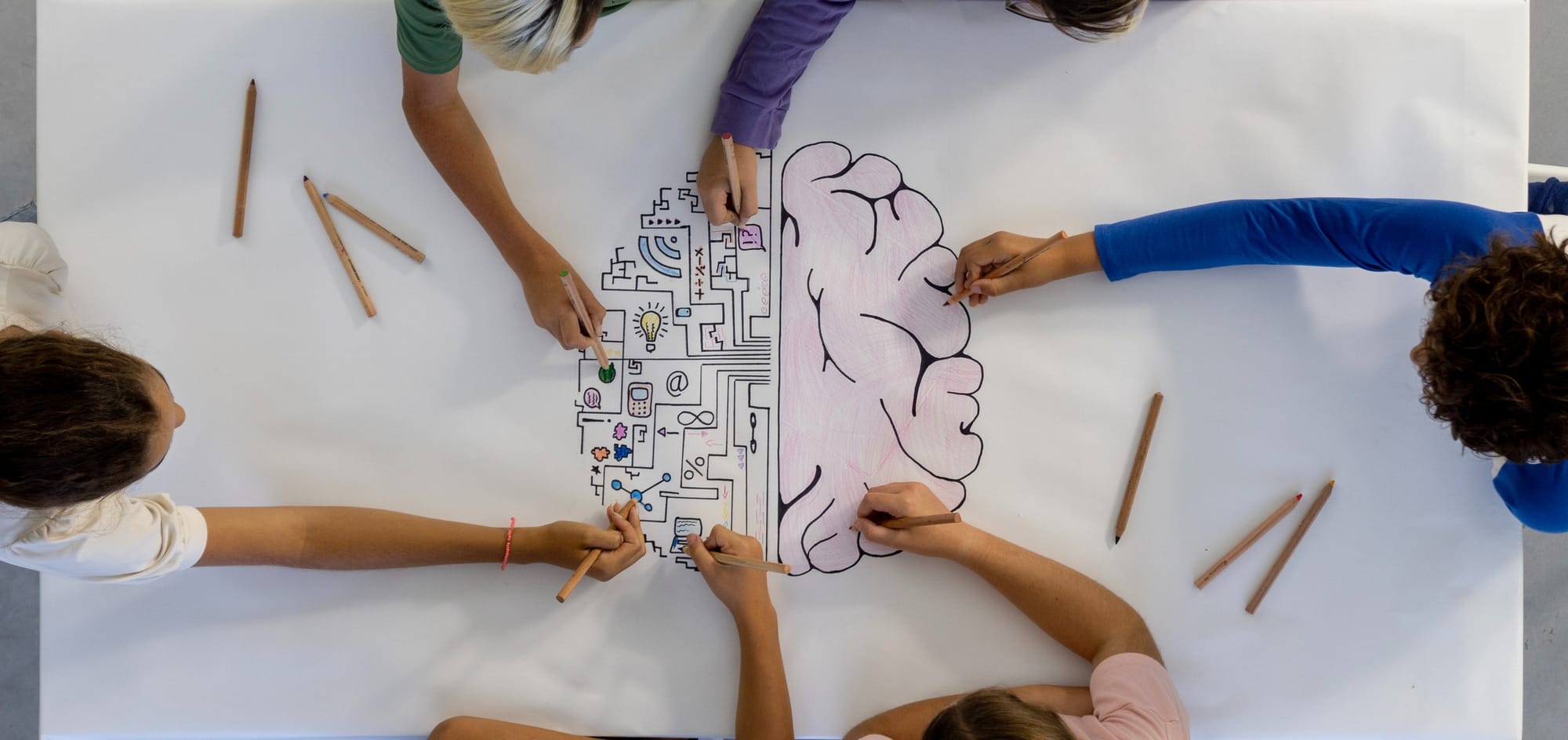
The human brain is shaped by experience — a process known as neuroplasticity. This is especially pronounced in early childhood and adolescence, when repeated activity strengthens neural pathways.
A growing body of research has examined how digital environments may interact with this process. Neuroimaging work has found associations between higher screen exposure and differences in white matter organisation in preschool children. Longitudinal studies have also linked higher digital media use with increased likelihood of developing ADHD-related symptoms over time.
These findings do not establish simple causation. But they do suggest developmental pathways worth paying attention to.
One hypothesis is that children may be offloading cognitive tasks to devices — tasks traditionally developed through play, social interaction and unstructured time. Skills such as sustained attention, spatial reasoning and non-verbal social processing are built through repeated real-world use. When those experiences are reduced, development may follow a different trajectory.
It’s important not to overstate the neuroscience. As research has shown, brain-based explanations can appear more definitive than the evidence justifies. But across studies, a consistent pattern is emerging — and its effects are increasingly visible in classrooms.
What teachers are seeing
Today’s primary school students are the first cohort to have had near-continuous access to touchscreens from infancy. For many, digital environments have displaced activities that historically shaped early development.
This displacement may be especially significant for children who are drawn to predictable, low-social-demand environments — including many children with autism.

Teachers report growing challenges with attention, emotional regulation and social interaction. This is happening at scale, in every primary school, every day. These are not minor issues. A child who cannot manage frustration or recover from setbacks will struggle to engage in learning, regardless of the quality of instruction.
Research also suggests broader shifts may be underway. After decades of rising IQ scores — known as the Flynn Effect — several countries have reported stagnation or decline in some measures of reasoning and problem-solving. The causes remain debated, but the timing invites scrutiny.
At the same time, teachers are absorbing the impact. The relational nature of teaching — noticing, supporting and responding to student distress — is contributing to rising reports of burnout and compassion fatigue.
Read more: Teacher burnout crisis: The hidden emotional toll driving educators out
What actually helps
Long before modern psychology, Robert Burton wrote in The Anatomy of Melancholy (1621): “Be not solitary, be not idle.”
The idea that social connection and meaningful activity support mental wellbeing has been repeatedly supported across centuries of research.
It points toward something simple – children develop through movement, interaction and shared experience.
Experimental evidence supports this. A study by UCLA’s Yalda Uhls and colleagues found that just five days without screens improved preteens’ ability to read non-verbal emotional cues. Physical activity is also closely linked to the cognitive and regulatory capacities schools are trying to build.
The implication is not that technology is inherently harmful, it’s that it cannot substitute for the experiences through which development occurs.
Emotional regulation, in particular, is built through participation — in playgrounds, classrooms and social interactions. These are not skills that can be outsourced to devices or addressed solely through clinical intervention, but they can be embedded in everyday settings.
For example, the Joy of moving program in Australia integrates physical activity into classrooms to give children the opportunity to regulate emotions with movement. It’s delivered by classroom teachers without specialist training, using curriculum-aligned resources. It was designed to be embedded in what they’re already doing.
Why humility matters
The pressures facing children today are real, and the science is still evolving. In this context, intellectual humility is essential.
It allows space for uncertainty, for competing explanations, and for the possibility that some of what we believe now will later be revised.
Professor Simon Moss’ work notes that sustainable humility in children can address some of their most pressing problems, including social media addiction.
Seen developmentally, humility itself is built through experience. Children learn it when they fail and try again, misread a situation and repair it, and encounter challenges in the presence of others.
These processes require effort, friction and human connection.
If there’s a lesson here, it may be this: In responding to the complexity of modern childhood, the most effective solutions may not be entirely new. They may lie, in part, in returning to the conditions under which children have always learned to think, relate and grow.
This article was co-authored with Dr Mark Williams, a Monash University alumus and professor of cognitive neuroscience, and the bestselling author of The Connected Species and Screen Smart Children, whose recent 60 Minutes appearance examined the impact of digital devices on children’s attention, learning and wellbeing.


