

In 2017, I stood among hundreds of Aboriginal and Torres Strait Islander delegates gathered at Uluru. Together, we authored what would become one of the most significant political and moral documents in this country’s modern history: The Uluru Statement from the Heart.
I was both a co-author and a signatory. That’s important — not as a claim to authority for its own sake, but as a responsibility to speak clearly about what was asked of this nation — and what has since been misunderstood:
“We seek constitutional reforms to empower our people and take a rightful place in our own country.” (Uluru Statement, 2017).
Those words were not tentative. They were not symbolic. They were an invitation to structural transformation.
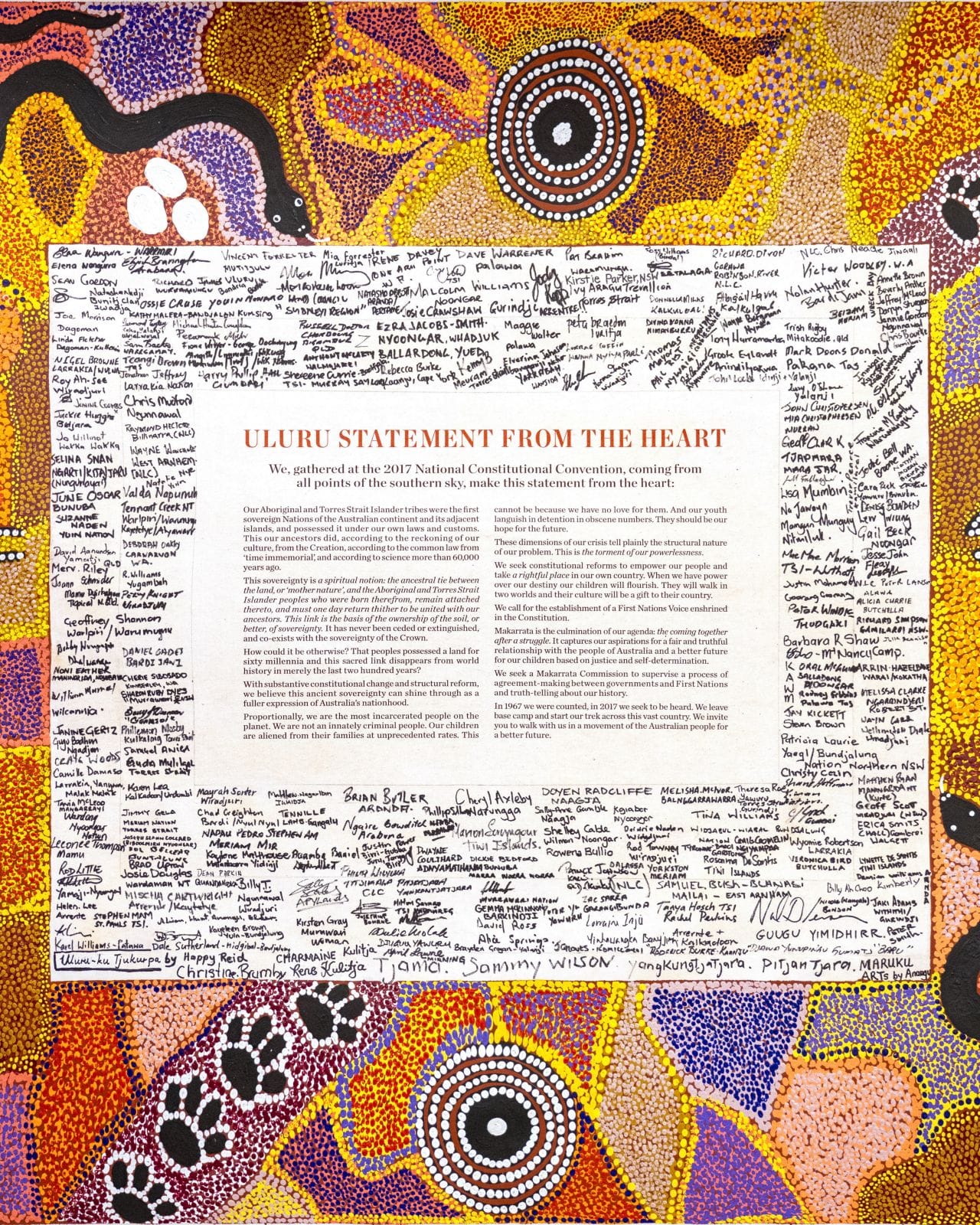
The Uluru Statement did not call for “truth-telling” as an endpoint: It called for Voice, Treaty, and Truth as a sequence; a system; a reordering of power grounded in justice.
And yet, nearly a decade on, truth-telling risks being isolated from that architecture. It is being lifted out of its political context and placed into something safer and more palatable than the truth of this nation and its modern foundations demands: A process that can apparently be funded, administered, and concluded. A performance of listening, rather than a commitment to change; a catharsis for postcolonial institutions and non-Indigenous Australia.
This is the central claim of my presentation on Day 1 of the AIATSIS Summit 2026, which is being held 1–5 June at the Gold Coast Convention and Exhibition Centre on the lands of the Yugambeh peoples. Titled “Indigenous leadership beyond performative ‘Truth-Telling’”, it asks a question that cuts to the core of our current moment:
What happens when truth becomes something we merely perform as ritual, rather than something that truly transforms us?
The AIATSIS Summit is one of the most significant national gatherings of its kind. It brings together Elders, community leaders, youth, academics, native title holders, legal experts, and representatives from the GLAM sector—galleries, libraries, archives, and museums — alongside government. It is a convergence of knowledge, authority, and lived experience: A place where the future is not simply discussed, but contested and shaped.
Our truth, our power, our future
This year’s theme — Our Truth. Our Power. Our Future — is not a slogan. It is a provocation. It asks whether truth, on its own, is enough. It asks whether power is being meaningfully redistributed. It asks whose future is being imagined, and who is authorised to imagine it.
Across five days, the summit will engage with the most pressing issues facing First Nations peoples:
- caring for Country
- rights and representation
- cultural resurgence
- intergenerational knowledge, and
- contemporary innovation.
It is a forum for collaboration and connection, but also for accountability. Because the question is no longer whether Australia can tell the truth. It is whether it is willing to live with the consequences.
This is where institutions become critical. Monash University is proud to sponsor this year’s Summit, demonstrating a sustained commitment to Indigenous leadership, research, and partnerships. Monash’s ongoing relationship with the Yoorrook Justice Commission — the first formal truth-telling inquiry into historical and ongoing injustices experienced by First Peoples in Victoria — reflects the kind of engagement that is necessary.
#Walk_for_truth: #Travis_Lovett’s 500km journey to remind Albanese of his promise to create a #First_Nations #truth_telling commission
— Nes Evan 🌏 (@NesEvan9) April 19, 2026
Former Yoorrook justice commissioner says he wants to start a wide discussion on a subject that is often misunderstoodhttps://t.co/RreE5uCGas
But necessity is not the same as sufficiency. The work of Yoorrook is vital. It creates a public record. It centres First Nations voices. It makes visible what has long been denied. Monash’s partnership with First Nations Australians in real truth-telling respects our sovereignty, authority, and voice; a voice that too many non-Indigenous people deny us, even in the name of truth, and of justice, defined on their terms.
Genuine versus performative truth-telling
If truth-telling is not led by community authority — if it is not grounded in the sovereignty of lived experience and the governance of First Nations peoples — then it risks becoming something else entirely. Performative truth-telling is not defined by falsehood. It is defined by containment.
It is the staging of truth within parameters that do not threaten existing structures of power. It is the careful management of narrative, where acknowledgement is permitted, but transformation is deferred. It is the language of recognition and reconciliation without the practice of redistribution.
Genuine truth-telling is something else. It is disruptive. It is unsettling. It is accountable to community, not to institutions. It does not end with the telling: It begins there. It demands response. It insists on consequence.
“We invite you to walk with us in a movement of the Australian people for a better future.” (Uluru Statement, 2017). This invitation from the Uluru Statement is often quoted, but rarely confronted in its full implication. To walk with us is not to observe. It is not to listen and then return unchanged. It is to move — to shift — to be altered by what is heard.
My argument is simple, but it is not easy:
Reconciliation and truth-telling will continue to fail if they are not led by First Nations authority. Not consulted. Not included. Led. Because without that leadership, truth becomes a resource to be managed, rather than a force to be reckoned with.
We see this risk already in the truth-telling processes that catalogue injustice but do not alter the conditions that produce it:
- National conversations that acknowledge dispossession, while maintaining the legal and political frameworks that sustain it.
- Institutions established in the name of truth and justice, that leave our voices listened to, yet unheard.
- A country that becomes fluent in the language of its past, while remaining silent on the demands of its present.
This is not what Uluru asked for.
Uluru and our commitments
At Uluru, we asked for a reconstitution of the relationship between First Nations peoples and the Australian state. We asked for a Voice enshrined in the Constitution. We asked for Treaty as a mechanism of negotiation. We asked for Truth as a foundation for both. To separate these elements is to diminish them. To elevate one in isolation is to misunderstand the whole.
At the AIATSIS Summit, these tensions will be alive in the room. They will be carried in the voices of Elders, in the ambitions of youth, in the scholarship of researchers, and in the decisions of policymakers. It is here that the distinction between performative and genuine truth-telling will be most visible; not in theory, but in practice.
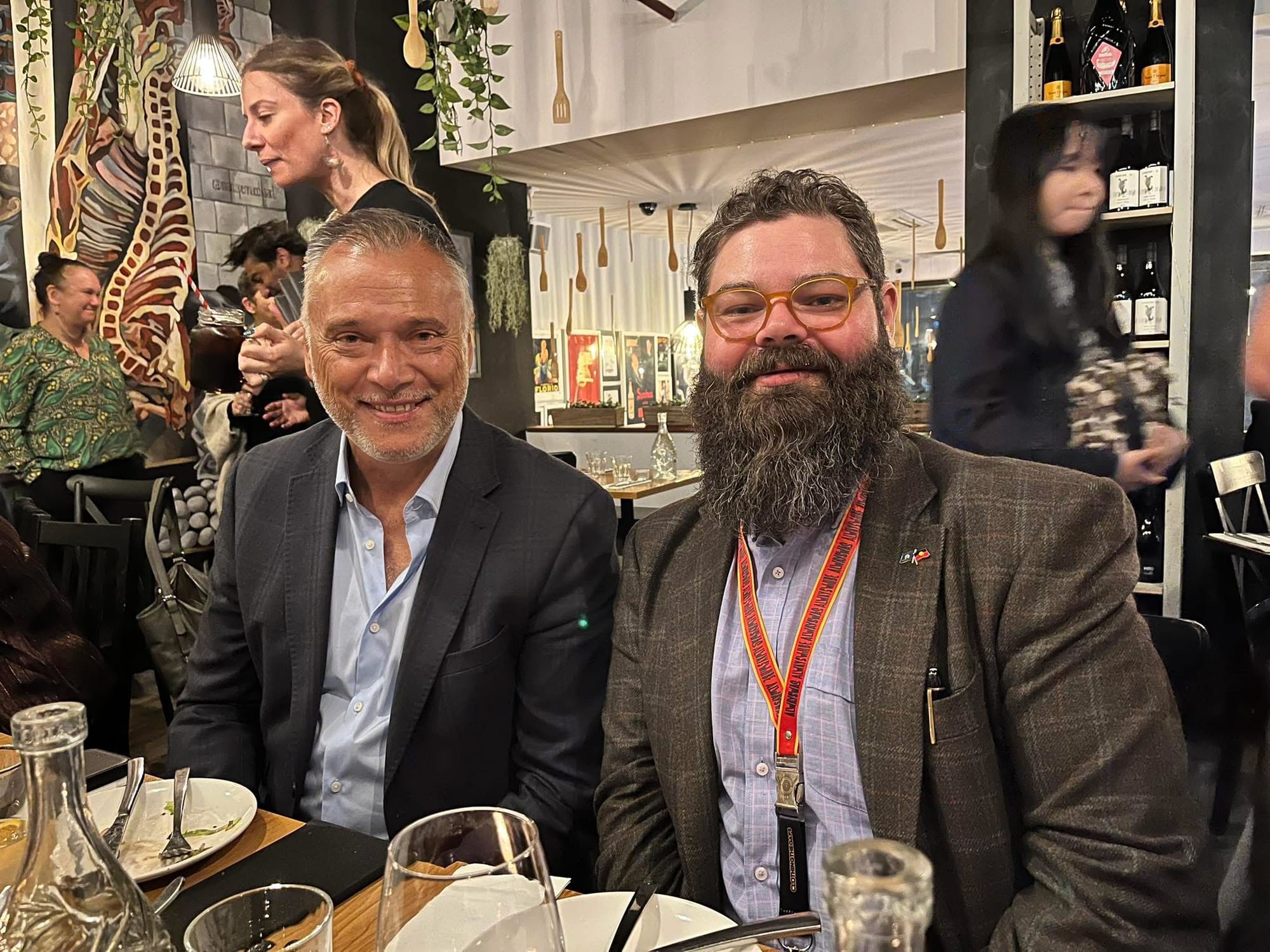
Monash’s presence at the Summit is an opportunity to stand on the right side of that distinction. To support work that is not only rigorous, but transformative. To engage not only in research, but in responsibility. Because the future of this country will not be determined by what we say about truth. It will be determined by what we do with it.
There is, however, reason for hope.
Hope is not found in the comfort of recognition alone. It is found in the courage of leadership. In the resurgence of First Nations governance. In the assertion of self-determination not as an abstract principle, but as a lived reality.
Across this continent, communities are already doing this work: Caring for Country, revitalising culture, building institutions, and imagining futures that are not bound by the limitations of the past.
This is the future the Uluru Statement points toward. Not a future of division, but of shared responsibility. Not a future where truth is something to be managed, but something to be lived. If we are willing.
Because truth, on its own, will not save us. But truth, led by First Nations authority — grounded in self-determination, and carried forward in partnership — might yet allow us to become something better.
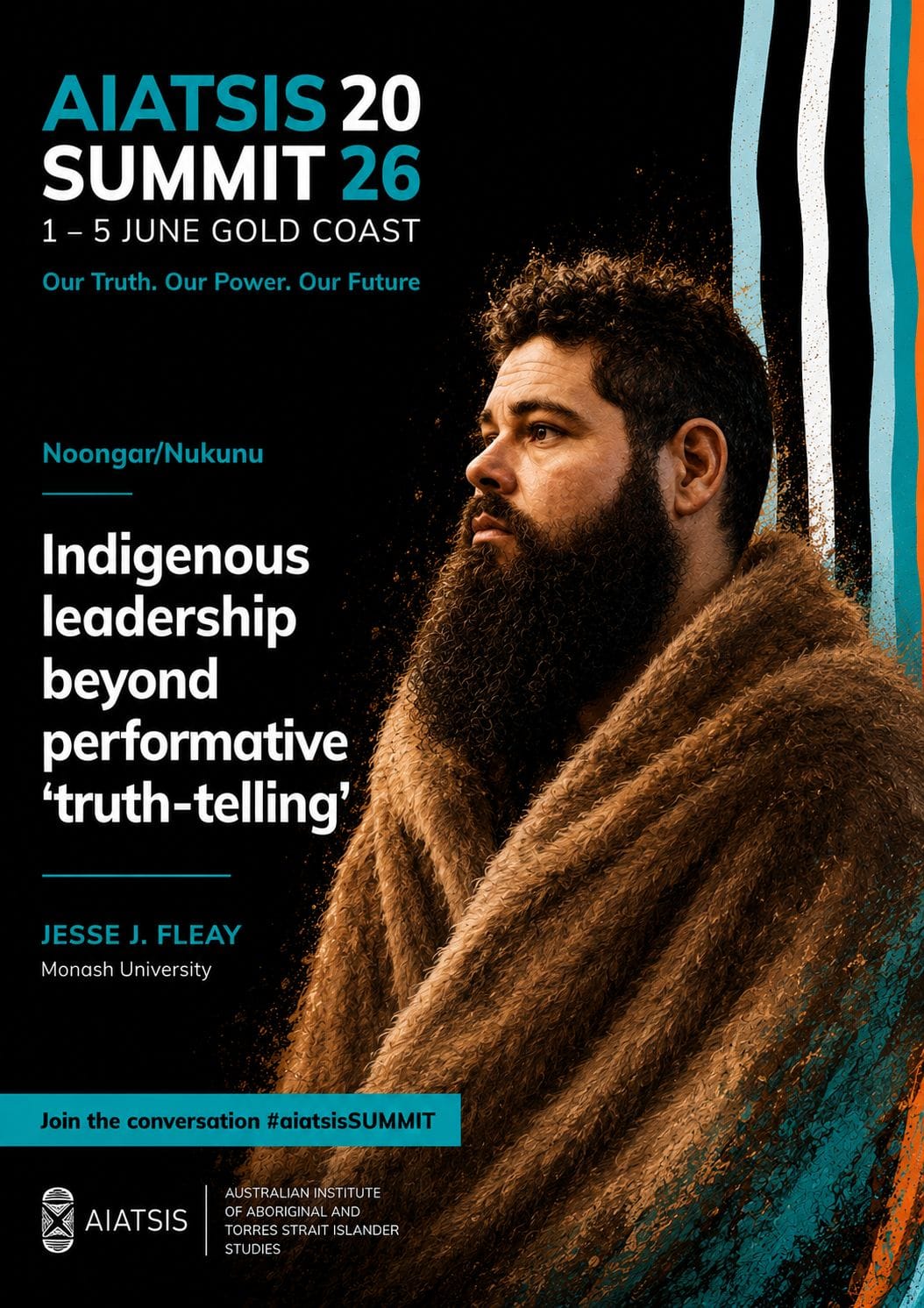
This is an edited extract of the presentation Jesse will be giving at this year's AIATSIS Summit. on Monday, 1 June.


