


The Albanese government has confirmed further details of its intention to develop a National Media Literacy strategy as part of its $153.5m ‘News Media Assistance’ program. Along with other experts in the areas of media, journalism and digital literacy we welcome this as a potentially generation-defining development. However, coming up with a strategy that is both coherent and comprehensive will not be an easy task.
Why media literacy is a government issue
The Australian government is not alone in its ambitions for a national push for media literacy. Countries around the world are realising the need to respond to the fast-changing nature of public media engagement
The resurgence in government interest relates back to profound concerns over rising levels of online misinformation and disinformation, the rapid proliferation of AI-generated content, deep-fakes, online scams, and a general loss of public trust in mainstream media.
Therefore it makes sense to develop effective ways of supporting all Australians to work out what information to trust, how to think carefully about the information that they create and share, and generally become media savvy in ways that are genuinely helpful and empowering. Like many other governments, the Albanese Labor Government clearly hopes that a media literate population will be a key part of ensuring Australia’s democratic, economic and social cohesion over the next decades.

The need for a specifically Australian strategy
While the country has a rich tradition of community media, Australia continues to suffer from one of the highest levels of concentration of media ownership in the world. Conversely, Australia’s multicultural population and historic ties with countries such as the UK means that large proportions of the population are engaging with diverse media sources from around the world.
Any national strategy must address these issues, as well as meeting the specific media literacy needs of Australia’s First Nations communities. Another unique challenge will be supporting the upcoming generations of young Australians now facing delayed exposure to social media platforms due to the social media ban. There are many reasons that media literacy in Australia is not something that can be properly addressed simply by replicating what has been done elsewhere in the world.

What makes for a good national Media Literacy Strategy?
Ideally, the government will take a genuinely comprehensive approach to tackling media literacy. Alongside functional skills required to safely access online information and services, Australians will need support to develop the critical thinking skills needed to evaluate and make sense of what we are seeing. Knowing how to make the best use of online content is important, as are the creative skills needed to produce it.
The government should also strive for a genuinely inclusive strategy – taking a lifelong and life-wide approach to developing media literacy. This is not just something that needs to be taught in schools, but covers all ages and stages of life – from pre-school to older adults.
It is also important that the government takes a future-proof approach – flexible enough to adapt to future media developments and challenges. Very few (if any) media literacy programs from the 2010s would have anticipated the challenges now faced from deep-fakes and AI generated content. We should expect similar developments into the 2030s and beyond.
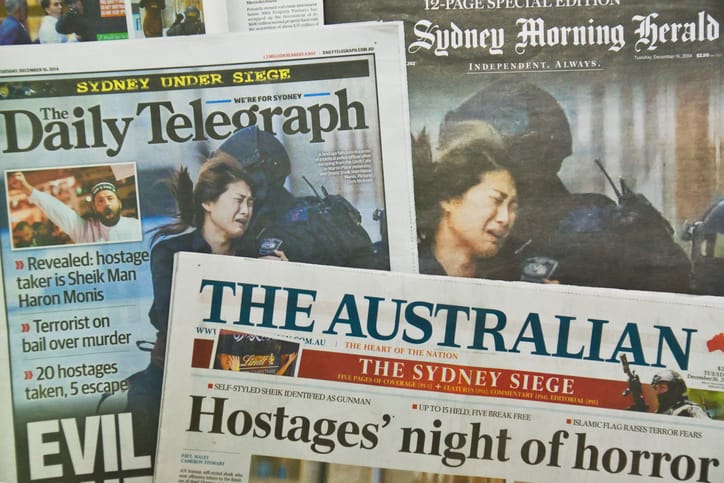
So, what should a National Media Literacy Strategy look like?
Alongside the obvious development of formal media literacy courses for schools, TAFEs and universities, is the need to support media education programs for libraries, museums, community education and other ‘non-formal’ institutions that are a crucial part of the nation’s education.
Ideally, a national strategy would support regular national media literacy campaigns along the lines of the nation’s iconic public health campaigns (such as ‘Slip-Slop-Slap’) and events such as National Book Week.
There is also scope for establishing national media literacy services to support Australians in their everyday engagement with media. These might include national fact-checking services such as Norway’s Faktisk agency, or perhaps government verification and kite-marking for information sources. There should also be provision of ‘media literacy-by-design’ – where media platforms, advertisers and other content producers are required to incorporate media literacy features into their online platforms.
Possible problems and challenges that need to be addressed
Of course, how successful the eventual Media Literacy Strategy turns out to be depends on how bold the Albanese Government is willing to be.
One main problem is the likely limited scope of any national Media Literacy Strategy. These sorts of policy efforts often focus on immediate concerns around online safety and risk avoidance, while shying away from supporting creative and productive media practices. There is also a sense that the current Australian government efforts are firmly focused on online news consumption, whereas media literacy in its fullest sense covers everything from understanding the social and emotional aspects of being online, how best to navigate online civic engagement through to critically understanding the political economy of media.
The Australian government also faces the challenge of ensuring universal access to media literacy education and support. Simply loading ‘media literacy’ courses into the school curriculum runs the risk of further entrenching disadvantage among some of the most vulnerable groups that would benefit most but are not engaged in mainstream schooling. There is also a risk that already overworked teachers will simply see media literacy as another optional ‘add-on’ to their core business which can be skipped over.
Finally, these sorts of national policy efforts also often bump up against familiar structural problems. Without clear leadership from one government department, media literacy can easily fall between the gaps. Like all Federal initiatives, there is a danger of uneven take-up by the different State governments, coupled with the perennial issue of sustained funding way beyond the incumbent governments. Launching a national Media Literacy Strategy is a big ongoing commitment for any government to make – not just a case of ‘one and done’. A Media Literacy Strategy is for life, not just one election cycle.
We watch the formation of the National Media Literacy Strategy with interest, and are genuinely hopeful that these efforts might finally establish Australia as a leading player in this space. Having made a splash with previous moves toward a ‘News Media Bargaining Code’ and the recent Social Media ban, Australia has gained a reputation for leading the world in media policy. It would be good to think that this will soon translate into an effective, equitable and broad-ranging media literacy strategy for the ages.


