

When Louis Theroux released Inside the Manosphere on Netflix in March this year, it felt like a timely intervention into a growing public concern: the rise of misogynistic online cultures shaping how boys and young men understand gender, relationships and power.
But Theroux has, in many ways, been here before.
Long before Andrew Tate or ‘high-value men’, Theroux’s early work captured an origin point of what would later become the manosphere. In a 2000 episode of Louis Theroux’s Weird Weekends (s3 ep1), he meets Ross Jeffries, an early ‘seduction guru’ widely regarded as a foundational figure in pickup artist culture. Theroux observes Jeffries demonstrating ‘speed seduction’ techniques, including attempts to influence women through scripted psychological cues in everyday social settings.
At the time, this appeared as just another eccentric subculture. In retrospect, it looks more like a prehistory, offering one of the first mainstream glimpses into what we now recognise as the cultural and economic foundations of the manosphere.
The forgotten prehistory: pickup artists and The Game
Five years later, journalist Neil Strauss published The Game (2005), a bestselling account of the ‘secret society’ of pickup artists: men who believed that attraction could be reverse-engineered into a system of repeatable techniques.
The book popularised a subculture built around scripts, routines and tactics – most infamously perhaps was ‘negging’, a form of backhanded compliment designed to undermine women’s confidence and secure male dominance in interaction. Within this world, dating was reframed as a market.
Pickup artistry was never just about sex or relationships. It was an industry. Gurus sold bootcamps, online courses and coaching programs promising transformation and individual success through self-optimisation, while obscuring structural inequalities.
But this promise is unstable. When it fails, as it often does, it produces resentment.
What Theroux had glimpsed in Jeffries, although seemingly awkward and absurd, was the early stage of a system that would expand, digitise and globalise the emergence of a commercialised masculinity in which self-worth, sexual success and economic investment became tightly entwined.
Hustle culture meets misogyny
Theroux’s new documentary shows how manosphere influencers monetise masculinity through podcasts and subscription content.
What is striking is how familiar the business model is. Like pick up artists before them, these figures sell a lifestyle: financial success, sexual access and dominant masculinity as bundled products.
This is where misogyny intersects with hustle culture.
The same logic that drives startup and influencer culture – optimisation, competition, personal branding – is applied to intimate life. Women become metrics of success. Relationships become transactions. Masculinity becomes an entrepreneurial project.
And, crucially, men pay for it.
Harm beyond the obvious
Much of the discussion around the manosphere rightly focuses on harms to women: the normalisation of sexism, the reinforcement of rape culture, and the framing of women as objects of conquest or enemies to overcome.
But another dimension of harm is the exploitation of men. This concern has been gaining traction in recent years, with the Netflix series Adolescence capitalising on this concern, turning the spotlight onto ‘our boys’.
These cultures are profoundly homosocial, built on male approval, competition and hierarchy. Success is measured through status within male peer groups.
Men and boys are encouraged to invest time, money and identity in systems that promise transformation while deepening cycles of inadequacy and comparison.
In this sense, the manosphere is a site of neoliberal extraction: profiting from male insecurity while reproducing it.
Full circle, or unfinished reckoning?
From pickup artists to the manosphere, Theroux has been documenting the same underlying phenomenon for decades: the commodification of intimacy, the fragility of masculinity, and the seductive promise that self-transformation can be bought.
Yet this continuity often goes unrecognised in mainstream discussions. Pickup artist culture seems to be recognised as a relic of the 2000s, a strange pre-social media subculture.
It should instead be understood as the prototype.
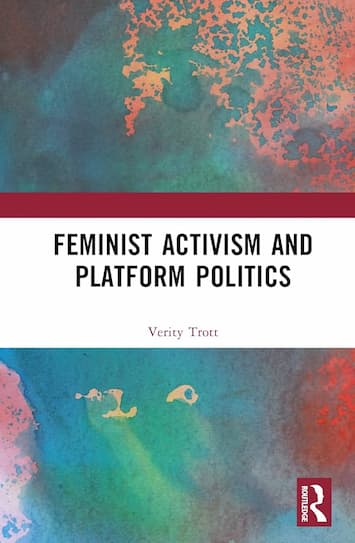
In my book, Feminist Activism and Platform Politics, I conducted research into infamous pickup artist (now rebranded ‘motivational speaker’) Julien Blanc, documenting his racist and misogynistic, and deeply entrepreneurial practices targeting young men. I followed the corresponding international backlash by feminist activists that led to his Australian visa being revoked in 2016.
In academia, other researchers have also documented how pickup artist groups formed as an early subset of the Manosphere and documented pathways to more extreme misogynistic subcultures such as ‘incels’.
If anything, Theroux has not simply revisited the same terrain; he has actually traced its evolution. The difference now is the scale, speed, and visibility our current social media landscape affords. What was once considered a niche subculture is now an algorithmically amplified industry shaping everyday gender relations.
Recognising this lineage matters. It shifts the conversation from a ‘new’ problem to a long-standing cultural issue.
And it raises a harder question: not just how we respond to the manosphere today, but why its logic of markets, metrics and monetised masculinity has proven so durable.
Theroux’s work, across decades, suggests that the answer lies not in the fringe communities but in the broader culture that made them possible.
My colleague Dr Andy Ruddock and I are currently interviewing fathers of boys (aged 12-15) about how they encounter hypermasculine, entrepreneurial content on social media and how they believe this ‘industry’ impacts their sons. If you are interested in participating, please submit an EOI here.


