


Across Malaysian cities, delivery riders weaving through traffic have become part of everyday life. They bring meals, groceries and parcels to millions of households, forming the logistical backbone of the country’s rapidly expanding gig economy.
Yet behind this convenience lies a deeper question: What does wellbeing look like for workers operating under such different conditions, and how well are they protected?
While debates about the gig economy often focus on insecurity and risk, emerging evidence suggests a more complex picture, one that challenges long-held assumptions about stable versus flexible work.
New insights from the first phase of the Employee Wellbeing Index (EWI), conducted by the Workplace Wellbeing Science Network at Monash University, Malaysia, offer a window into this changing landscape. Drawing on data from 451 Malaysian workers (213 delivery riders and 238 white-collar employees), the study compares wellbeing across four dimensions – physical, psychological, social and financial.
The findings reveal both expected patterns and surprising contradictions.
White-collar workers reported higher levels of physical wellbeing.
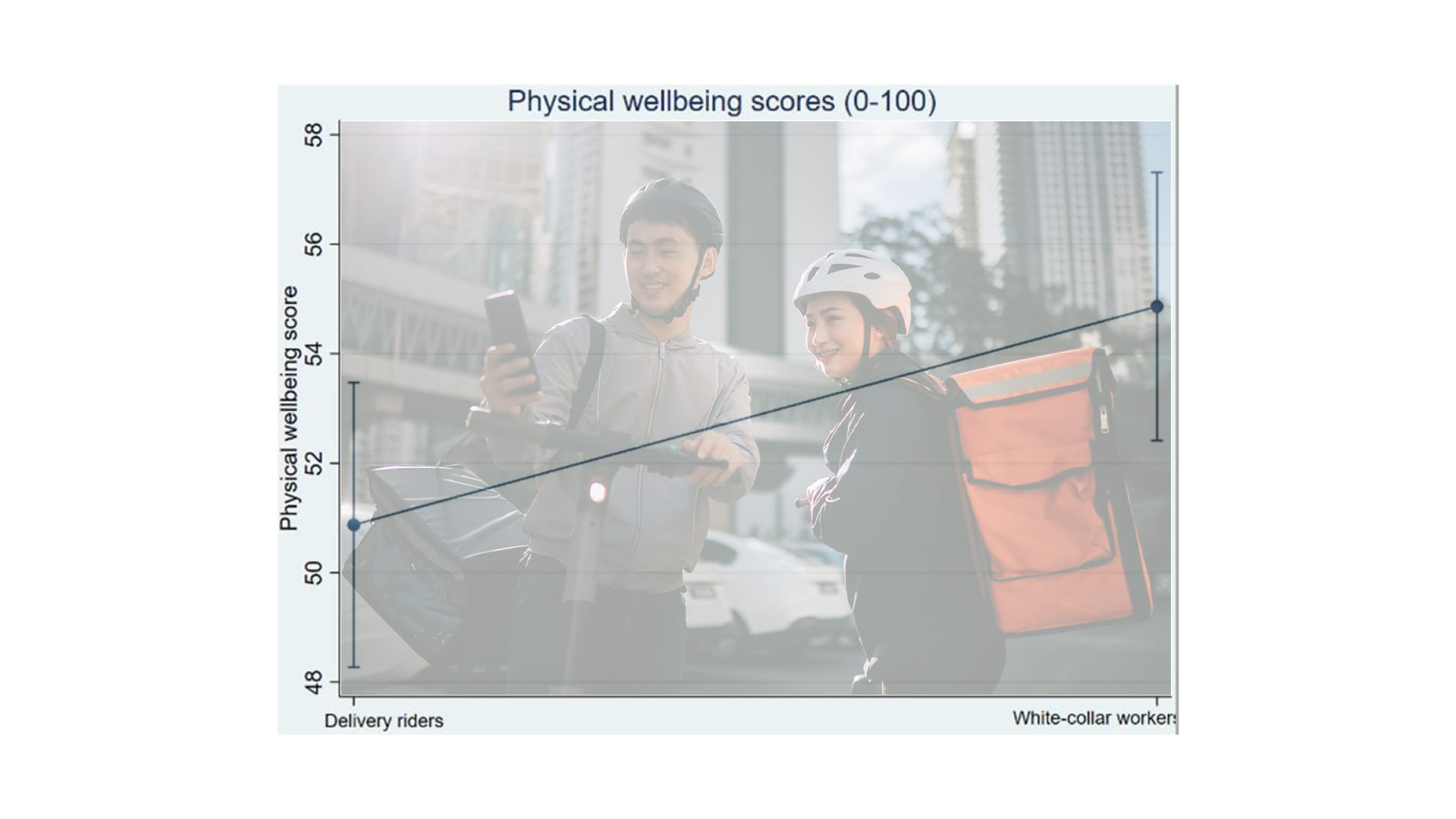
Office-based roles are typically less physically demanding and involve fewer safety risks than delivery work, which often requires long hours on the road under time pressure. Delivery riders face daily exposure to traffic hazards, fatigue and physically-taxing conditions.
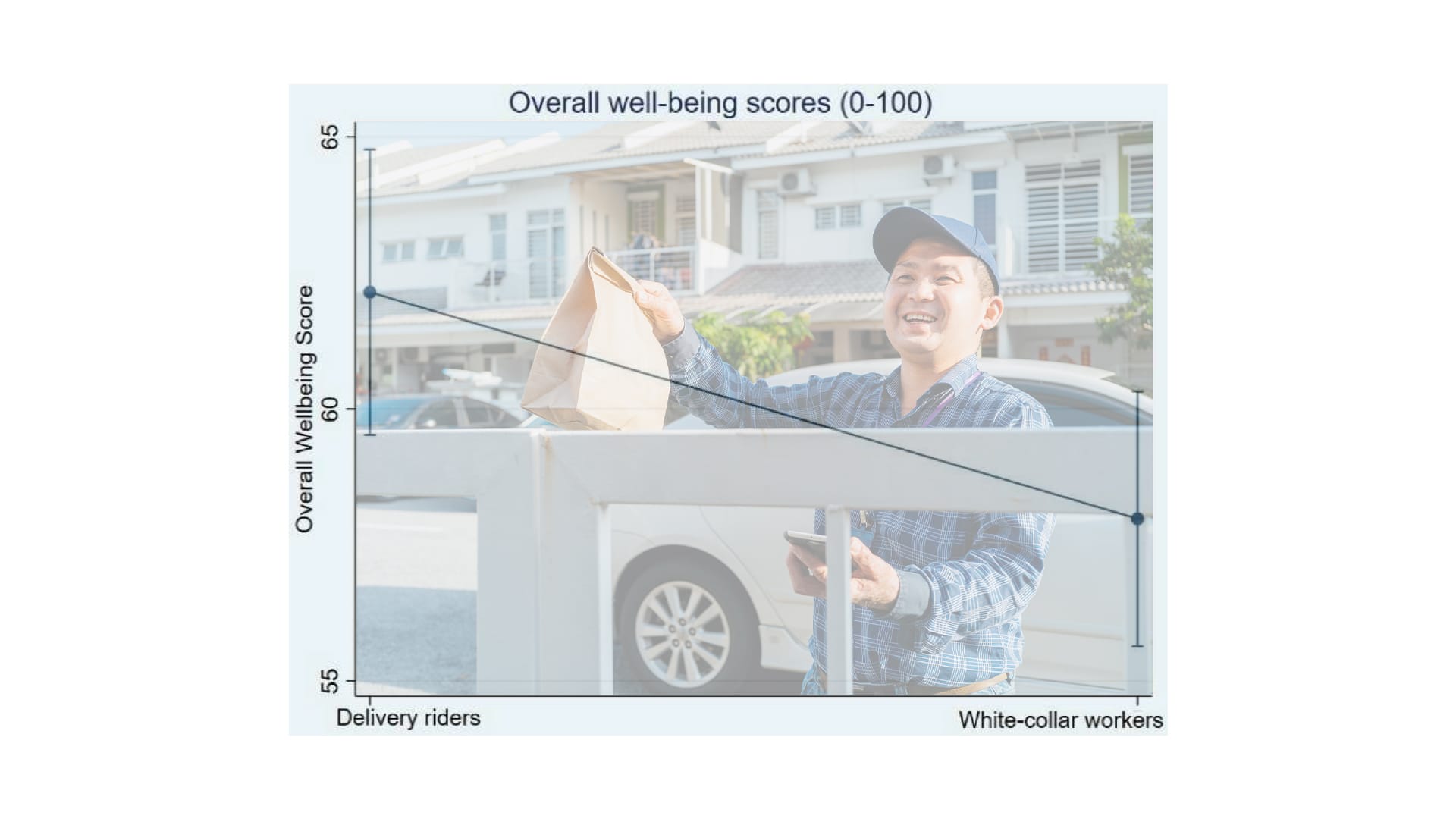
Yet the study also uncovered a striking paradox. Despite these challenges, delivery riders reported higher levels of psychological and social wellbeing.
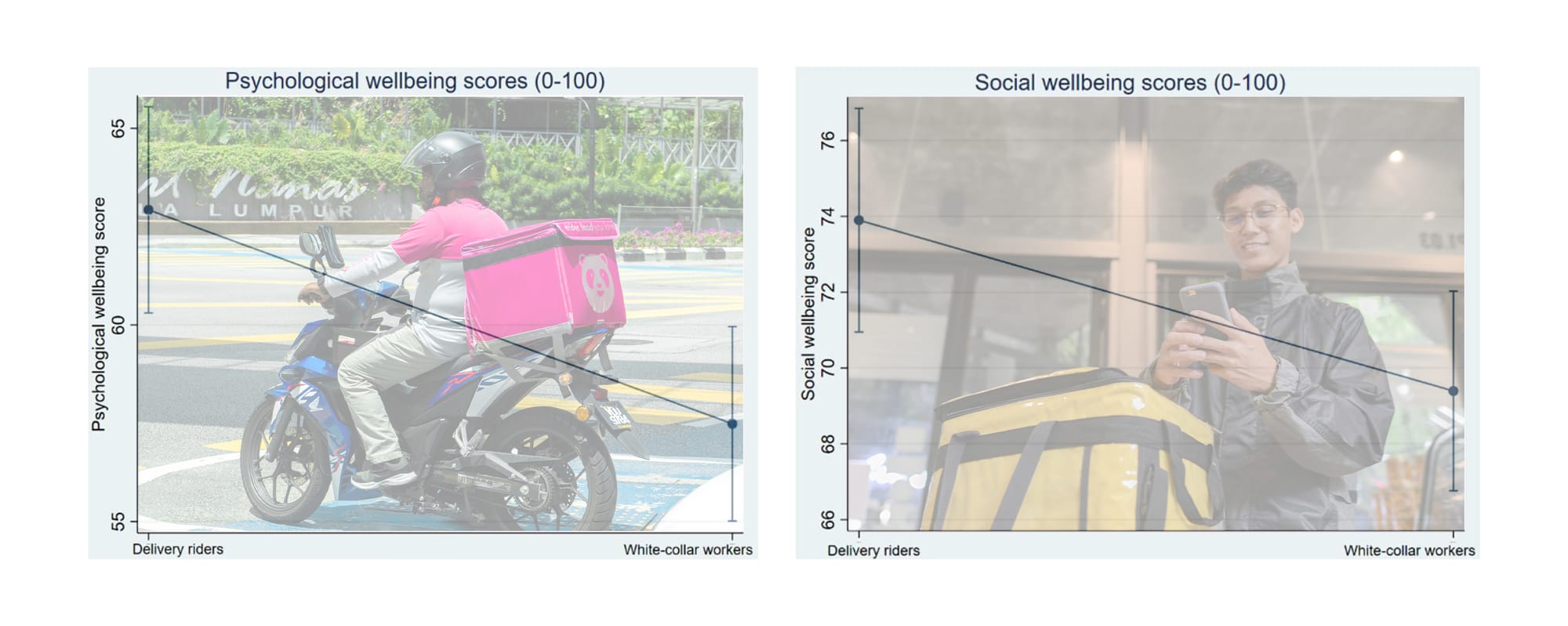
And even slightly higher overall wellbeing than their white-collar counterparts.
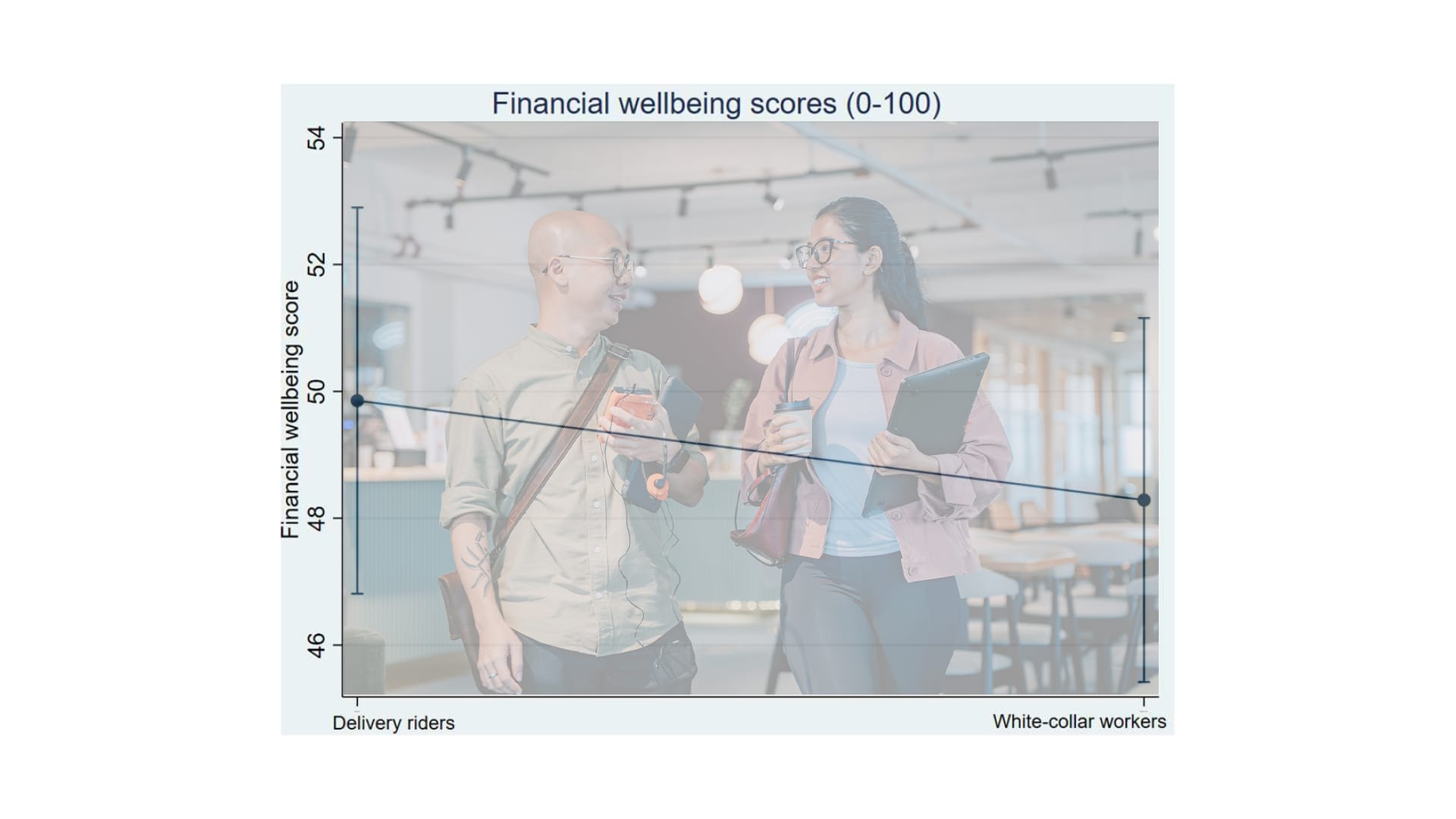
Financial wellbeing showed no significant difference between the two groups, although lower-income riders experienced greater financial strain.
How can workers in more precarious and physically-demanding roles report better overall wellbeing than those in relatively stable employment?
Part of the answer lies in the everyday experience of work.
Gig work is often characterised as isolating, given its independent and task-based nature. However, for many delivery riders, the reality appears more socially connected than commonly assumed. Informal peer networks, shared waiting areas and digital communities can foster a sense of belonging and mutual support, strengthening social wellbeing despite the absence of a traditional workplace.
Flexibility also plays a role. The ability to choose when and how long to work can provide a sense of autonomy that is often lacking in structured organisational environments, supporting psychological wellbeing.
However, these strengths should be interpreted with caution.
Higher reported psychological and social wellbeing may reflect resilience and adaptation rather than inherently better working conditions. Many riders operate in a system where income is uncertain, protections are limited and the rules governing their work are not always transparent.
From legal grey zone to reform
Until recently, delivery riders in Malaysia occupied an ambiguous legal space. Most were classified as independent contractors rather than employees, excluding them from key protections under the Employment Act 1955, such as paid leave, limits on working hours and safeguards against unfair dismissal.
Their work is managed not by traditional supervisors but by algorithms embedded in digital platforms. These systems determine job allocation, performance ratings and incentive structures, often with limited transparency. While riders may appear to enjoy flexibility, their income and opportunities are shaped by systems they have little control over.
This has clear implications for financial wellbeing. Because minimum wage laws apply only to employees, riders’ earnings depend on demand, delivery volume and platform-designed incentives.
Income can fluctuate significantly, placing much of the financial risk on the worker rather than the platform.
[Social Security] Gig Workers Bill 2025 to close protection gap for social justice
— malaysiakini.com (@malaysiakini) August 27, 2025
The proposed law seeks to extend fair wages, protection, and recognition to Malaysia’s growing gig workforce.
Read more: https://t.co/XwCEsjWxET pic.twitter.com/6Ui4FTniLI
There have been some efforts to extend protection. Under the Self-Employment Social Security Act 2017 (SESSA), delivery riders are covered for work-related accidents through Malaysia’s Social Security Organisation (SOCSO), providing medical and disability benefits.
However, this remains narrowly focused on physical harm and does not address broader concerns such as income stability or job security.
More recently, Malaysia has taken a significant regulatory step. The Gig Workers Act 2025 (Act 872), gazetted on 31 December 2025, introduces a clearer legal framework for platform-based work. For the first time, gig workers – including delivery riders – are formally recognised in legislation.
The act strengthens oversight of platform operators, improves coordination with existing social protection mechanisms and introduces clearer processes for dispute resolution, including safeguards around account suspension or deactivation.
These changes matter, because access to the platform is effectively a rider’s livelihood.
However, the framework remains distinct from traditional employment law. Riders are still classified as self-employed, meaning many employment-related protections do not automatically apply. The system is evolving, but it’s not yet comprehensive.
In this context, the relatively high levels of psychological and social wellbeing reported by riders should not be mistaken for evidence that the system is working well. Rather, they highlight the complex ways people adapt to their circumstances, including through finding connection, autonomy and meaning even in uncertain conditions.
White-collar roles, while physically safer, come with their own challenges. Many involve high cognitive demands, tight deadlines and complex organisational structures. These pressures can erode psychological wellbeing, particularly when combined with weaker day-to-day social connections in increasingly digital or hybrid workplaces.
The findings point to a broader truth: Wellbeing is not determined solely by job security or physical safety. It emerges from a combination of factors, including autonomy, social connection, meaningful work and manageable demands.
The study also confirms a strong link between wellbeing and workplace outcomes. Across both groups, higher levels of wellbeing were associated with greater work engagement and job satisfaction. This reinforces the idea that wellbeing is not simply a “nice to have”, but a critical driver of performance, retention and long-term workforce sustainability.
For organisations and policymakers, these insights carry important implications.
First, they highlight the need for more nuanced, sector-specific approaches. A one-size-fits-all strategy is unlikely to be effective in a labour market that includes both platform-based gig workers and traditional employees.
For delivery riders, improving physical safety must remain a priority. This includes better infrastructure, access to rest and recovery, and protections against work-related risks.
There’s also a growing need to address algorithmic management. Greater transparency and fairness in these systems could help reduce uncertainty and financial stress.
At the same time, policymakers must consider how to strengthen social protections for gig workers, particularly as regulatory frameworks such as the Gig Workers Act 2025 continue to evolve.
For white-collar workers, the focus should shift toward psychological and social wellbeing. This includes fostering supportive leadership, building stronger workplace relationships and designing work arrangements that promote balance and flexibility.
As remote and hybrid work become more common, organisations must be intentional about creating opportunities for meaningful connection.
Ultimately, improving wellbeing at work is not just about reducing risks or increasing benefits. It requires a deeper understanding of how different forms of work shape people’s daily experiences.
In a world where work is becoming more diverse, dynamic and decentralised, the experiences of delivery riders offer an important reminder that, even in the most uncertain conditions, people find ways to build connection, autonomy and meaning.
The challenge for policymakers and organisations is to ensure those strengths are supported and evolve rather than relied upon to compensate for gaps in protection.


