
Monash University physiology lecturer Dr Michael Leung describes his team’s unique “flipped learning” classes as “live theatre”. There might be costumes, wigs and fake blood, as well as crime scene tape, video and scripts. It’s unusual, but in terms of student engagement, it works.
Dr Leung – who’s been using games, roleplay, puzzles and “escape room” ideas in his classes since 2019 – says storytelling in the classroom provides an inclusive, fun environment that encourages collaboration and active learning, rather than traditional passive learning.
With a Monash team co-led by Professor Craig Harrison, Dr Leung evaluated one of these workshops/classes – the results are published in Advances in Physiology Education.
It shows how 418 students attended a non-compulsory “flipped” workshop in 2024, themed around diagnosing the infertility of a fictional medieval king, with 90% reporting high levels of engagement and all the students reporting more confidence on all revised topics.
The least-prepared students had the largest gains – students with no pre-workshop module completion reported confidence increases of 55% to 118% across the topics covered in the workshop, while those fully prepared showed 8% to19% gains, suggesting to the Monash researchers that inclusivity might benefit students who are less engaged with the preparatory materials, and all students benefited from workshop completion.
Flipping the script
In this model of flipped learning, the students look at the content before class, including viewing pre-recorded lectures, reading suggested materials and completing note-taking assignments. Then the rest of the class becomes an interactive workshop using key ideas they need to learn.
Flipped learning has increased in prominence over the past decade in tertiary education, and the team’s work has not surprisingly attracted media attention because it flips an accepted wisdom.
The Australian spoke to Dr Leung, but also some of his students. A former student told the newspaper his results improved, while a current student said the teaching method prompted her to go to workshops when previously she did not.
The team ran, for example, a physiology workshop themed around a role-playing murder mystery, with teaching assistants acting as a clinical pathologist, a homicide detective, like a murder mystery dinner party or an escape room concept.
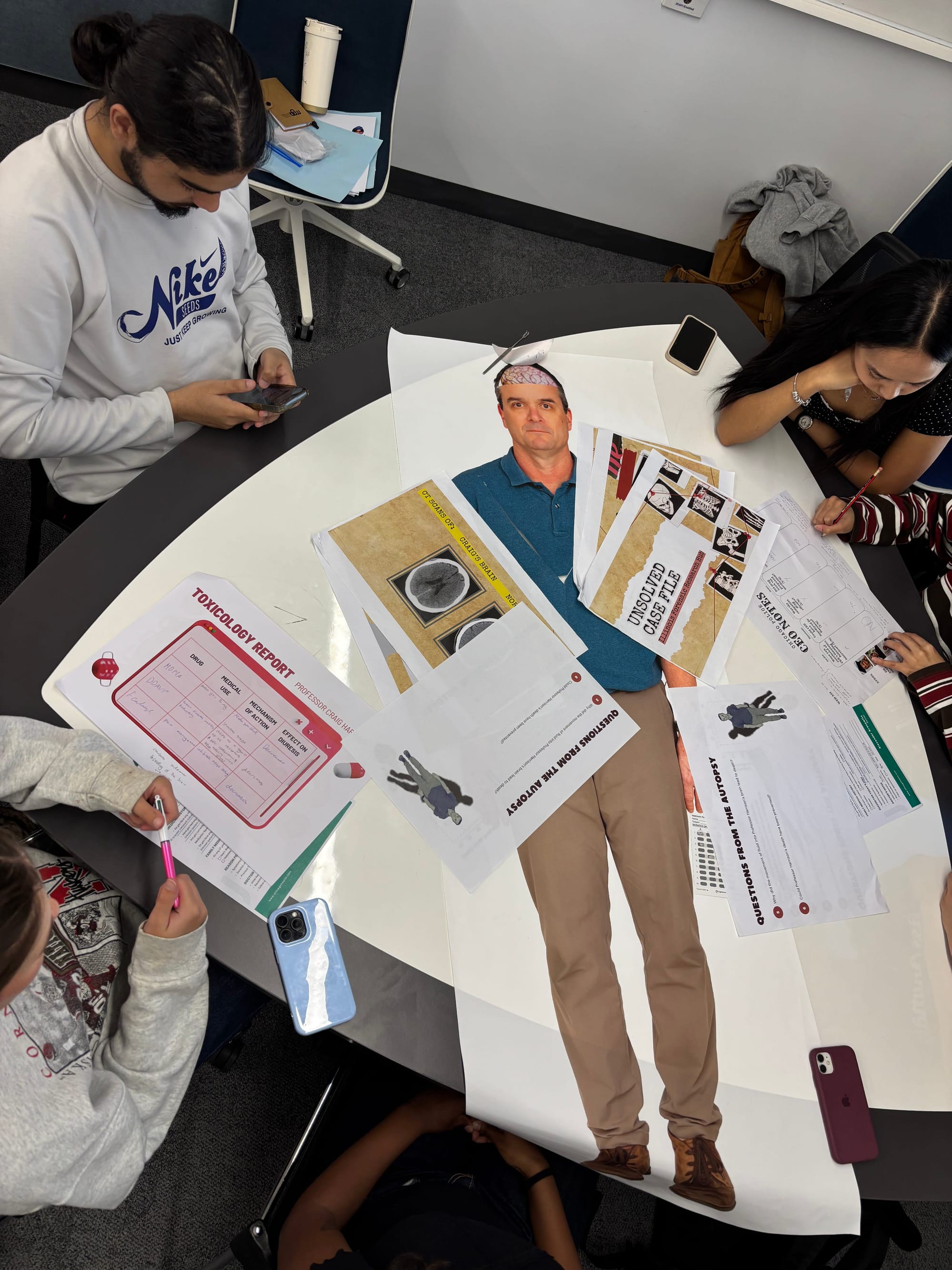
The workshop space was set up with separate stations. The concept is that a new pharmaceutical is in development, but a renowned clinical trials scientist is found murdered. Whodunnit? And whatdunnit?
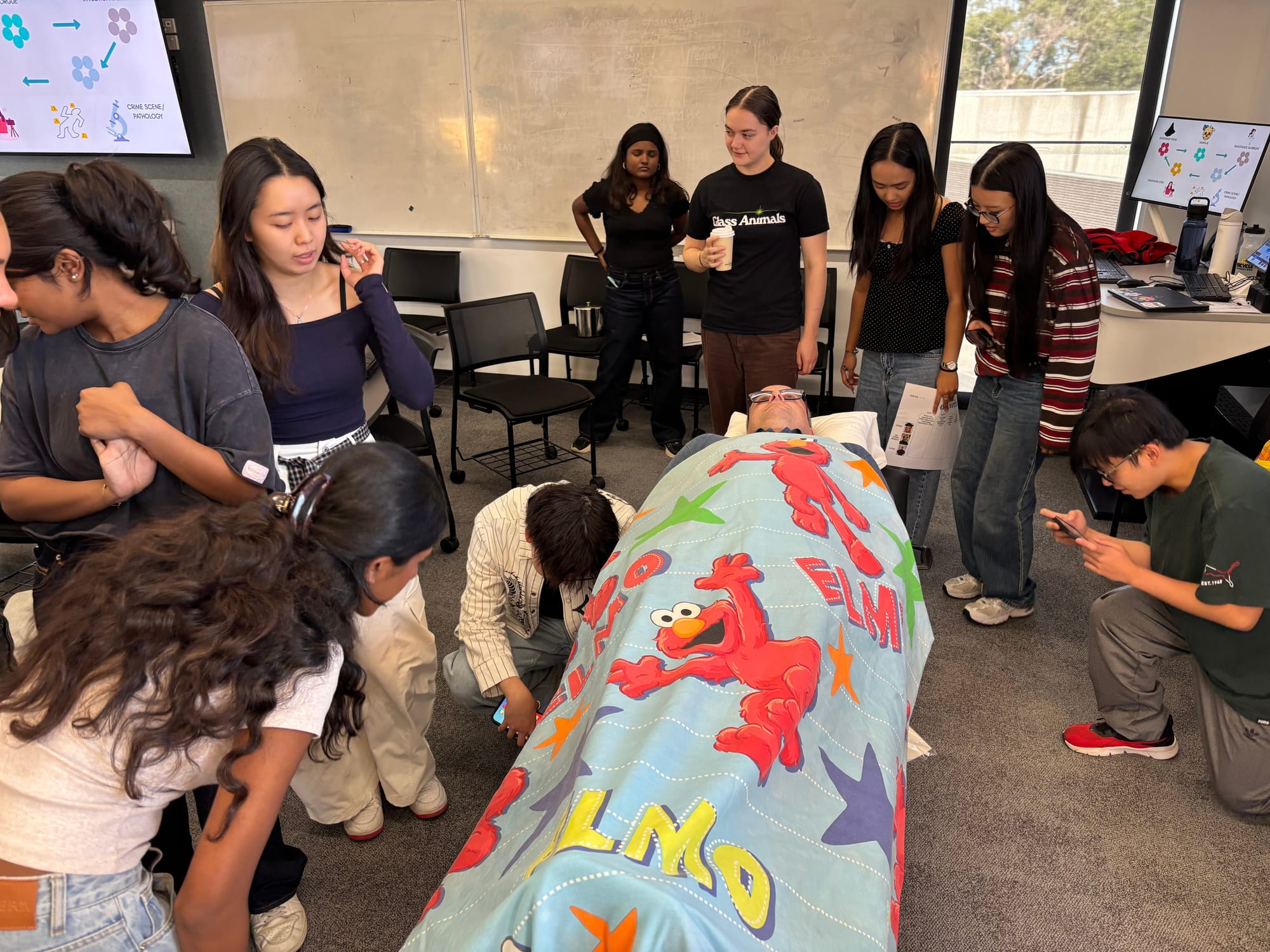
The students move through the various stations, where they’re given information through live theatre and curated resources and have to work out whether the new drug would work and what poisoned the CEO using chromatography.
“There's a crime scene where my teaching colleague is actually the one who was killed, is actually there, pretending to be dead, and then there's clues around, fake blood, and also these pills scattered around, a cheque, and a morgue with a life-size printed version of my colleague.
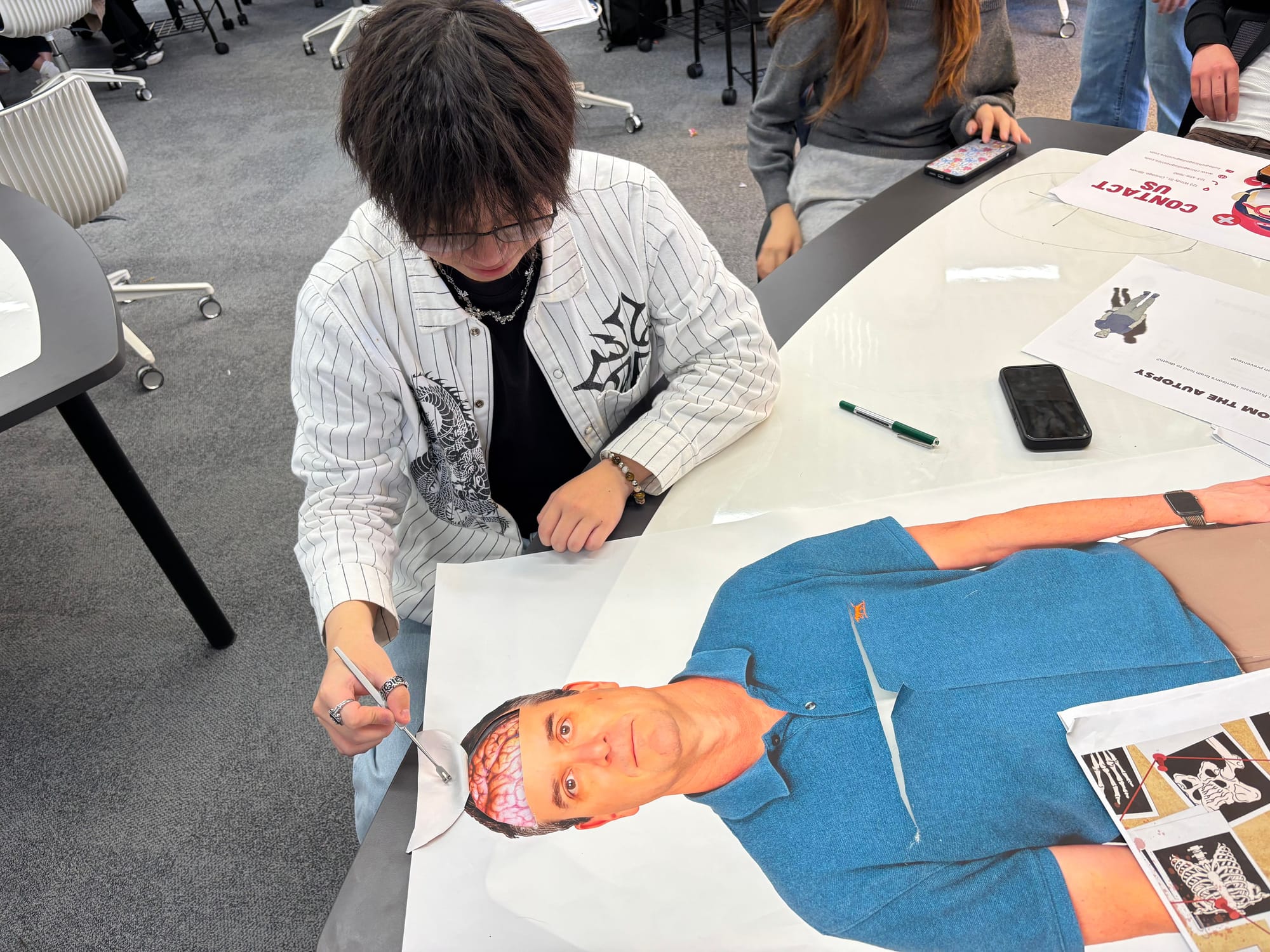
“The students have to cut him open with fake scalpels, and there’s organs and systems that have been affected. So they're piecing together something that’s really complex and trying to solve a murder mystery in the sense that it's not just rebranding a couple of worksheets and making it a murder mystery.
“These students have to actually go in, think about all the information at a pretty high level and piece it all together.”
Engagement is the key
The underlying concept, he says, is giving students a reason to engage.
“We deliver it in a way that provides context and reason to engage in the physiology, and we add a dash of humour. And often we try to tie in human and ethical elements to it. So if the concept is an apocalyptic future and we need to relocate and see if reproduction is possible on Mars, they have to make decisions as to who to bring, because they can't fit everyone on the settlement.
“So we try to actually engage them in a story where everything, all the decisions, that they’re making matter and drive the story forward at the same time.”
Driving the narrative
Storytelling is important, as always.
“We really put a lot of effort into the narrative. We have three key things that we're focused on – the theme, the story and the content. We believe that these three are the key to making sure that all our students are engaged.
“It’s going back to really old-school learning, telling through communication and really like getting people to discuss things and being invested in what they're learning.”
For a Harry Potter-themed workshop, Dr Leung’s hair played a part. He was growing his hair for charity, but scheduled filming for the planned workshop around having long hair so he would look more like Snape.
“Even though longer hair was annoying me to great lengths,” he says.


