

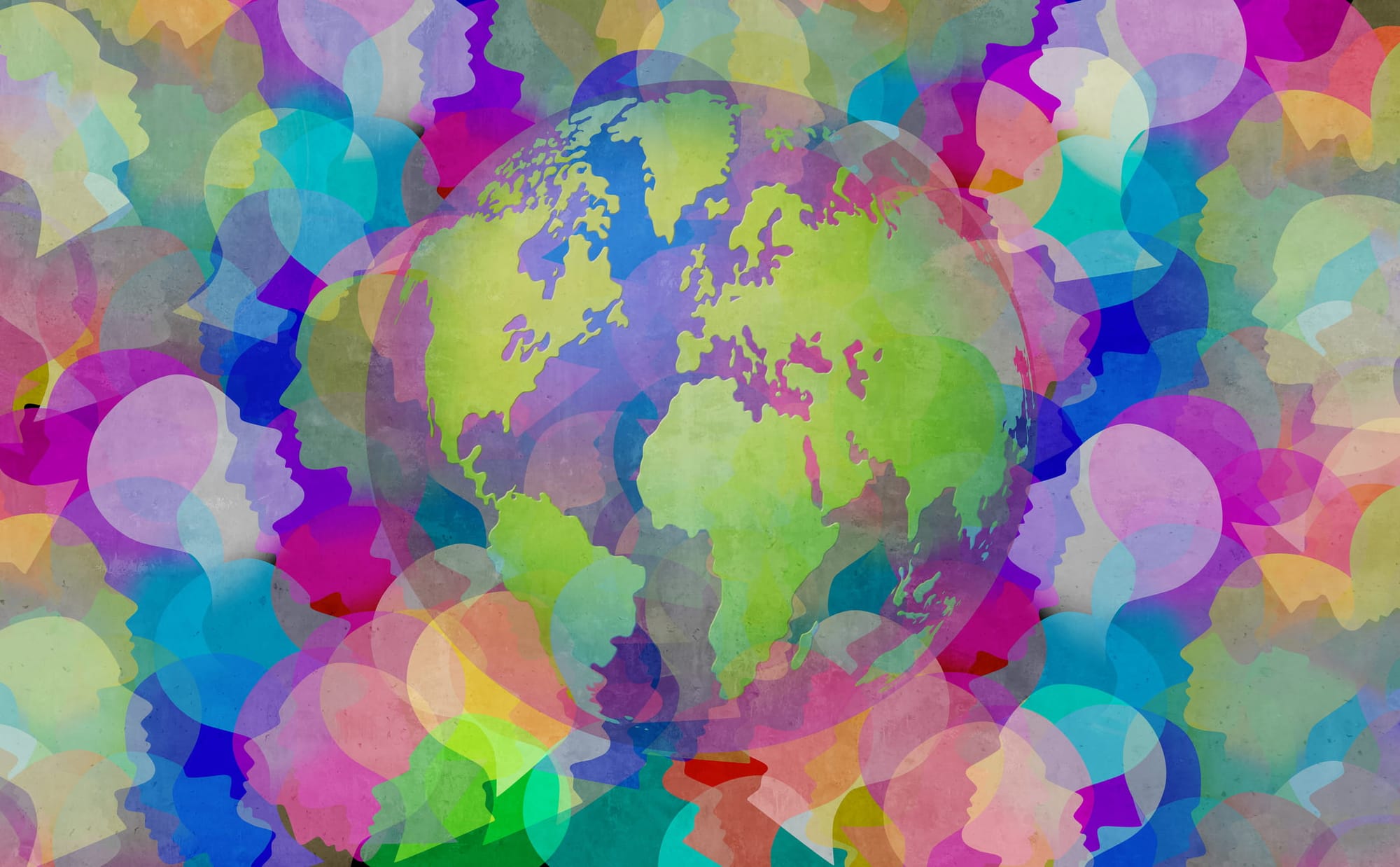
Building global citizenship has never been more important than right now, and is a perspective I strive to embed into my learning and teaching practice.
So, what does it actually mean to be a global citizen?
According to Oxfam, a global citizen is “someone who is aware of and understands the wider world – and their place in it. They’re a citizen of the world. They take an active role in their community and work with others to make our planet more peaceful, sustainable and fairer.”
The United Nations goes further and states that global citizenship includes social, political, environmental and economic actions of globally-minded individuals and communities, on a worldwide scale, who also acknowledge that we as individuals are actually members of multiple, diverse, local and non-local interconnected and interdependant networks, rather than being single individuals affecting isolated societies.
Recently, I experienced the magic of global citizenship in creative action. This came in the joyful form of attending the WOMADelaide festival, a wonderful gathering of world music and performance bringing together an eclectic crowd of humans from many corners of the globe to rejoice in things that bind us together – song, storytelling, movement, art, curiosity, wonder, mutual respect and love for our planet.
It was a powerful and timely antidote to the stream of negativity and destruction occurring in the world. It’s also a poignant reminder of the power of music, a universal language we can all speak and listen to together.
Holding on to the ties that bind
So how do we hold onto the things that bind us in a sea of noise about division and destruction? The answers may be closer than we think if we send our attention in the right direction.
In the swamp of information in which we find ourselves swimming, it’s easy to allow our attention to be diverted towards reporting of division and negativity.
Understandably, in times like these, avoiding this can be no easy challenge. In fact, this has become such a significant challenge for modern-day us that there are now worldwide movements of attention activism focused on alerting us to the commodification of our attention and empowering us to reclaim our attention back towards more purposeful and positive impact.
In an example of my own misdirected attention, I recently bought a copy of The Big Issue from a vendor in Melbourne’s Bourke Street Mall. In my rush at the time, I didn’t look at the contents, thinking I was purchasing it as an act of altruism towards the vendor.
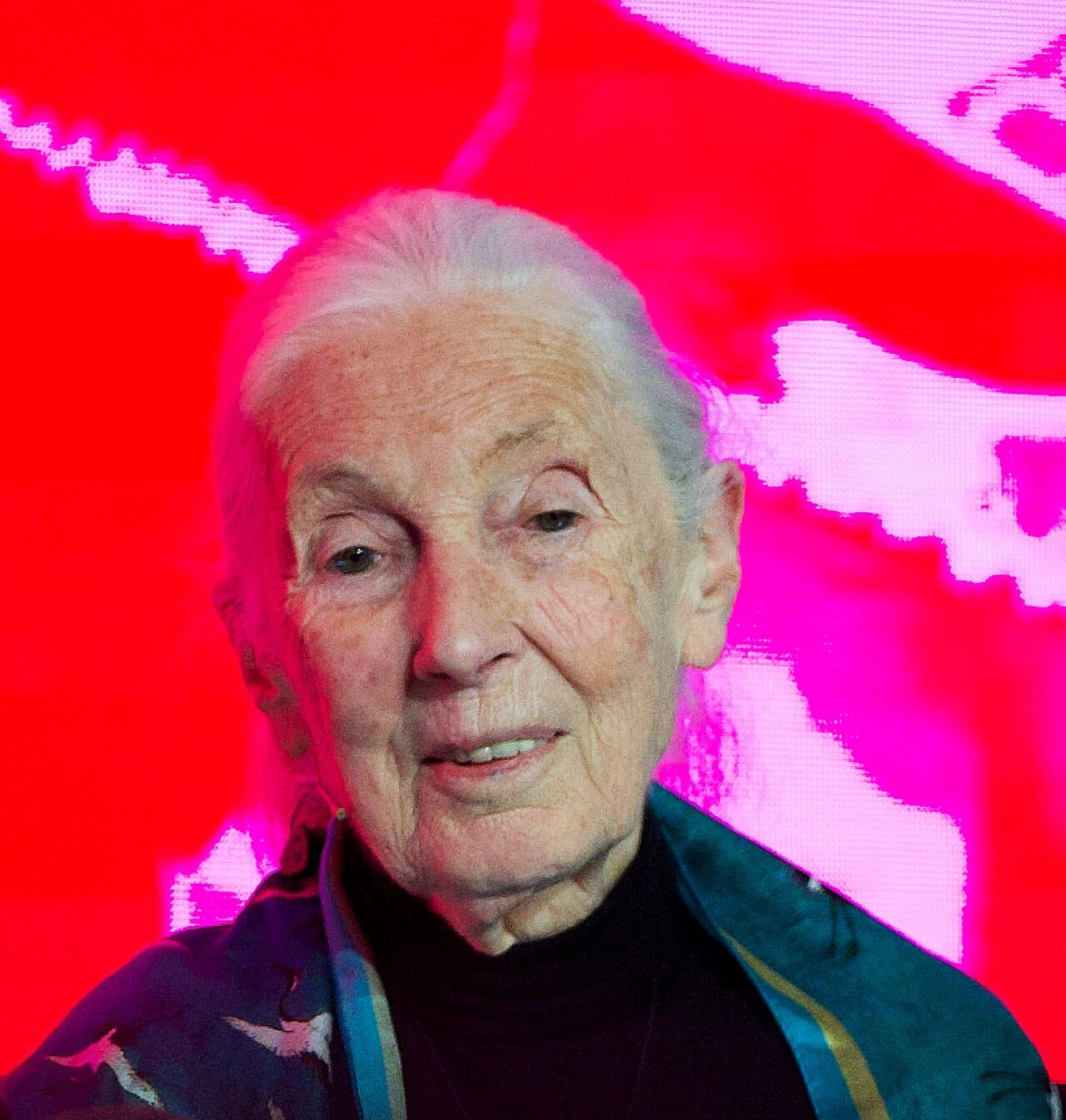
However, as I glanced at the cover a few days later, I realised I was in fact the beneficiary of the purchase. On the cover was a close-up image of the late Jane Goodall, her penetrating gaze conveying a distinct note of challenge. Challenge to do what? To pay attention, to take action, to contribute to positive change and renewal.
Resetting the internal compass
Perhaps this is a signpost for us, to help reset our internal compass as we face the immense challenges surrounding us all. Where can we look to direct our
attention and action in our own corner of life and identify what we’re able to contribute positively towards in a struggling interconnected and co-dependant world.
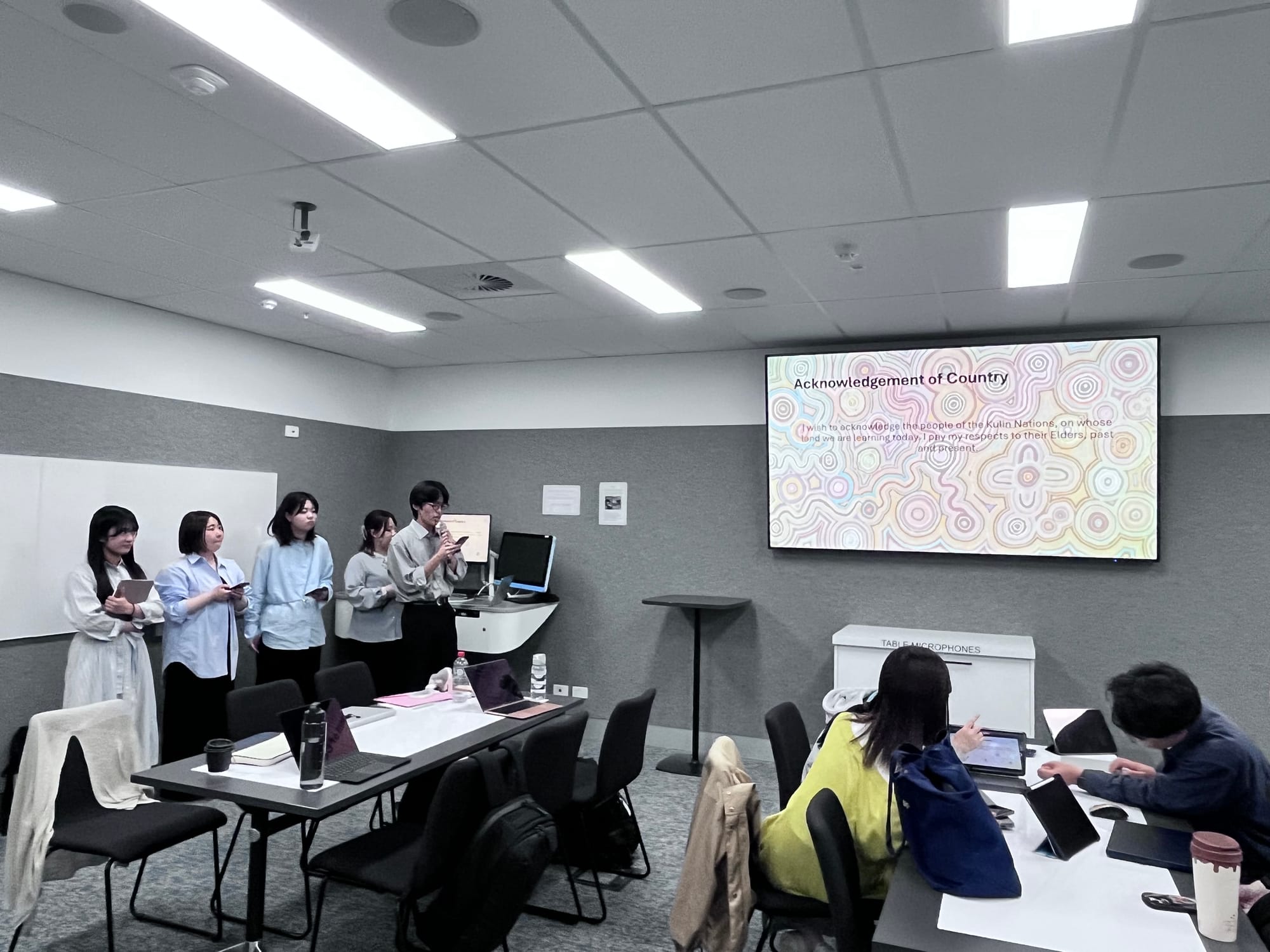
Here at Monash University’s Faculty of Medicine, Nursing and Health Sciences, we recently welcomed a visiting group of students from Nagoya University and Chiba University, Japan. They were participating in an in-bound global engagement opportunity that’s part of the Global and Regional Interprofessional Education Plus Program (GRIP).
Our program focused on two themes of healthy ageing and disaster preparedness in both countries, and drew on the deep expertise that we have on these topics at Monash. It was also an opportunity for some Monash students from pharmacy, physiotherapy, medicine, paramedicine, nursing and nutrition science to join the Japanese students to learn with, from and about each other and about our locations in the world.
At the centre of this program is building an understanding and application of global citizenship in the future careers of these inspiring young scholars.
On their final day, we asked our participants: What does global citizenship mean for you? They responded with these descriptors: Collective responsibility; working together to solve our shared problems, including all people in these solutions; empathy and respect for difference; having a volunteering spirit; actively using our expertise to solve global challenges; intergenerational communication; and thinking beyond our own borders.
A mindset traversing borders
Having a global citizen mindset can take us beyond other borders, too. For me, this often comes in the form of moving from land into the sea.
It’s not my natural habitat, but my routine of open-water swimming in the morning with my companions never fails to open me up to new insights and deep appreciation for the world we live in. There, I’m introduced to innumerable other species, all going about their own lives in their own ways, with their own communities.
Today’s breathtaking encounter was a giant stingray, wafting gently by on its own purposeful way to wherever.
And yet, whether we meet each other or not, we’re all linked and co-dependant on the health of the ocean and the planet.
Hope through positive action
Perhaps our working definition of being a global citizen could be extended to acknowledge the extent of our inter-connectedness and ensure our shared responsibility goes beyond borders on land to include those of water and sky.
So, as we grapple with how to manage amongst the chaos, may we be inspired by the insights of bright young minds, by the mystery of a giant stingray and by the hope that is inherent in taking positive purposeful action within our own zone of influence.
And may our attention include active focus on discovering together what it truly means to be global citizens. Something we all need now more than ever.


