


The Pacific Islands are home to some of the world's most extraordinary natural assets.
From the tropical forests of Papua New Guinea and Solomon Islands to the coral reefs, mangroves and vast ocean ecosystems that connect the region, these landscapes and seascapes sustain livelihoods, cultures and economies while delivering environmental benefits to the world.
Yet these countries and communities face an extraordinary injustice.
They contribute less than 0.03 per cent of global greenhouse gas emissions but confront some of the most severe consequences of climate change.
The Pacific’s annual adaptation financing needs alone are estimated at US$3.3 billion.
At recent Pre-COP31 discussions in Fiji, Pacific leaders reiterated a fundamental demand: wealthy countries, particularly neighbouring developed nations, have a moral obligation to provide grants, rather than additional debt, to help Pacific communities respond to a crisis they did little to create.
They are right. But there is another conversation we urgently need to have.
The limits of climate finance
When climate finance reaches communities, it can make a tangible difference.
However, the international climate finance system has consistently failed to deliver funding at the scale, speed and accessibility needed by Pacific nations.
Despite decades of negotiations, accessing grants from institutions such as the Green Climate Fund remains complex, expensive and administratively demanding.
Funding often passes through multiple international intermediaries, including multilateral agencies, development organisations and consultants, before reaching the communities where it is needed.
Each intermediary performs functions that may be necessary, but these arrangements can also absorb substantial resources through administration, project preparation, compliance and management costs.
The result is a system in which too much funding can be consumed before tangible benefits reach communities.
Meanwhile, geopolitical and economic priorities are shifting and many traditional donors are reducing their international development commitments.
Globally, official development assistance fell to US$174 billion in 2025, from US$215 billion the year before, the steepest annual drop ever recorded. The United States cut its aid by more than half and accounted for three-quarters of the decline; the United Kingdom, Germany, France and Japan all cut too.

The 2025 International Court of Justice advisory opinion, initiated through Pacific leadership, reinforced the legal obligations of developed country parties to provide climate finance. But legal and moral obligations do not necessarily translate into timely financial commitments from nation states.
This creates a difficult reality. The Pacific must continue demanding climate justice and grant-based assistance, particularly for adaptation, loss and damage, and essential public goods. Initiatives such as the Pacific Resilience Facility offer important opportunities to direct grant funding towards locally determined priorities.
However, reliance on an increasingly constrained international grants system cannot be the region's only financial strategy.
From climate finance to natural capital investment
An alternative, and potentially transformative, opportunity lies in strengthening the investment proposition of the Pacific's natural assets.
The forests, reefs, fisheries, agricultural landscapes and coastal ecosystems of the Pacific are not simply vulnerable environments requiring international assistance. They are productive assets capable, under the right circumstances, of generating significant economic value.
Natural capital investment seeks to recognise and responsibly realise this value through activities such as sustainable forestry, regenerative agriculture, carbon markets, biodiversity conservation, fisheries, ecotourism and ecosystem restoration.
Consider a mangrove forest. It stores carbon, supports fisheries, protects coastal communities and sustains cultural practices. Traditionally, these benefits have been poorly reflected in economic decisions. Yet carefully designed investments could generate revenues through carbon markets, sustainable fisheries and complementary enterprises, creating financial incentives for long-term protection.
Similarly, investment in sustainable agricultural processing or responsibly managed forestry could increase economic returns without expanding environmental degradation.
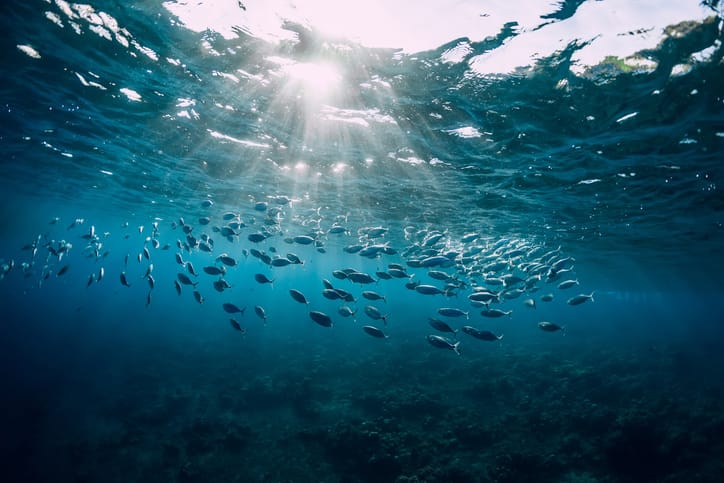
The opportunity is to shift from financing environmental protection primarily as an expense towards recognising ecosystem stewardship as an economically productive activity.
Importantly, investment capital can offer efficiencies that conventional grants frequently struggle to achieve. Where commercially viable projects can be developed, investors have incentives to deploy capital effectively, generate measurable outcomes and maintain productive assets over time.
Unlike grants, successful investments can generate recurring income, support further investment and reduce dependence on successive rounds of donor funding.
This does not mean investment is universally superior. Commercial finance carries costs, risks and expectations of financial returns. Many essential adaptation and conservation activities will never generate sufficient revenue to attract investors and must remain publicly funded.
The challenge is identifying where grants are indispensable and where investment can deliver additional, sustainable financial flows.
Investment on Pacific terms
There are legitimate concerns that natural capital investment could become another form of resource extraction, particularly given the Pacific's colonial history.
Forests, reefs and customary lands are not simply commodities awaiting financial valuation. They embody cultural identities, traditional knowledge and relationships between communities and nature that extend far beyond commercial returns.
Indeed, customary ownership and community stewardship should be recognised as strengths rather than obstacles to investment.
Successful natural capital investment must therefore be designed with traditional owners, respect customary tenure, protect community decision-making and ensure fair distribution of economic benefits.
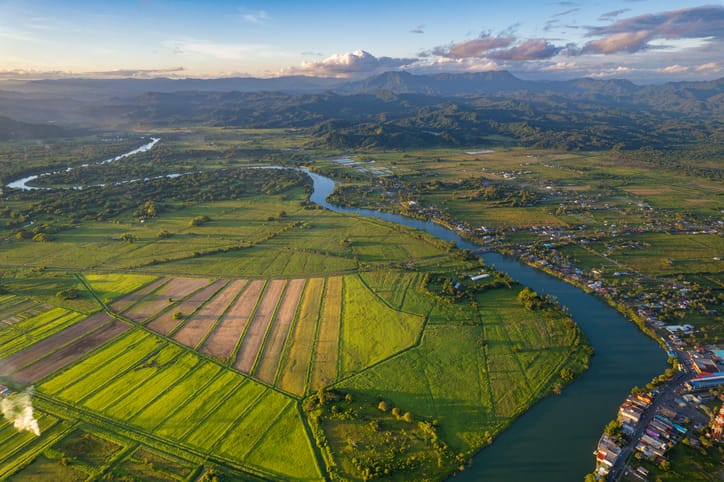
Communities must retain the ability to reject inappropriate proposals. Transparent agreements, safeguards and locally led governance are essential.
The objective is not to transfer control of Pacific natural assets to international investors. It is to attract capital on terms that strengthen Pacific ownership, prosperity and environmental resilience.
A new financial proposition for the Pacific
Australia and other developed neighbours must not use private investment as an excuse to retreat from their climate finance obligations. Grants remain essential, and their delivery must become more direct, accessible and efficient.
But grants can also help establish the conditions for investment: strengthening local institutions, developing viable project pipelines, reducing early-stage risks and building the technical capabilities needed to negotiate equitable financial arrangements.
This creates an opportunity to mobilise financial flows substantially greater than those available through public grants alone.
The Pacific should not be positioned merely as a recipient of international climate assistance. It should increasingly be recognised as a region possessing globally significant natural wealth, with the authority and opportunity to determine how that wealth supports its future.
The real ambition is not simply to attract more money into the Pacific. It is to fundamentally improve how finance reaches communities, who controls it, and how enduring economic and environmental value is created.
Climate justice requires grants. Long-term economic empowerment also requires investment. The Pacific deserves both.


