

A landmark High Court decision has confirmed that decision-makers in New South Wales need to consider downstream emissions – generated when the coal is eventually burned by end users – in assessing fossil fuel projects.
A majority of the High Court has today dismissed an appeal by coal company MACH Energy Australia over the expansion of the Mount Pleasant coal mine in the Hunter Valley.
The case is highly significant and is the first climate change case to reach Australia’s highest court. It confirmed that decision-makers in New South Wales must consider imposing conditions on fossil fuel projects to minimise to the greatest extent practicable all greenhouse gas (GHG) emissions, including scope 3 emissions.
However, this case is not a ‘home run’ for climate action. In fact, the case did not raise any issue concerning climate change other than how to interpret the relevant environmental legislation in the case. It did not consider whether or not the fossil fuel project in question ought to be approved or not in light of climate change concerns.
The implications of the decision for future climate-related project approvals will therefore depend on how the legal principles identified by the Court are applied in subsequent cases.
The Mount Pleasant mine expansion
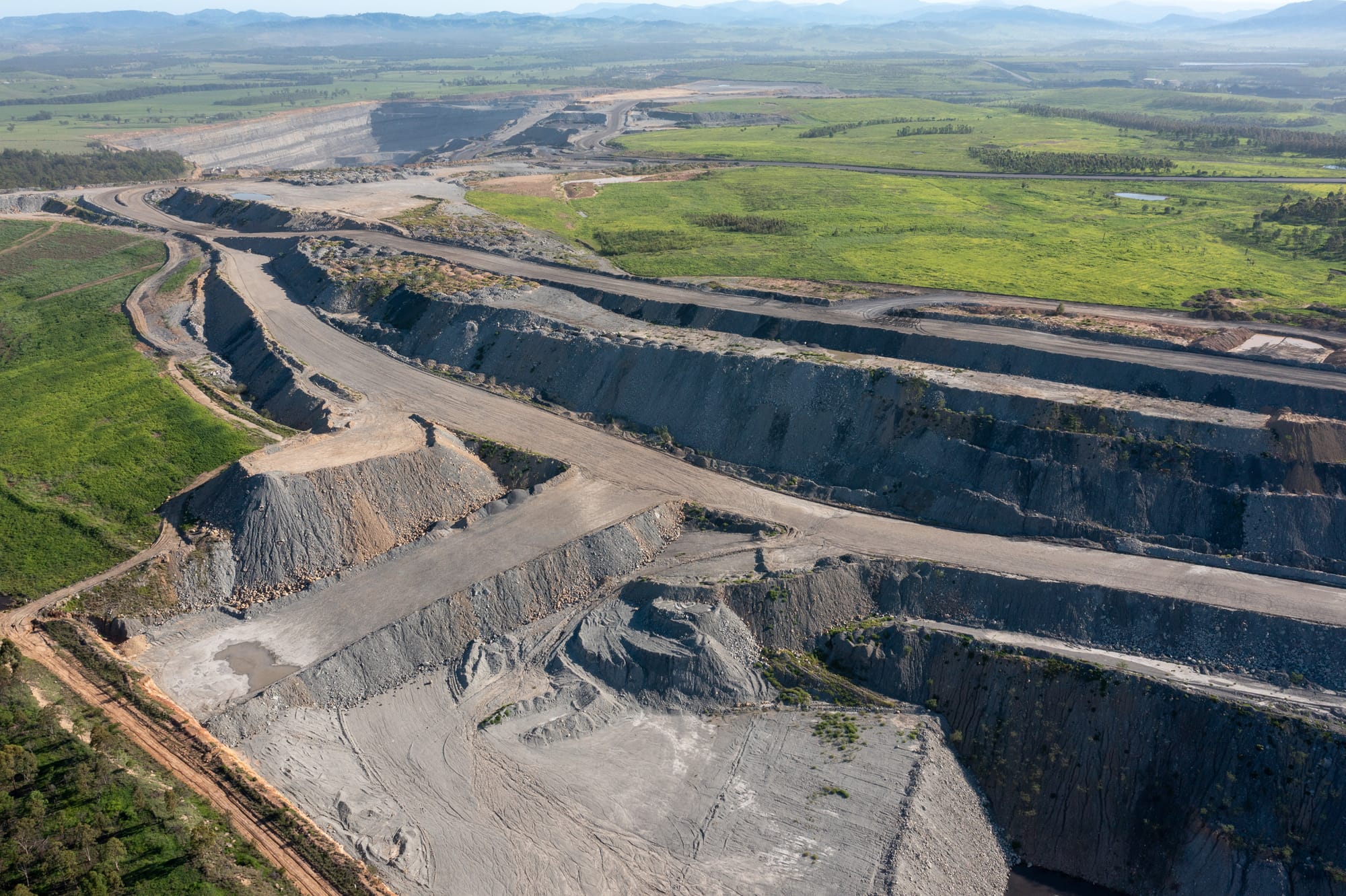
The case concerned MACH Energy’s proposal to extend the life of its open-cut Mount Pleasant coal mine to December 2048, as well as a proposal to substantially increase production over the extended life of the mine.
This project has a long history.
In September 2022, the Commission approved the project expansion. This was unsuccessfully challenged by the Denman Aberdeen Muswellbrook Scone Healthy Environment Group (DAMSHEG), a community environmental organisation, in the NSW Land and Environment Court.
DAMSHEG then, however, appealed the case to the NSW Court of Appeal. In a significant turn of events, DAMSHEG were successful in the Court of Appeal and that court overturned the approval.
However, MACH Energy appealed the decision to the High Court which led to the decision today.
The High Court decision
In a narrow decision, three of the five High Court judges found that the Commission had failed to discharge its statutory obligations in assessing the proposed coal mine. They therefore refused MACH Energy’s appeal.
More specifically, the three judges held that the Commission had failed to consider imposing conditions directed at minimising, to the greatest extent practicable, the GHG emissions associated with the project, including its scope 3 emissions. Scope 3 emissions accounted for approximately 98 per cent of the project’s total GHG emissions.
Scope 3 emissions are indirect GHG emissions occurring downstream in a company or project's value chain. These are usually much larger than the scope 1 and 2 emissions associated with the mine site.
This error means that the case will now have to be returned to the Commission to be re-assessed in accordance with the law.
The Court left the bigger climate causation question open
This case has attracted considerable attention because of a broader question: whether GHG emissions from an individual fossil fuel project can be legally connected to climate impacts in a particular locality.
The NSW Court of Appeal had approached the case through this question, finding that the Commission had failed to consider the likely environmental impacts of climate change in the Hunter Valley.
However, four judges on the High Court rejected that aspect of the Court of Appeal's reasoning. They found that it was not for the court to decide whether the project’s contribution to climate change would be disproportionately felt by the Hunter Valley.
Significantly, two judges explicitly said that climate impacts were not relevant in this case. As they put it, this case "does not raise for consideration any issue concerning climate change outside of the meaning and application of the EPA Act. Nor does it concern any aspect of the merits of the development, which are extraneous to the questions in the appeal".
The case’s implications
The fact that scope 3 emissions must be considered when imposing conditions on a fossil fuel project is highly significant. This confirms jurisprudence, including the ruling of the International Court of Justice, that scope 3 emissions are a crucially important consideration in fossil fuel approvals.
This will mean that in future cases in NSW, and potentially beyond, decision-makers will need to consider imposing conditions directed at minimising all GHG emissions, not just scope 1 and 2.
However, the judgment does not mean that fossil fuel projects can no longer be approved.
Nor does it establish that scope 3 emissions must always lead to refusal of a project.
Instead, where the law requires GHG emissions to be minimised, downstream emissions cannot simply be put to one side because they occur after the product leaves the project or because they may be emitted outside Australia.
This is progress, but leaves the door wide open for future cases to consider the causal contribution of fossil fuel projects to harm in particular circumstances.


