

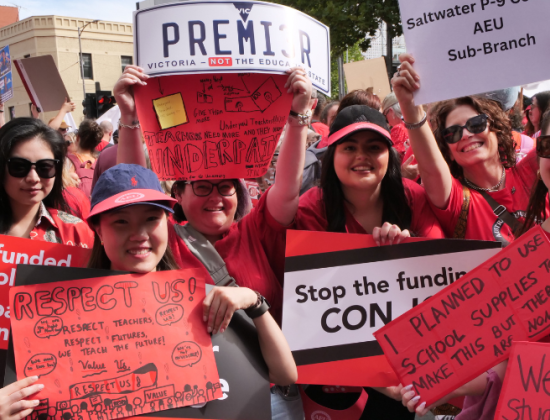
For years, Victorian teachers have been sounding the alarm on an education system running on the smell of an oily rag. Chronic staff shortages, growing administrative burdens, and salaries that have fallen behind their counterparts in every other Australian state and territory have pushed teachers to the brink.
In March, a strike that saw over 35,000 teachers and support staff flood the streets of Melbourne to campaign for pay and conditions that better reflect their status as seasoned professionals, propelled negotiations.
The Victorian branch of the Australian Education Union (AEU) negotiated an in-principle agreement with the Allan Labor Government on May 15. Ahead of the vote, AEU Branch President Justin Mullaly described the proposed deal as providing “really significant improvements in the pay and conditions of public school and kindergarten staff”; while, Education Minister Ben Carroll said that it “reflects the important work our educators do every day teaching and shaping our youngest Victorians.” Despite the support for the in-principle agreement, in an historic vote, 57.7 per cent of the voting AEU members disagreed and voted against the deal, making it clear that the proposed improvements to pay and conditions do not go far enough.
Criticisms of the agreement include the unchanged number of face-to-face teaching hours, a refusal to limit mandated meeting times, and a failure to prevent class sizes exceeding 26 students in primary and 25 in secondary schools.
Voting members also criticised the abandonment of the call for a 35 per cent pay increase over three years. They claim that wages have fallen significantly below inflation and that the offer of a 28 per cent increase over four years would not return them to a reasonable level in relation to inflation. Further, the proposed agreement prevents negotiations should inflation spike again. Given that the final increment of the pay increase does not come into effect until 2029/2030, there is a real risk that further inflationary pressures would disadvantage teachers even more.
Our research at Monash University’s Education Workforce for the Future Impact Lab revealed Victorian teachers are doing an average of 12.4 hours of unpaid work each week in the most under-funded education system in the country; and, are working under challenging conditions.
Pay and conditions for Victoria’s teachers are central to the current dispute, but at the heart of the demands are deeper concerns. The teaching profession is struggling and the improvements that teachers are currently asking for are about improving the status of the profession and ensuring that Victoria’s public schools are adequately funded, safe and effective learning communities for Victoria’s students.
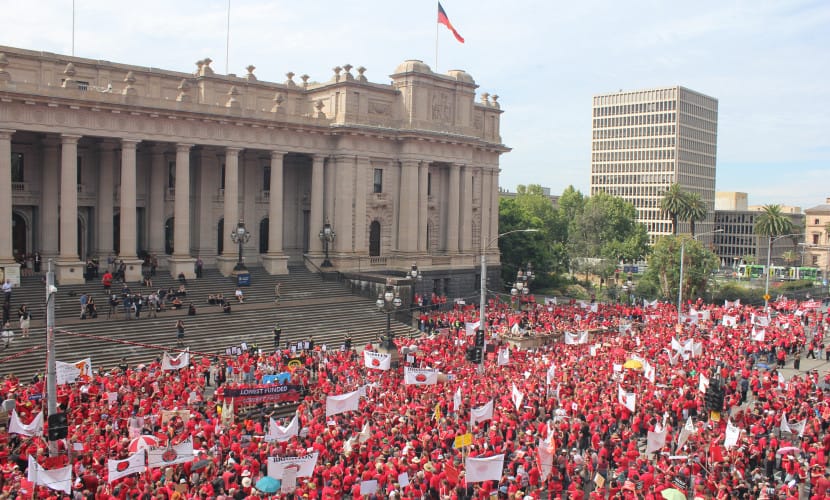
It is clear that the current conditions are not only having implications for teachers. It was reported recently that 150 students per day are being suspended from Victorian schools. These levels indicate serious issues with student engagement. Supporting students to connect with school and succeed in their education requires teachers who feel that their work is worthwhile and that they are appreciated.
With further strike actions planned over the coming months, parents were recently exposed to the implications of industrial action as they received their child’s school report. This important school-home communication included the status of their child’s progression but without the usual personalised comments, which were not provided due to the industrial action. While parents may have found this frustrating, it is important that they understand the reasons that teachers are taking these actions. It is not just about their pay, but it is about improving the quality of the education their children receive.
Victorian teachers have made it clear that they will no longer accept being the most overworked and underfunded in the country. Unless a significantly improved offer is made in the meantime, such measures will continue and another strike is likely in Term 3.
We can no longer rely on the goodwill and free labour of a workforce pushed to its limits - 2026 has brought Victoria to a crossroads. Teachers have stood up and spoken; it is now up to the government to decide if they are really listening.
Disclosure: research published in the Education Workforce for the Future impact lab is funded in partnership with the Australian Education Union (Victoria Branch).


