
The regular cycle of policy debate about universities’ economic contributions and their role in the migration squeeze can make it easy to lose sight of the fact that universities serve as the primary engine for building a globally connected society. They inject diverse perspectives into the international neighbourhood's social and intellectual fabric, as campuses act as hubs for global citizenship, intercultural diplomacy and shared human capital.
What is mobility and does it need to change?
International mobility has become a prominent feature of the shift in higher education towards broader internationalisation. Universities now offer study tours, exchanges, international internships, clinical placements, research experiences and service-learning programs that immerse students in unfamiliar cultural, academic and professional environments. These experiences have attracted large numbers of students, seeking intensive international learning experiences without the time and cost burden that comes with fully or partially completing a degree overseas. Against the backdrop of this rise in student enrollment, the expectations attached to mobility programs are also changing. Universities and policymakers increasingly expect international experiences to do more than broaden horizons. Instead, they should also prepare students for their future careers in which international collaboration and partnership can be a dominant theme. If graduate employability is now part of the promise of mobility, we need to ask a more fundamental question: are we designing mobility in ways that equips students to thrive?
Beyond a skills-based view of employability
Mobility research has often focused on intercultural understanding, global perspectives, language development and personal growth. These align with the conventional wisdom that by understanding each other better, and by being able to communicate, we can more effectively collaborate. Even when employability is examined explicitly, the emphasis has often remained on knowledge, skills and competencies.Certainly, these outcomes matter, but employability is about more than just a portfolio of skills, it’s increasingly being understood as the development of multiple forms of capital including human, social, cultural, identity, psychological and agentic capital (Tomlinson, 2017; Pham & Soltali, 2021). These capitals encompass what students know and can do, who they know, how they understand professional and cultural contexts, who they believe they can become, how to build confidence and resilience to transitions, and their capacity to act with purpose and stewardship.Viewed through this wider lens, international mobility could potentially be a rich employability-development environment. Students may strengthen communication and problem solving, but they can also build relationships, navigate unfamiliar cultural expectations, reconsider career aspirations, develop confidence and resilience, and learn to exercise agency in uncertain situations. The value of mobility may therefore lie not in producing a few additional ‘global skills’ or imparting ‘global experiences’, but in developing an interconnected portfolio of resources that span international borders and can be translated from an education setting into the workplace..
The gap between opportunity and employability development
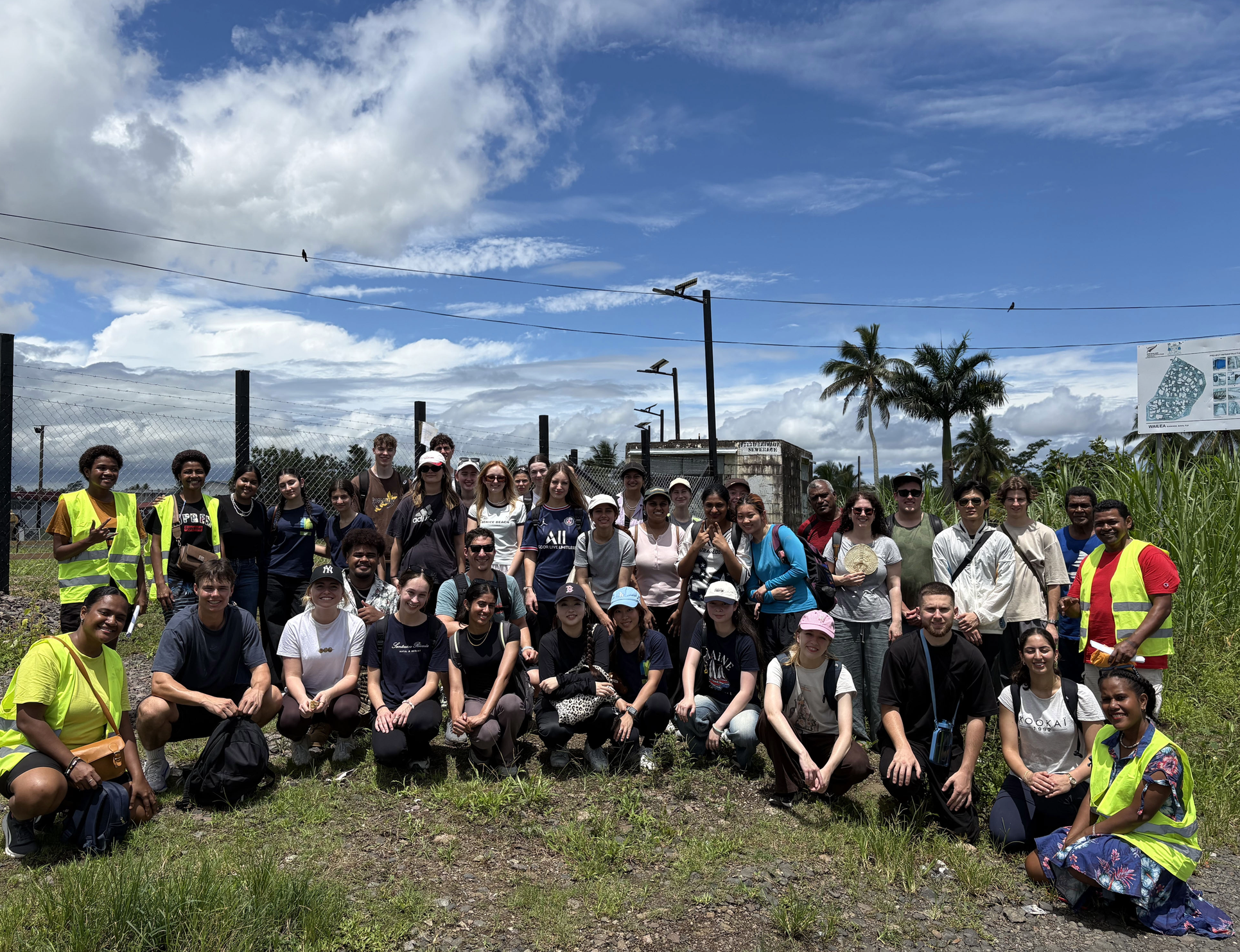
My experience with Monash University’s Global Immersion Guarantee (GIG) makes this gap particularly visible. GIG provides first year students with an intensive overseas experience centred on global challenges. Within a short period, students encounter unfamiliar places, people, expectations and ways of thinking. These conditions create rich opportunities to develop multiple employability capitals simultaneously and often push students in a way they haven’t been pushed before.
Students may, for example, build social capital by forming relationships with international peers, academics and professionals. They can deepen cultural capital by learning to navigate unfamiliar cultural norms and perspectives. Managing demanding schedules, uncertainty and unfamiliar environments can strengthen confidence, adaptability and resilience. Mobility can also shape identity capital. By placing a student in an unfamiliar environment, exposing them to a range of different societal norms, paid and volunteer professions and general ways of living, it can encourage them to introspectively review their own values and passions. The end goal then is to support students in having tangible, meaningful impact wherever they choose to focus their career. Additionally, for some students, an international experience may go so far as to reveal the possibility of working internationally or pursuing a global career.
But opportunity does not automatically become employability capital. Students experiencing the same program may engage with these opportunities very differently. A new contact may remain a casual acquaintance or develop into a meaningful professional relationship. A demanding experience may simply be stressful or harm a student’s confidence and therefore, capacity to develop resilience and adaptability.
Developing these capitals doesn’t guarantee that students can use them later either. A student may return more adaptable, culturally aware or professionally confident, but an employer cannot necessarily see, or is not made aware, of these qualities. Similarly, students whose mobility experience has reshaped their career identity may not know how to connect that change to subsequent educational and career decisions or have built the confidence to make such significant decisions. Students need to recognise what they have developed, understand its relevance and learn how to articulate and mobilise it in recruitment, workplace and career contexts.
This is where program design becomes critical. If students are not explicitly helped to recognise the employability opportunities embedded in mobility, they may not purposefully invest in developing them. And if they are not supported to reflect on and mobilise what they have developed afterwards, valuable resources may remain largely unrealised or undervalued.
Mobility programs should therefore avoid expecting employability to emerge naturally from international experience and instead intentionally support its development before, during and after mobility. By utilising a comprehensive, end-to-end approach, it will help students recognise opportunities, engage purposefully with them, reflect on how they are changing, and ultimately translate those changes into resources they can use in their future careers.
Where should mobility go from here?
For our universities to better prepare students for employability, two critical areas should be reviewed. Firstly, employability capital frameworks could be more explicitly integrated into the design and evaluation of mobility programs. Where employability is an intended outcome, program design could identify which employability capitals different activities are likely to develop and how. Evaluation could then move beyond the traditional student satisfaction and generic skills evaluation typically employed during program reviews, to examine which capitals develop, through what experiences, for whom and under what conditions. This would provide a stronger basis for understanding what aspects of mobility contribute most meaningfully to employability.
Secondly, students could be more explicitly supported to recognise and purposefully develop these capitals. Pre-departure preparation could help students identify opportunities and set developmental goals, providing an invaluable starting point for reflection. During mobility, structured reflection could help them make sense of relationships, challenges and changes in how they see themselves. Post-mobility support could help students recognise what they have developed, how their mobility program has contributed to this, and translate these resources into career narratives, sustained networks and future actions.
The key shift is to see international mobility not simply as an experience from which employability may spontaneously emerge, but as a deliberate educational process through which students can purposefully develop, recognise and mobilise employability capitals. This does not mean turning mobility into employment training. Rather, it means making better use of the rich learning already embedded in international experiences.
Moving beyond skills in this way could help Universities ask a powerful question: are mobility programs only for developing employability by association, or can they serve as a vital link between pedagogy and employability?


