

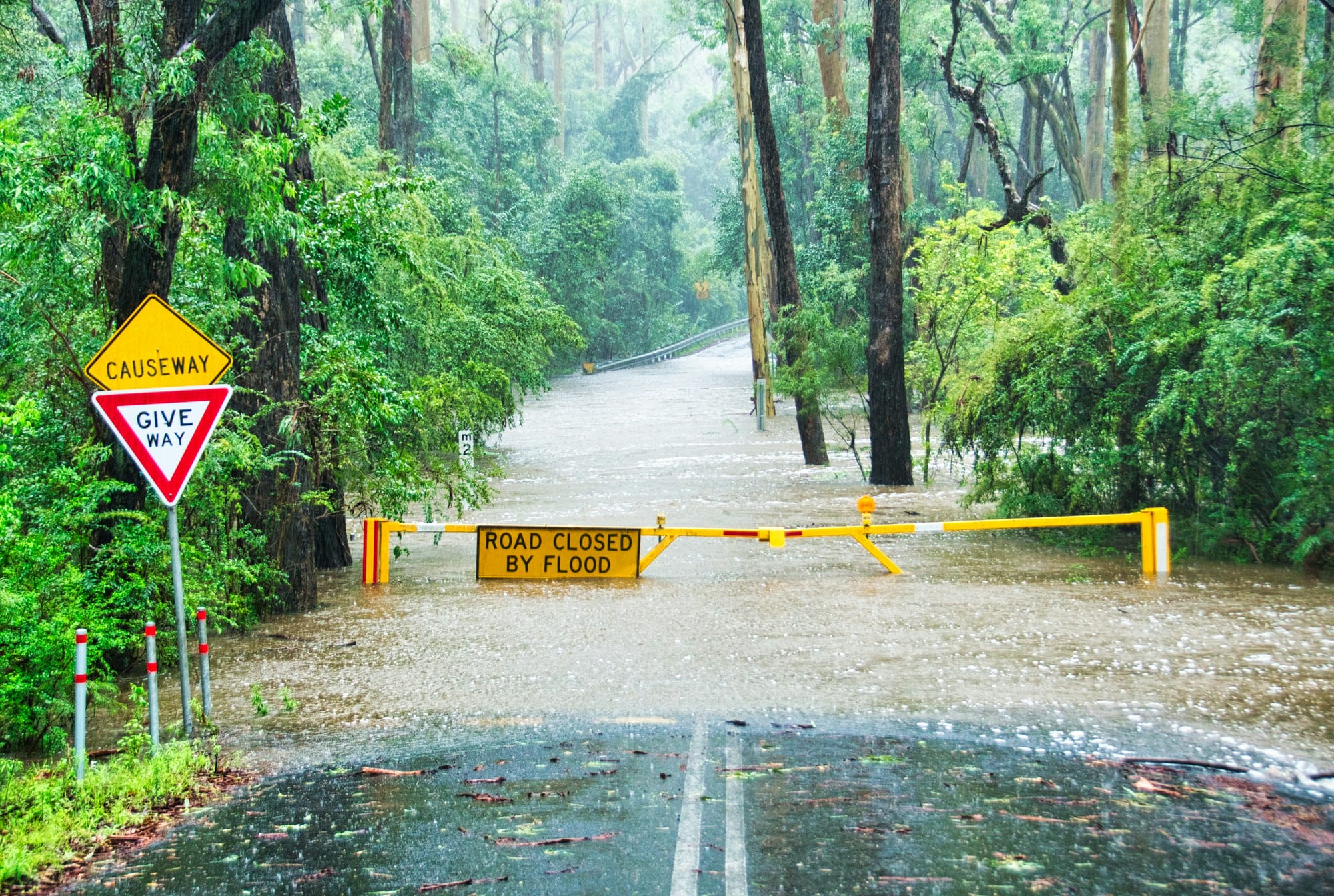
The devastating floods that struck Nepal in August 2026 offer another sobering reminder of communities' growing vulnerability to natural hazards in a changing climate. Scientists will continue to investigate the precise causes and contributing factors, but the disaster draws attention to a larger question: how prepared are we for the natural hazards that exist within the places where we live?
Climate change is altering the conditions within which many natural hazards occur. The challenge before us is therefore not simply to understand climate change as a global environmental phenomenon. We must increasingly understand it as a question of local risk, preparedness, leadership and shared responsibility.
Knowing our risks
Every community has a different risk profile. A family living near a river may need to understand flooding. A rural Australian community may face bushfire and drought. Coastal communities may confront storm surges, erosion and sea-level rise. Other regions may face cyclones, landslides, extreme heat, or severe storms.
Knowing these risks is the first step in preparedness.
The lesson from Nepal is particularly confronting because some communities had extraordinarily little time to respond. Yet there are also remarkable stories of preparedness and leadership. At one Nepalese school, the headteacher reportedly decided to evacuate approximately 1,600 students about ten minutes before floodwaters inundated the school. The school was subsequently swept away, but the rapid decision helped save its students.
This example raises an important distinction. We often judge leadership by what happens during or after a crisis. Perhaps we should pay much greater attention to what leaders, organisations and communities do before one.
From crisis leadership to adaptive and agile leadership
Our earlier research into school leadership during COVID-19 provides an important lens for understanding this challenge. We found that leaders facing profound uncertainty needed to move between crisis, adaptive and agile forms of leadership. Immediate crises may require rapid and decisive action. However, as situations evolve, leaders also need to interpret changing conditions, learn, collaborate, mobilise resources and adapt their responses.
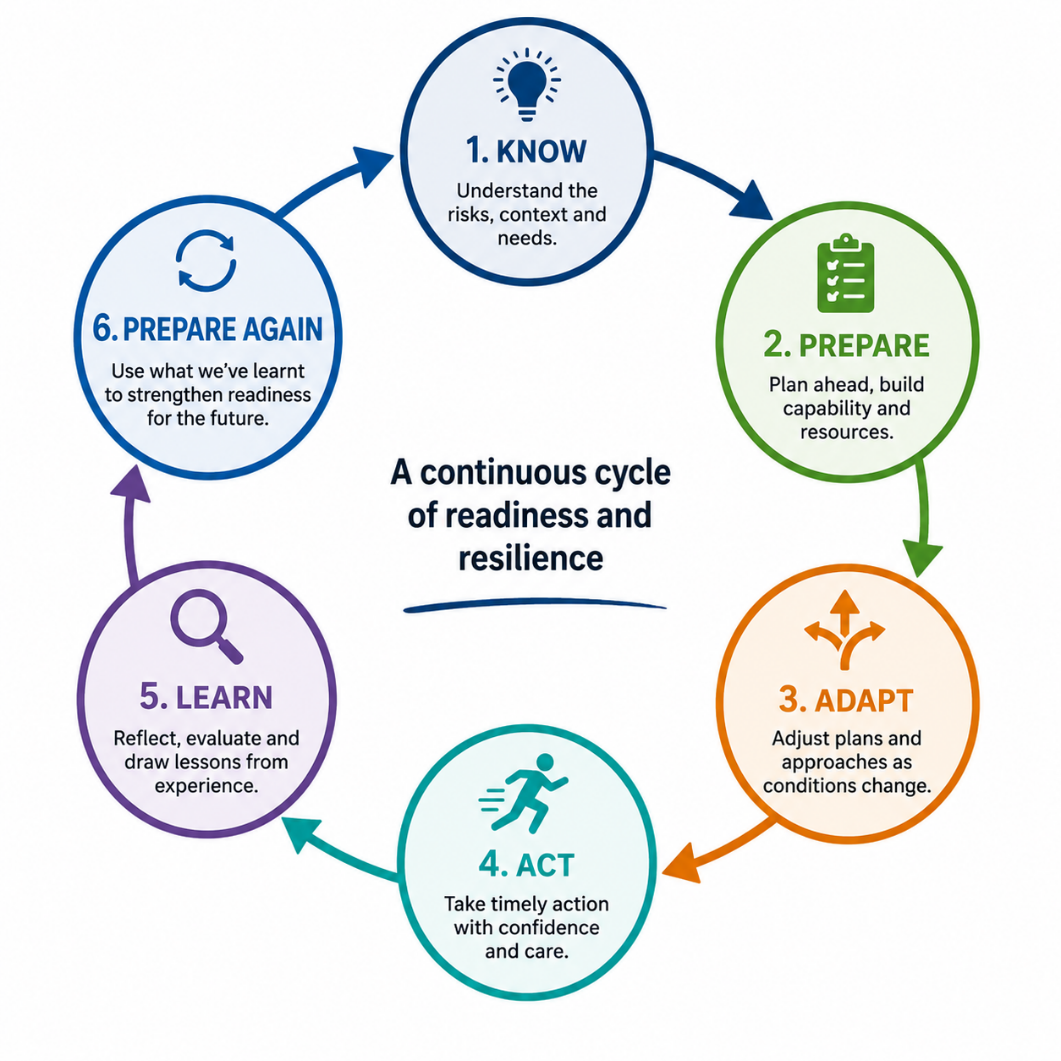
Agility takes this thinking further. It involves developing the organisational and human capacity to sense changes in the environment and respond to them effectively. This suggests that preparedness should not be conceptualised as a static emergency plan stored somewhere until disaster occurs. It needs to become a continuing cycle as presented in Figure 1. Each stage works in concert with all the others in this cycle. Staying agile and informed is the proactive approach required to be responsible and prepared.
Figure 1: A continuous cycle of readiness and resilience.
COVID-19 demonstrated the consequences of preparedness and underpreparedness at almost every level of society. Schools, health systems, governments, workplaces, families and individuals discovered that capabilities developed before a crisis could profoundly influence what happened during it.
Climate-related and natural-hazard preparedness requires the same mindset.
Preparedness is also an ethical responsibility
Disaster preparedness is not simply technical. It is ethical.
Ethical leadership requires us to consider context, relationships, competing values, justice, care, responsibility and the consequences of our decisions. During a disaster, these questions become immediate. Who receives assistance first? Who has access to emergency information? Who has transport to evacuate? Who checks on the older person living alone, a child separated from their family, a person with disability, or a newly arrived family that may not understand emergency communications?
These questions should not be asked only when floodwaters are rising or fires are approaching.
Ethical preparedness requires communities to recognise vulnerability beforehand. It requires moral courage, shared responsibility and collective sense-making. Ethical leadership must move beyond the actions of individual leaders and become embedded within the culture and practices of organisations and communities.
Schools must become pre-crisis-ready
Schools occupy a particularly important position within this conversation.
Too often, schools become highly active after crises, providing counselling, supporting displaced families, restoring learning and helping communities recover. These functions are essential, but schools should increasingly become pre-crisis-ready rather than simply post-crisis-active.
Schools can become hubs of community resilience. Students can learn about locally relevant natural hazards. Families can participate in preparedness education. Emergency scenarios can be practised. Communication systems can be tested. Schools can build relationships with local emergency services. Schools can identify children and families who may require additional assistance during emergencies.
The Nepal floods demonstrate the urgency of this work. At least 69 schools were reported damaged or destroyed, affecting the education of almost 19,000 children. Yet evacuating approximately 1,600 students from one school also demonstrates what knowledgeable, decisive leadership can achieve.
Perhaps that is the most important lesson.
We cannot prevent every natural disaster. We cannot predict precisely when every crisis will occur. However, we can become considerably better at understanding our risks, preparing for them, recognising others' vulnerabilities, and developing the individual and collective capacity to act.
Climate resilience therefore begins long before the waters rise, the fires approach, or the emergency warning arrives. It begins with knowledge. It grows through relationships. It is strengthened through adaptive, agile leadership, and guided by ethical responsibility.
References
ABC News. (2026, August 31). Nepali teacher saved hundreds of students from flood, minutes before it arrived. Australian Broadcasting Corporation.
Fernandes, V. (2026). Unravelling the complexity of ethical leadership and decision-making in educational contexts. Administrative Sciences, 16(6), 290. https://doi.org/10.3390/admsci16060290
Fernandes, V., Wong, W., & Noonan, M. (2023). Developing adaptability and agility in leadership amidst the COVID-19 crisis: Experiences of early-career school principals. International Journal of Educational Management, 37(2), 483–506. https://doi.org/10.1108/IJEM-02-2022-0076
Acknowledgement of AI use: The figure in this article was created with the assistance of ChatGPT. Grammarly was used to proofread and edit the article.


