

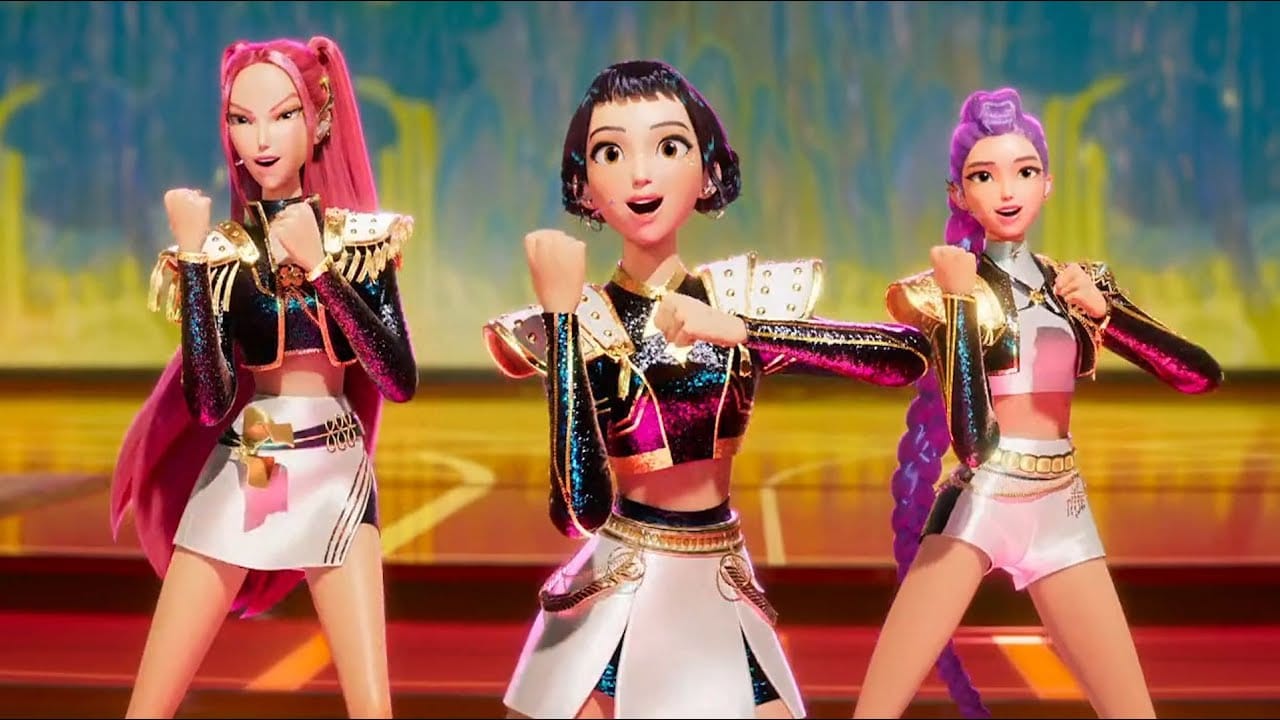
“I’m done hidin’
Now I’m shinin’
Like I’m born to be
We’re dreaming hard
We came so far
Now I believe
We’re goin’ up, up, up …”
– From KPop Demon Hunters theme song Golden
As a parent with an empty nest, animated movies aren’t my usual choice. But a casual browse on social media, seeing a bunch of Chinese pre-teen pupils singing in English, waving their hands in the air with laughter and enthusiastic moves, triggered me to look up the lyrics of Golden, the theme song from the animated movie KPop Demon Hunters.
The more I read, the more curious I became.
When I then discovered that the film had become Netflix’s most-watched movie, I was pushed to watch it that very same night. My husband whispered to me “Are you a kid?” as I pressed play.
After watching and listening to the theme song, I understood why it’s so popular around the world. Within the first two months of its June 2025 release, KPop Demon Hunters had been viewed more than 250 million times on Netflix, surpassing Squid Game to become the most-watched film in the platform’s history and appearing in the top 10 in more than 90 countries.
The soundtrack album reached No.2 on the Billboard 200, and Golden, performed by the fictional girl group Huntr/x, hit the top spot on the US Billboard Hot 100, Billboard Global 200 and Global Excluding United States Chart, topping charts in more than 30 countries and holding the global No.1 position for about 15 weeks.
We now see the demon hunters’ costumes at young children’s birthday parties and Halloween, dads dressing up alongside their daughters, coloured hair pieces turning up as props at karaoke sessions, and the Golden choreography being used in workout routines in gyms.
Added to this Demon Hunters tsunami was a full-length performance of Golden on The Tonight Show starring Jimmy Fallon, a US late-night program usually aimed at adult viewers.
Marketing, or more?
Why would an animated movie draw so much attention and become a record-breaking global phenomenon within a few months? Is it simply another clever marketing success?
I would suggest that the success of the movie and the songs goes beyond it being a well-made animated film with beautiful melodies.
It’s the uplifting, emotionally honest lyrics that move people, especially youth, who are experiencing tremendous social pressure to excel, to “be someone” to meet the expectations of adults, and for some, to blend in with the majority.
Golden walks a fine line between admitting “I feel broken, anxious and not enough” and insisting “I am still golden”. This emotional journey is very familiar to many pre-teens and teenagers.
In Australia, recent national youth mental health surveys in 2018, 2020 and 2022, covering about 5700 young people aged 12 to 25, suggest that approximately half the population of young people can be classified as flourishing, meaning high wellbeing without mental illness.
Yet, rates of flourishing declined between 2018 and 2022, and flourishing generally decreased with age. Males were more likely to report flourishing than females, who experienced lower wellbeing and higher distress.
Across these surveys, a substantial minority, in the range of 30-40%, reported high psychological distress. In other words, a large number of Australian youth are not “doing fine” beneath the surface, even when they appear outwardly functional.
Prevalence of depressive symptoms
In Malaysia, a large national study estimates 26.9% of adolescents experience depressive symptoms, which translates to more than half a million young people. The prevalence is much higher among girls, at about 36%, compared with about 18% among boys.
Depression among Malaysian adolescents is also associated with higher sedentary behaviour and increased body mass index, pointing to complex links between emotional health, lifestyle and physical health.
These are not small margins. These troubled youngsters could be a significant slice of the students sitting in our classrooms and/or lecture halls.
Against this backdrop, the lyrics of Golden are uplifting because they name and normalise the anxiety young people, especially girls, face in their daily lives. Expectations about perfect body image, academic results, co-curricular performance and social popularity impose tremendous stress.
The songs in KPop Demon Hunters do not deny these pressures. Instead, they give young people language and imagery to face their “demons” and fight them, rather than silently absorbing the shame.
For mature adults, the songs in this animated movie also speak to the world we’re living in today with a surprisingly positive spirit.
In a time when daily news about geopolitics, climate and conflicts can feel relentlessly dark, Golden offers a small, shared ritual of hope. It invites us, whether in Australia, Malaysia or elsewhere, to cheer each other on and to hold the belief that we’re still going up, up and up, even when life feels heavy.


