

January 26 is one of the most contested dates on the Australian calendar. For some, it represents celebration and national pride. For many First Nations people, it marks invasion, dispossession and the beginning of generations of harm.
The conversation about January 26, revisited, in what seems not long after the sounds of New Year’s Eve fireworks have dissipated, is not about division. Considering the import of January 26 requires something far more important of us. It asks Australians to reckon honestly with our shared history and to decide what kind of nation we want to be.
This is not only an Indigenous issue. It is an Australian one.
The conversation is about recognising the truth that modern Australia was built on land taken without consent. It’s about acknowledging that laws and institutions in our country historically excluded First Nations peoples from citizenship, rights and opportunity. And it’s about understanding how these foundations continue to influence who benefits, who is heard and who is not.
But our shared history isn’t only one of harm and disharmony. It’s also about leadership, resistance and moral courage.
Uncle William Cooper and the day of mourning
This is why at this time of year – and all year – we remember and honour the legacy of Uncle William Cooper, for he is central to how we understand January 26, and central to the living legacy carried forward at the William Cooper Institute at Monash University.
Uncle William Cooper was a Yorta Yorta man, an activist and a visionary leader who believed deeply that Australia could be fairer and more just, but only if it was willing to confront its own contradictions.
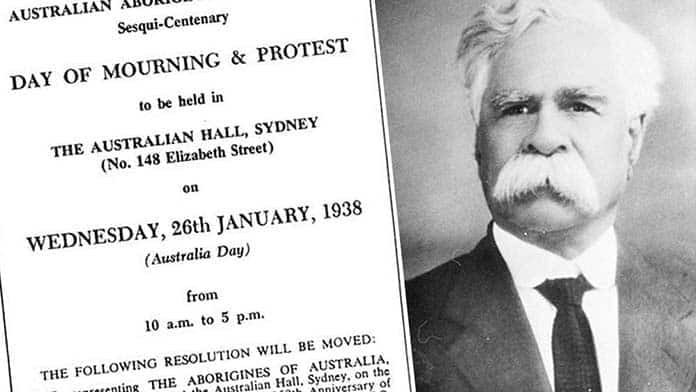
In the 1930s, he organised Aboriginal communities, petitioned governments and demanded political representation and citizenship rights decades before such ideas were widely accepted. His work laid the foundations for Indigenous political advocacy in this country.
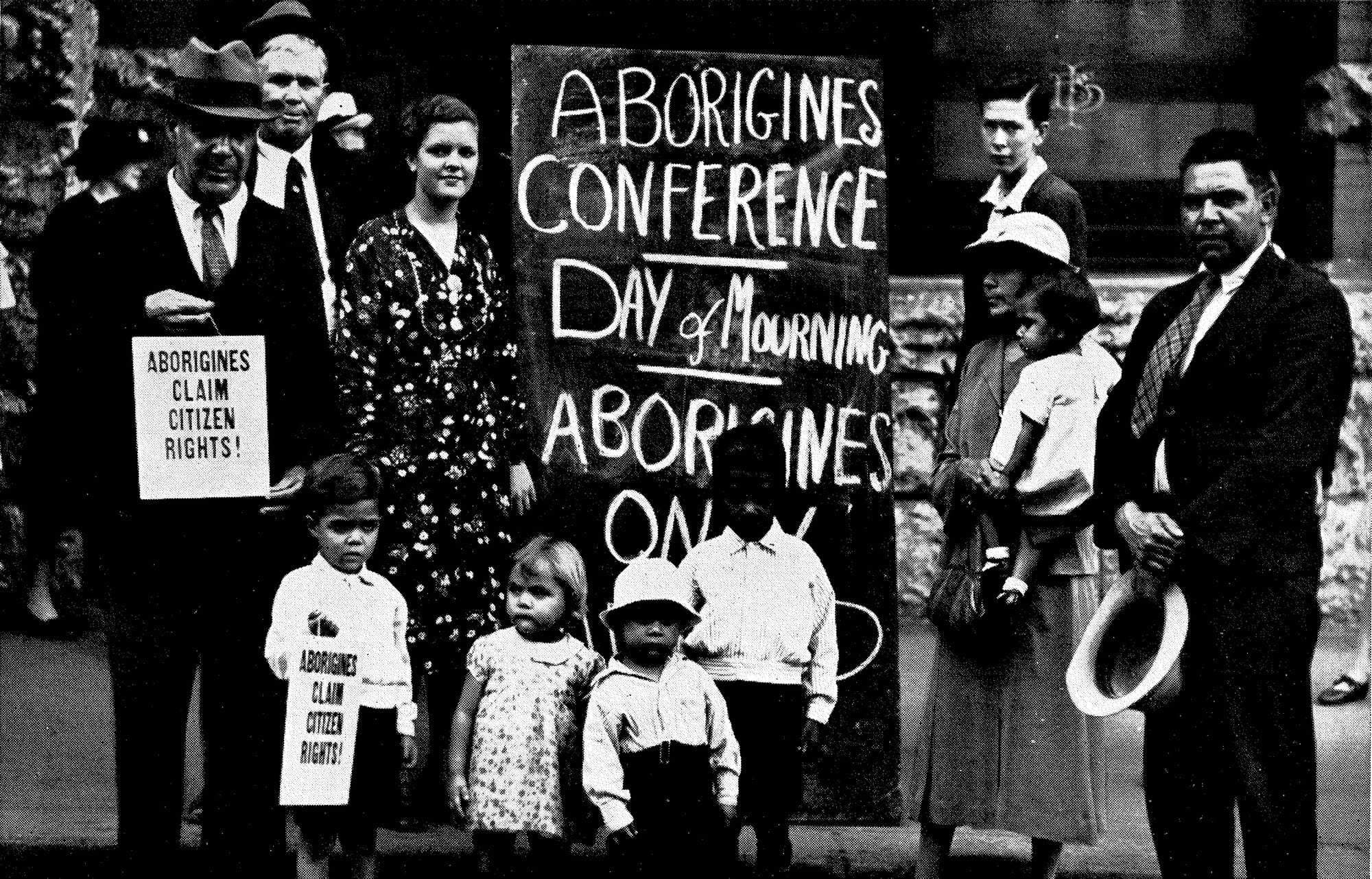
On 26 January, 1938, as Australia marked 150 years since colonisation, Uncle William Cooper helped organise the Day of Mourning. While the nation celebrated, Aboriginal leaders gathered to protest dispossession and demand equality.
This was not an act of disruption for its own sake; it was a deliberate act of truth-telling, of starting an honest dialogical conversation.
Uncle William Cooper’s leadership also extended far beyond Australia. In the same year, he led a delegation to the German consulate in Melbourne to protest the persecution of Jewish people under Nazi rule. It remains one of the only known private protests of its kind anywhere in the world at that time.
This matters, because it reminds us that Indigenous leadership has always been grounded in universal principles of justice, dignity and human rights, even when those rights were denied at home.
The William Cooper Institute at Monash University is not a memorial to the past; it’s a commitment to ensure his legacy lives on through future generations of Indigenous and non-Indigenous peoples who will have the courage and compassion to build a just society together.
Survival Day: Resilience, reflection, resistance and continuity
The conversation about January 26 is not new and it’s not simply about changing a date. It’s about acknowledging our shared history.
For many First Nations people, January 26 is known as Survival Day. Our view is one of resilience, resistance and the unbroken continuation of culture despite adversity.
If January 26 is to have meaning for all Australians, it must become more than a day of celebration alone. It should be a day of reflection, learning and shared responsibility. A day to ask difficult but necessary questions with courage and compassion.
This does not mean abandoning pride in our nation. It’s about embracing a shared pride grounded in honesty, courage and mutual respect.
Uncle William Cooper understood this nearly a century ago. He believed Australia could be better, but only if it was brave enough to face itself.
Through the William Cooper Institute and the Office of the Deputy Vice-Chancellor (Indigenous), that challenge remains alive today.
January 26 gives us the same choice he confronted in 1938. We can look away, or we can have courageous conversations as Australians, Indigenous and non-Indigenous alike, towards a brighter future together.


