
On 17 February, we’ll witness one of the biggest celebrations on Earth – the Chinese New Year (officially known as “Spring Festival” in China, but also known as Lunar New Year*), celebrated by about 1.4 billion people in China and about 60 million ethnic Chinese around the world.
It’s a moment when the most familiar symbols of tradition return – family reunion, red lanterns, lion dance, taboos and blessings.
Yet, it’s also the moment when the newest technologies quietly walk into the middle of the oldest rituals. This year, you don’t even need to look far to mainland China. In Malaysia, some major companies are already adding robots into their festive posters, as if to say, “gong xi fa cai (wishing you getting rich)”, now with a tech update.
@sunwaypyramid 🦁✨ What’s happening at Sunway Pyramid?! ✨🦁 OMG — a super cute Lion Dance and the God of Prosperity have been spotted roaming around the mall! 🧧🎉 Did you manage to snap a photo with them? 📸 Want to see them again? Drop a comment below and Lion will think about it 😉 #SunwayPyramid ♬ original sound - Sunway Pyramid
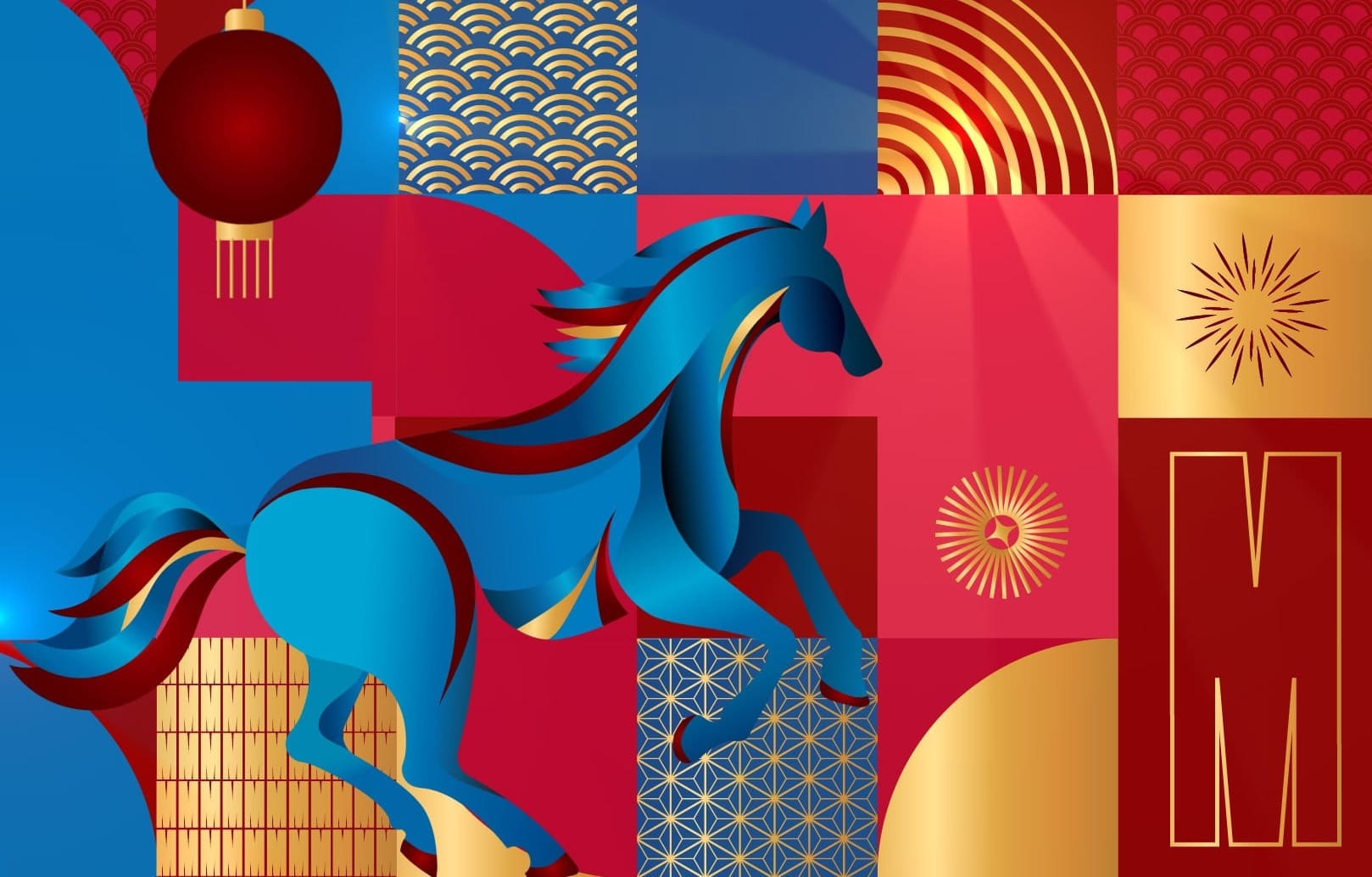
According to the Chinese zodiac, 2026 will be the year of the Fire Horse. It’s predicted to be a year of breakthroughs, fast changes and transformation.
The Fire Horse image symbolises forward-emitting energy, the kind of energy that doesn’t tiptoe. It disrupts. It accelerates. It can cause structures to fracture in order to make way for what needs to come into form.
That sounds dramatic, but it carries a practical meaning for individuals and businesses. It’s a time for bold action, innovation and actively creating your dreams, as fire energy combined with the horse clears paths for big achievements.
Still, the core message I want to share is not only a zodiac prediction or a motivational slogan. It’s about the integration of tradition and innovation.
Recent celebrations show how Chinese societies hold tradition and innovation together, raising the question of how Chinese make this coexistence feel natural rather than contradictory.
In a way, this integration became more official last Chinese New Year, when celebrations in China increasingly blended tradition and innovation through heavy use of drones and AI in public displays, performances and commercial storytelling.
Around the same time, China’s consumer-facing AI breakthrough, DeepSeek, rose quickly and intensified a wider wave of AI adoption and competition.
Then came the festival imagery that still makes people smile and scratch their heads at the same time. Robots dancing in traditional Chinese costumes. Robots joining lion dance performances. Drone shows replacing fireworks. In the ‘lantern’ light, technology is not outside the festival providing support; it’s inside the festival as part of the celebration.
Happy Chinese New Year!🏮🧨
— ShanghaiPanda ( Account deactivation) (@thinking_panda) January 27, 2025
Enjoy the Cyber Lion Dance! 🤖🧧 pic.twitter.com/7Bw0FJIsGL
How could one imagine AI and advanced technologies being used in perhaps the most ancient celebration in one of the oldest-surviving civilisations in the world?
The tradition-versus-innovation poses a paradox in understanding Chinese society. From the outside, it can look like contradictory and competing phenomena, ancient customs and sometimes superstitious practices coexisting with robots that can replace humans in performance – even performance of ancient tricks including kung fu.
There are different approaches to explaining this seemingly contradictory phenomenon, but I would like to focus on a thinking style that’s popular among the Chinese-dialectic thinking.
Dialectic thinking refers to a tendency to accept change as natural, to tolerate contradiction, and to think holistically, seeing how opposite forces can coexist and shape each other.
It allows people to believe that amid negativity, something positive can still be created, not because danger is ignored, but because change is expected and possibility is actively searched for.
This is not naive optimism. It’s a habit of mind that treats tension as normal, and treats the uncertain future as something you can still move toward.
This dialectic thinking is embedded in Chinese semantics. A well-known example is the word “crisis”, weiji.
Crisis, in Chinese language, comprises two characters – danger and opportunity. Linguists may debate the most precise interpretation, but the lesson people carry is clear: When danger arrives, you also ask what can emerge.
In strategic management, this mindset matters. Entrepreneurs and corporate entrepreneurs are expected to believe in the bright side coming out from the dark side, and to keep acting even when the situation is messy.
Dialectic thinking is not just for the Chinese
Western societies also believe in good coming out of bad. But dialectic thinking is arguably a widely-spread norm in Chinese societies, which helps explain what we see during Chinese New Year, holding on to tradition while welcoming innovation, without feeling forced to choose one and reject the other.
That is why it can feel perfectly normal to light incense, follow taboos, exchange blessings and then turn around and watch a robot perform a perfect routine that no human can repeat 10 times in a row without complaining. The tradition stays, the form evolves, and the celebration remains recognisably Chinese.
If we return to the Fire Horse metaphor, it fits the current moment. Fire Horse refers to disruptive energy. We would expect more disruptions from technological development in China, and also disruptive responses from the United States as both countries compete for hegemony.
The world’s economic and political structures may shift again. Yet, for entrepreneurs and organisations, disruptions can also represent opportunity amid uncertainty, provided we stay alert, adaptive and ready to move.
So seeing the old integrated with the new should not be surprising. Dialectic thinking helps people stay grounded in ancient meaning while embracing new tools. Fire Horse energy reminds us to prepare for disruptions, to act boldly, to innovate and to actively create what needs to come into form.
Gong xi fa cai! Happy Chinese New Year! May the Fire Horse energy clear paths for big achievements, and may you find calm, courage and a bright side that you build with your own hands.
* Chinese New Year falls on the first day of the new lunar year. In some societies, the celebration is called Lunar New Year and is observed in non-Chinese societies such as Vietnam (Tết) and Korea (Seollal), with variations in practices and beliefs.


