

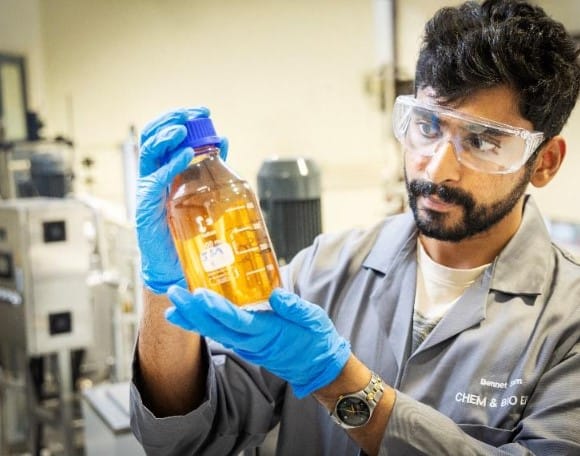
Australia is not short of rare earth resources. It is short of separation and refining capacity. Until that gap is addressed, we risk mistaking geological abundance for industrial capability.
Australia’s critical minerals strategy is aimed at reducing dependence on concentrated global supply chains and building domestic processing capability. At the same time, a federal inquiry is examining how these projects translate into social licence and broader economic development outcomes.
Yet the success of this ambition ultimately hinges on a harder question: whether Australia can move beyond extraction and develop the separation and refining capability that determines where real value is captured.
In the rush to secure resources, there is a growing risk of mistaking geological abundance for industrial capability. The focus has been on how much material can be dug up, when the decisive metric is how much can be refined into high-purity, market-ready products that global manufacturers actually require.
Australia holds around 4-6 per cent of global rare earth reserves and contributes roughly 5-8 per cent of production. But mining is only the beginning of the value chain. The real economic return sits in processing into separated oxides and metals, a stage still overwhelmingly dominated by China, which controls most global separation and refining capacity. The United States and Malaysia are developing capability, but Australia remains largely absent at commercial scale. This gap matters because upstream resource strength does not translate into pricing power without midstream infrastructure.
China’s position was not accidental. It reflects decades of coordinated industrial policy, including subsidies, export controls, state-backed finance, and deliberate integration across mining, separation, refining, and downstream manufacturing. The result is ecosystem-level economics where value is captured end-to-end, from ore to permanent magnets used in electric vehicles, wind turbines, and advanced electronics. By contrast, Australia’s model remains fragmented and largely market-led, with strong investment in mining but comparatively weak and slower support for processing and downstream manufacturing.
That fragmentation creates a structural blind spot. Many Australian projects report strong total rare earth oxide recovery rates, yet still struggle to achieve cost-competitive separation. Once material leaves the mine site as a mixed concentrate, it enters a global market where pricing is effectively shaped by a small number of dominant processors. This concentration allows external actors to influence margins, leaving Australian producers exposed to volatility and dependent on exporting semi-processed material rather than capturing downstream value.
The deeper issue is chemical, not just commercial. Rare earth elements are tightly coupled in nature, sharing nearly identical ionic properties that make separation inherently difficult. Extracting them is comparatively straightforward. Isolating them into individual high-purity products is the real engineering challenge. It requires repeated cycles of solvent extraction, scrubbing, stripping, and recycling, often hundreds or even thousands of stages. A mixed concentrate is not a product, but a partially solved problem that still carries most of the technical and economic burden.
The real question is not how much material is recovered, but how many steps, how much energy, and what cost is required to convert that material into individual rare earth products that meet industrial specifications.
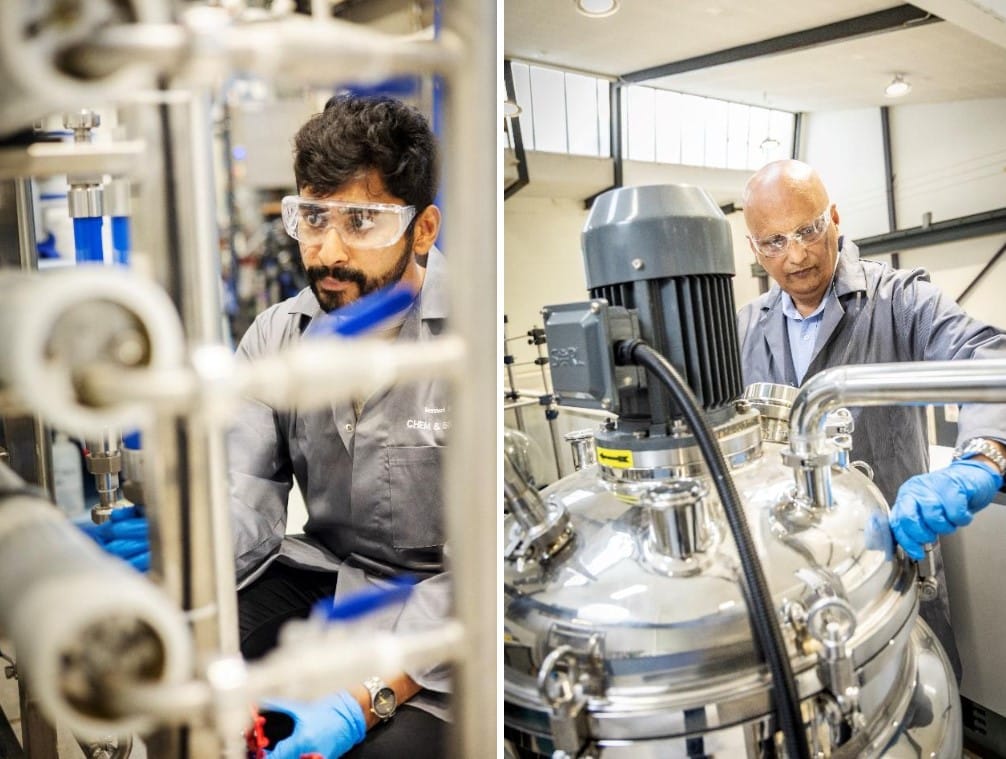
Our recently published research reflects the same broader shift from extraction to separation. Work has explored the use of organic acid leaching to recover rare earth elements from secondary waste streams such as coal fly ash, with pilot-scale trials achieving over 99 per cent total rare earth oxide recovery under controlled conditions. However, once the material is brought into solution, the difficulty quickly changes in nature. Separation becomes the dominant constraint. Using electro-dialytic membrane systems to improve selectivity, current results indicate approximately 60 per cent recovery for light rare earths and around 40 per cent for heavy rare earths, with ongoing work focused on improving purity and efficiency. The emerging takeaway is consistent with industry-wide experience: high extraction rates are increasingly achievable, but economically viable separation at scale remains the central bottleneck.
This distinction should reshape how Australia evaluates critical minerals projects. Meeting that challenge will require more than individual research breakthroughs or isolated industrial projects. It will require coordinated, long-term collaboration across universities, industry, government and international partners to accelerate the translation of new separation technologies from laboratory development to commercial deployment. Initiatives such as the Monash Critical Minerals Initiative, which links expertise across science, engineering, economics and policy and works with industry, manufacturers, mining companies and government agencies, illustrate the kind of integrated model needed to strengthen Australia’s critical minerals value chain. Building sovereign capability will depend on aligning research, investment and industrial strategy rather than treating them as separate challenges.
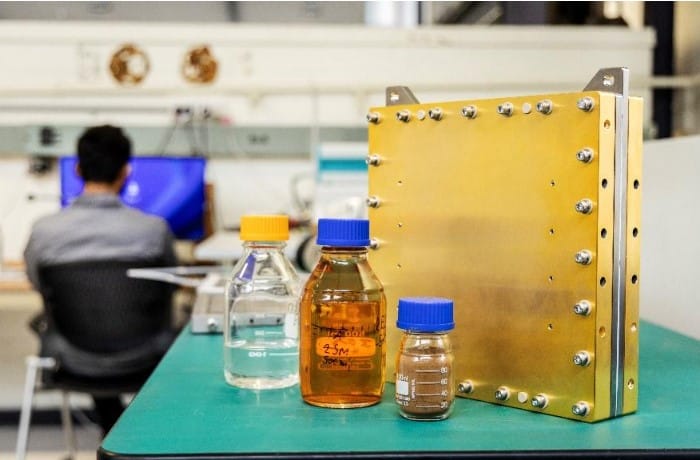
The key question is not how much ore can be produced, but how efficiently it can be transformed into separated, high-value materials. Without sustained investment in separation infrastructure, Australia risks remaining a supplier of raw inputs in a system where value is captured elsewhere. Real sovereignty in critical minerals will not come from what is taken out of the ground, but from the chemistry, engineering, and industrial capability that follow it.


