

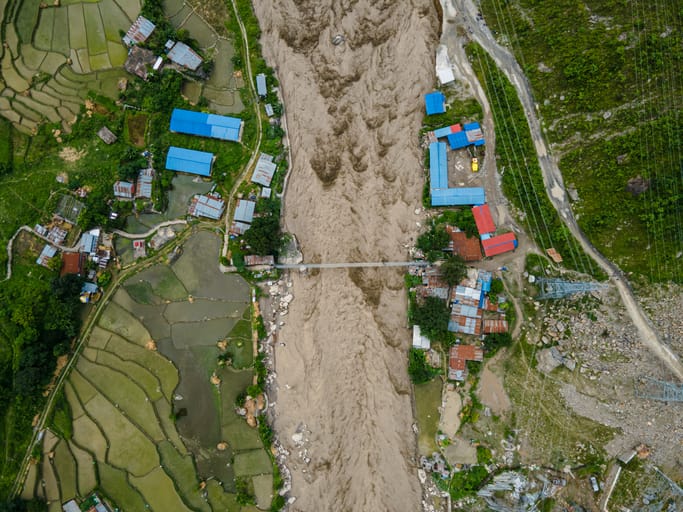
On the morning of 26 August 2026, the first indication of the scope of the crisis unfolding in Nepal came from CCTV footage showing the Rasuwagadhi border point being inundated with a tsunami-like wall of water and mud. This raw video was quickly followed by images of the widespread devastation, and burgeoning rescue efforts, images captured by Nepal-based visual journalists, including Associated Press (AP) photographer, Niranjan Shrestha and Reuters’ Navesh Chitrakar. Their documentation served as a reminder of the power of the image to capture the human condition in times of crisis.
Within hours of the first verified images of the unfolding disaster in Nepal emerging, an influx of AI generated imagery (stills and video) appeared on social media feeds. Media outlets such as Australian Associated Press (AAP), ABC, France 24 and BBC published articles and videos on these fake images providing audiences with tips on how to identify fabrications. Some fake posts featured footage from past disasters, such as a video posted on X which was from a 2025 mudslide in India. Another Facebook post, which AAP ran through a Google reverse image search, was from a flood in Japan in 2021. This post was viewed more than 360,000 times. It is common to use old recycled footage to spread misinformation, with past imagery from Chile, India and Alaska used to illustrate the Nepal crisis. AI images of missing persons were also posted. France 24 reported on multiple fake videos including one that was viewed seven million times on X.
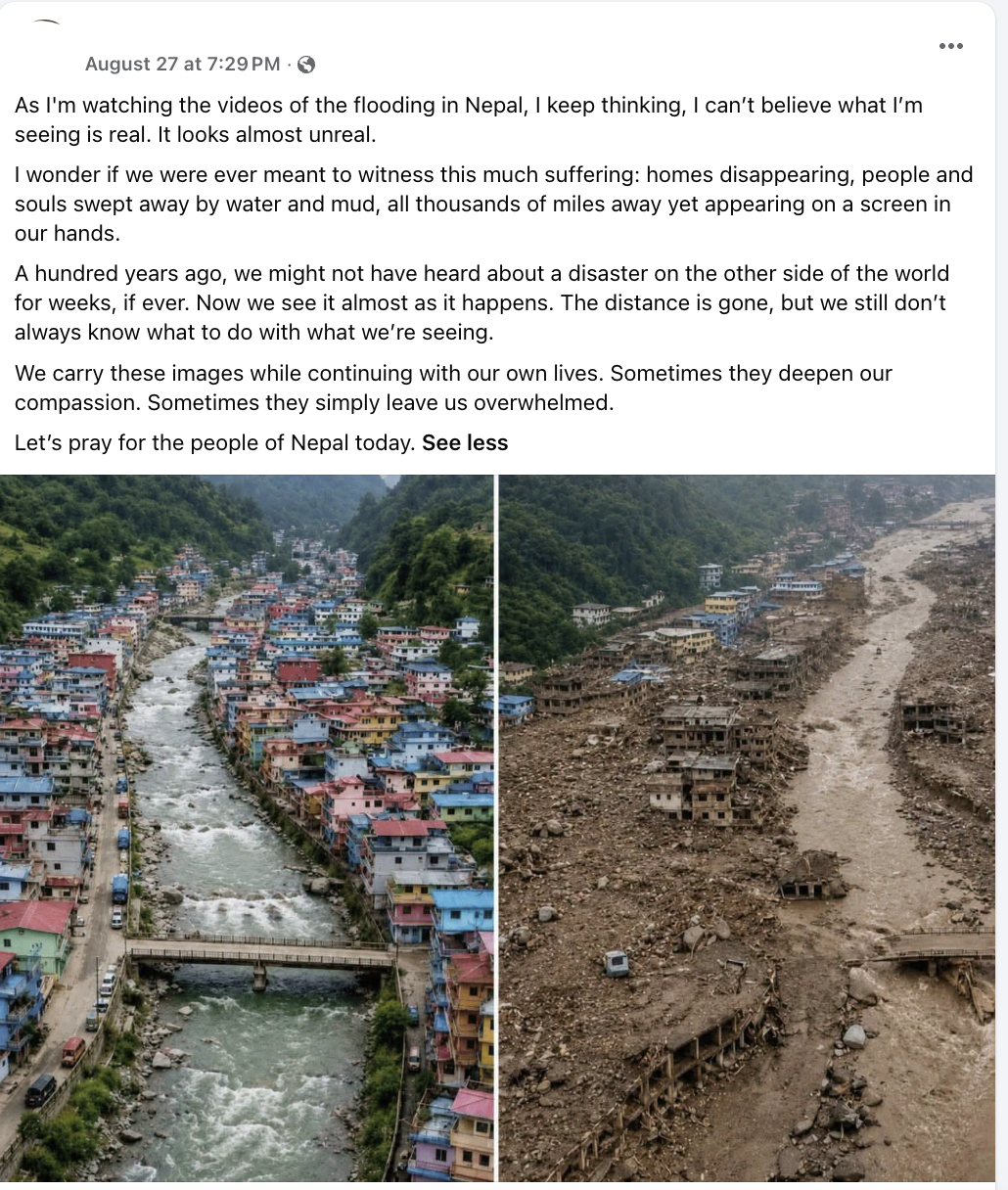
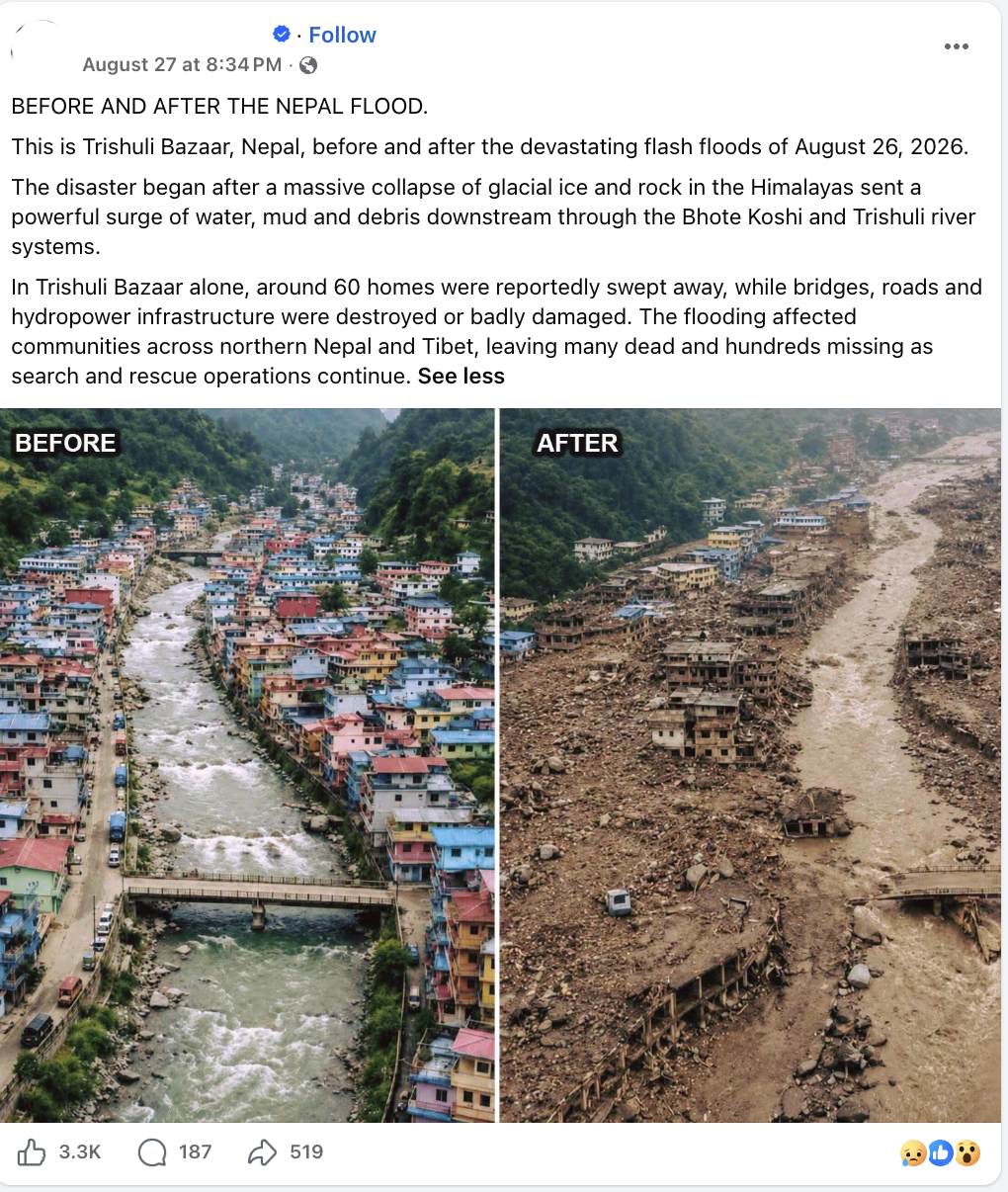
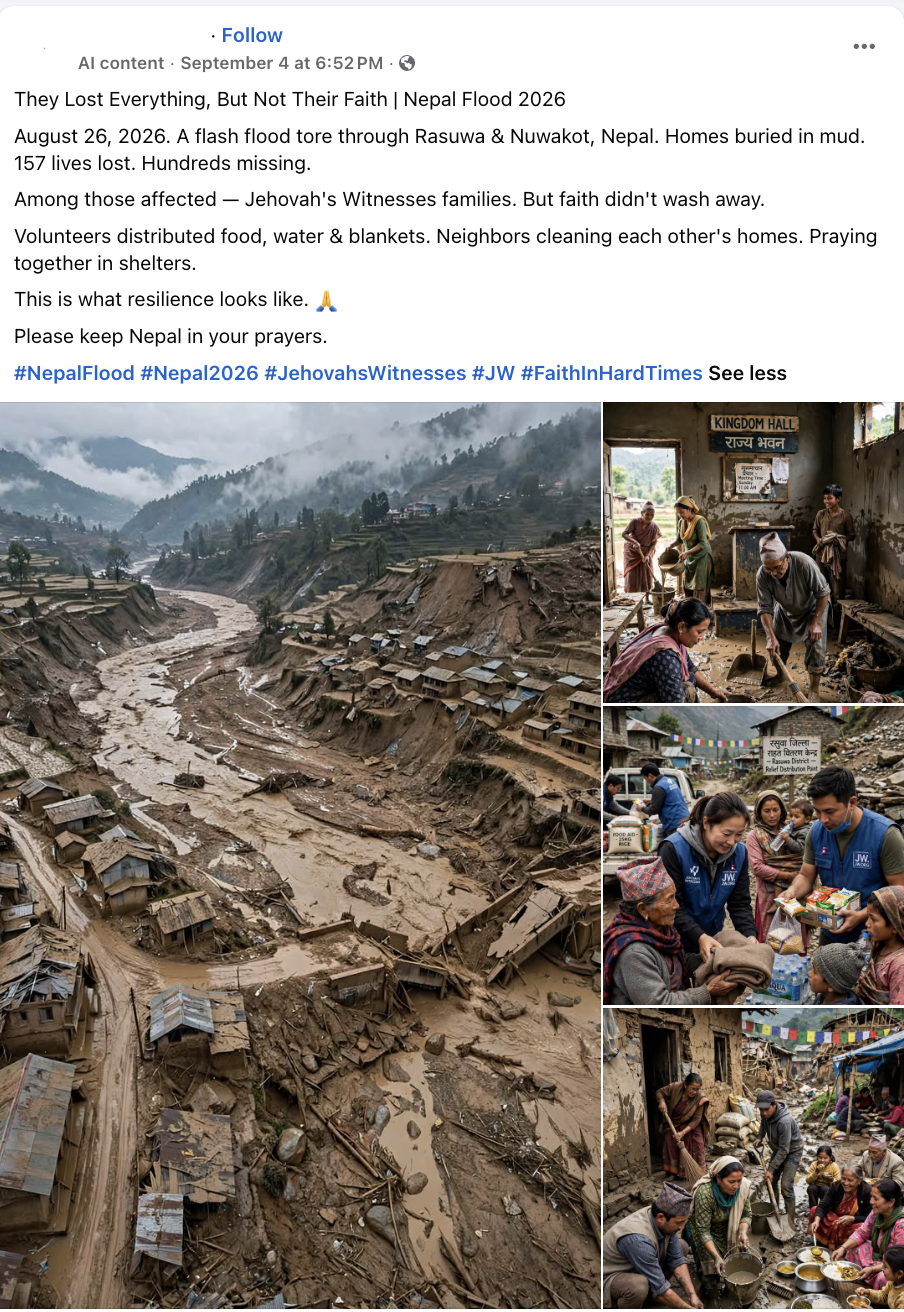
AAP flagged the image pictured below (Figure 1) as AI generated. I also tested this image with AI detection software Sightengine, which reported a score of 99 per cent AI generated. The same AI image (Figures 1 & 2) was used on more than one Facebook feed in different contexts and liked and shared multiple times. Facebook did not flag this as AI content whereas it did flag Figures 3 and 4 as AI content. Given that Facebook can mislabel images, I also ran these images through Sightengine and it confirmed these images were AI generated. However, the accompanying text suggests otherwise: “this is what resilience looks like.”

In Nepal, the Press Council launched a new site, “Special Complaints on the Bhotekoshi Incident", to enable people to report fake imagery and other forms of misinformation. In its first day of operation, more than 100 complaints were made and the Council instructed 72 social media users to take down content.
The verification and fact checking practices that media have applied to Nepal flood imagery act to both maintain the credibility of news sources, and to reassert the value of journalism at a time when it is contested. Fact checking and verification are fundamental journalistic practices. Traditionally conducted in-house, in 2016 these practices became more prominent in the “post truth” era, when attacks on journalism as fake news escalated.
Why does it matter if there are fake images and videos circulating? Visuals are often the first point of entry into a story and can shape the way audiences respond. In the Age of the Image we are acculturated to receive our news in pictures, both still and moving images. Seeing is believing is embedded in our DNA, our first instinct to accept that what we are looking at is real. Reading photographs is considered “relatively automatic and cognitively cost free” and in the digital media landscape, the consumption of imagery is conducted at a rapid pace. Attention spans on digital devices have declined from 75 seconds in 2012 to 47 seconds in 2024 leaving little time for critical analysis. An inability to sustain attention combined with the rise of easily accessible AI tools that flood feeds with fake content, distracts from the reality of the situation compromising issue salience. It also means that few people verify the information they consume, like and share.
Fake content can amplify panic and distress amongst affected communities. It can impact rescue services and emergency aid. And it can undermine the charity sector by seeding doubt about what are genuine and fake calls for donations. Fake visuals also contribute to the erosion of trust in visual journalism and the important, and often dangerous, work these professionals do.
Manipulated and fake images are not new, but they are increasingly difficult to detect, not only because of the advancement in technology, but because of low attention spans and our automatic default to believe what we see. As the creation of AI imagery continues apace, “journalism’s value proposition shifts...to verification, contextualization, and sense-making”, potentially reinvigorating and reshaping journalism’s watchdog role at a critical moment.


