

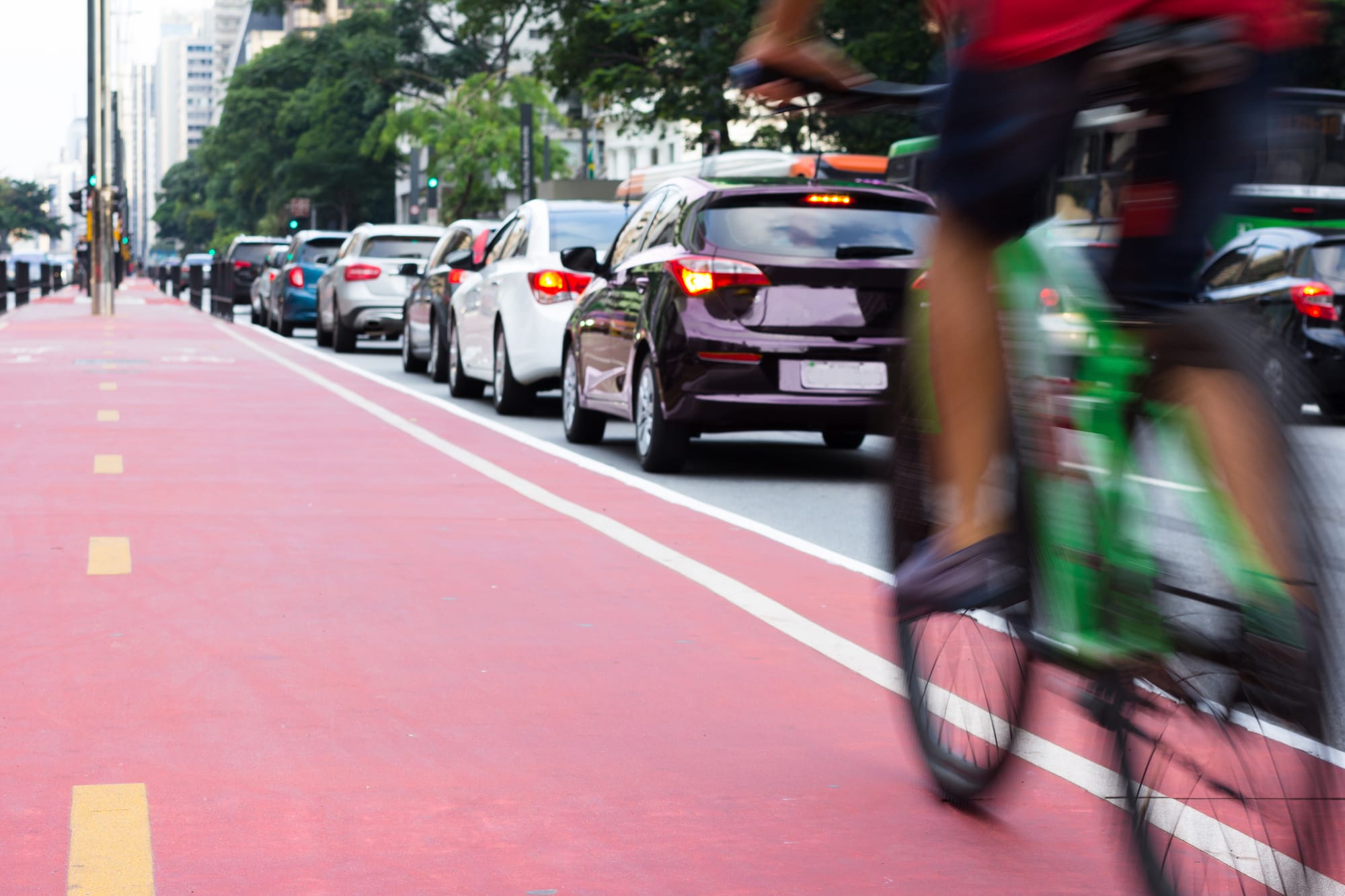
Australia's petrol prices have jumped around 50 cents a litre, with the national average now sitting above $2.19 a litre and forecasters warning of further rises. But the fuel crisis is only the sharpest edge of a much larger financial pressure.
Owning and running a car in Australia costs the average household roughly $20,000 a year when you factor in purchase, insurance, registration, maintenance and fuel, making it one of the biggest items in the household budget after housing.
For the one in five Australian households that own two or more cars, the exposure is even greater.
For those who feel they have no realistic alternative to driving, this is not an abstract energy security debate. It is an immediate, everyday financial pressure. And it lands at a moment when the Victorian government has just released its Active Transport Plan with a bold target: 25% of all trips made by walking or cycling by 2030.
That ambition, long justified on the grounds of health, liveability and climate, now has a fourth and urgent rationale: Affordable mobility.
Active transport is no longer just a congestion-busting form of physical activity, but one of the most cost-effective ways to reduce household dependence on expensive, imported fuel.
The question is whether we have built the conditions to make it a genuine choice for everyone.
Victoria's Active Transport Plan available. Can be read at: https://t.co/1qrkYmCnSP #springst pic.twitter.com/uVCBAdZ1od
— MelbourneOnTransit (@MelbOnTransit) March 18, 2026
Most Victorians want to use active transport. How do we get there?
More than half of all Melbourne trips are under five kilometres, well within cycling distance, yet only 1.6% are made by bike. Walking dominates very short trips but drops off sharply with distance.
This isn't for lack of interest. Our research found that three in four Victorians want to cycle more, and the market has never offered more options: e-bikes, cargo bikes, and adaptive cycles for different ages and abilities.
What holds people back is a web of barriers: Traffic danger, infrastructure gaps, and for many, particularly women, a lack of confidence and skills.
Tackling this requires thinking about behaviour as a system. People's travel choices are shaped by the built and natural environment, cost and convenience of alternatives, social norms, personal confidence, and the demands of daily life. Interventions targeting only one factor in this will consistently underperform.
This is where carrots and sticks become useful. Carrots, such as subsidies, skills programs, and supportive workplace policies, make active transport more attractive. But they're not enough if driving remains the path of least resistance.
Read more Shifting gears: How do we shift people from private cars to walking and cycling?
Sticks, such as road pricing, reduced parking, higher parking cost, are among the most effective tools for shifting travel behaviour at scale. Research shows combining both produces substantially greater mode shift than either alone.
Safe infrastructure such as protected bike lanes and greenways remain the essential foundation. But infrastructure alone, without strategies that address the full behavioural picture, risks being underutilised. Victoria's 25% target will only be reached by layering carrots and sticks alongside infrastructure investment.
Why a systems-approach is needed
Travel behaviour is shaped by street design, transport policy, social norms, and personal circumstance. No single lever can shift behaviour on its own. Rather, these factors work together, and interventions need to as well.
A systems approach asks: What works, for whom, and under what conditions? Our research has found that safe infrastructure is critical but must be layered with other interventions: Skills and confidence programs, particularly for underserved groups like women; community-level norm shifts through shared bike systems and campaigns; and institutional programs in schools and workplaces. It also means co-designing solutions with communities rather than applying generic, top-down approaches to places with radically different needs.
Delivering infrastructure falls largely on local councils navigating political resistance, shrinking budgets, and rising costs. The most promising terrain isn't CBD commutes but local trips: School runs, errands, visits to friends and parks. Enabling these requires place-specific solutions and a fundamentally different approach to community engagement.
Our research has shown that current processes too often fail to reach the full community and make it easier for opponents to organise than supporters to be heard. Genuinely engaging residents, traders, employers and schools leads to better investment decisions that serve the wider community.
Active travel benefits also extend well beyond what we currently capture routinely.
Walking and cycling deliver gains for health, equity, local economies, emissions, and social connectedness. Only half of Victorian adults and one third of children meet minimum physical activity guidelines, and those with the greatest health burden often have the least access to safe active transport.
Transport is also the state's second largest source of greenhouse gas emissions. Shifting short car trips to active modes requires no new technology, no grid upgrades, and no household cost. Done well, a systems approach reshapes how people move and delivers multiple benefits at once.
Alignment with the Victorian Active Transport Plan
The new Victorian Active Transport Plan signals a genuine shift in thinking, from single-focus, generic interventions toward a systems-level understanding of why people travel the way they do. That is both encouraging and based on recent evidence.
The plan acknowledges how critical infrastructure is in supporting uptake, alongside other interventions to target behaviour change for the diverse and substantial cohort of people who are wanting to walk and bike.
Most promising is a renewed focus on enabling local trips through both land-use planning and targeted infrastructure.
This means designing neighbourhoods where the destinations people need most, like shops, parks and public transport, are within easy walking or cycling distance, rather than assuming people will make long journeys by car to access them. This is particularly important for growth corridors, which experience up to ten-year delays in active transport infrastructure, embedding car-dependency from the start.
The plan also acknowledges the need to design for a changing climate. Victorian communities are already experiencing more frequent and severe heatwaves and flooding, both of which directly affect people’s willingness and ability to walk and cycle.
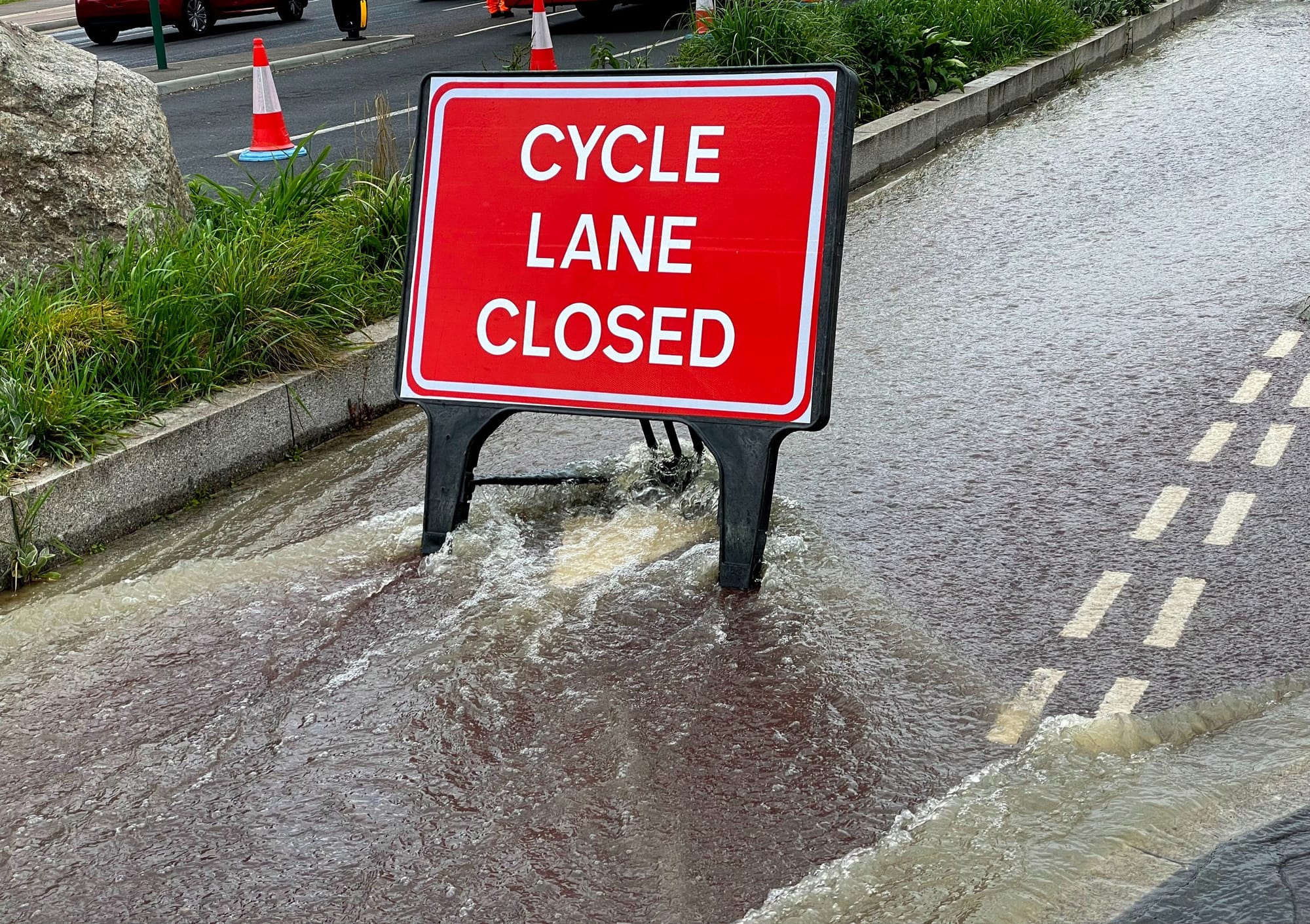
Infrastructure that fails to account for these conditions, such as unshaded paths, flood-prone routes, or surfaces that become dangerously hot, will be underused precisely when needed most.
Importantly, the plan recognises that evaluation must move beyond simple metrics like kilometres of path built, and instead measure what truly matters: Mode shift, health outcomes, equity impacts and emissions reduction. Our research is working to embed these measures into routine evaluation so the full value of active transport investment becomes visible, and so the system can be monitored, refined and held to account over time.
The opportunity ahead
The current fuel crisis is not the first, and it will not be the last.
Australia holds only around 36 days of petrol supply, and global disruptions translate quickly and directly to household budgets. Meanwhile, Melbourne already records around 1.2 million car trips every day, and congestion is projected to double by 2031 at a cost of more than $10 billion annually to the Victorian economy. The case for shifting short trips to walking and cycling has never been stronger, on health, climate, liveability, and now household economics.
Albanese reveals new national fuel supply taskforce to steer response to Middle East war https://t.co/IUp1A4JRFd via @ABCaustralia
— rose lane (@pully8) March 19, 2026
Historically, fuel price spikes produce short-term behaviour change that fades when prices ease. People experiment with alternatives, then revert, because the underlying system has not changed to make active transport an easy and accessible choice.
There is enormous unmet demand for active transport across Victoria. Councils are ready to act. The public is ready. The question is not whether the window of opportunity is open. It is whether we will invest at the scale and sophistication the evidence demands - in infrastructure, yes, but also in behaviour change, place-based co-design, equitable access, and robust evaluation of what works, for whom, and under what conditions.
Victoria has a plan. Now it needs the ambition, political will and sustained investment to make it real.


