


When my career began in 2005, fresh from a postgraduate master’s program in radiation therapy (RT), I was ambitious, determined and eager to make a difference.
I threw myself into clinical work, pushing to excel in complex techniques and fast-paced workflows while also engaging in research and presenting, publishing and contributing wherever I could.
Those early years were formative. I was proud of my achievements, proud of the pace I could sustain, and proud of the professional identity I was building as a radiation therapist.
Motherhood didn’t dim that drive, it simply reshaped it. My first child, a daughter, arrived in 2014; my second, a son, in 2016.
Life became fuller, louder, richer, and more complicated. Like many working mothers, I convinced myself that I could hold all the parts of my life together if I simply worked hard enough.
But quietly, beneath the surface, things were shifting. I always knew, deep down, that something didn’t feel quite right with my daughter – though I resisted acknowledging it. No parent wants to imagine that their child might struggle in a world that can be so unforgiving.
So I brushed aside the worry, telling myself she was sensitive, somewhat quirky and moved through the world in her own way – that naming the worry would somehow make it real.
When unease becomes something real
In 2018, she had just started kindergarten, and my son was almost two. I was preparing to return to work after two years of maternity leave when, one April morning, a kindergarten staff member asked me to meet with the kindergarten director. I assumed it was something small—maybe a question, maybe a request for help at an event.
Instead, I found myself sitting in the autumn sun as the kindergarten director gently read from a stack of notes outlining behaviours atypical for my daughter’s age. As she spoke, the world around me blurred. Across the playground, my daughter moved in circles, humming to herself.
By July that year, she had received a formal diagnosis – level 2 autism spectrum disorder. And though it gave a name to the patterns I had been living with, it also opened a door to a future I didn’t yet understand.
A diagnosis and a different future
I didn’t cope well at first. I withdrew – not physically, but emotionally. I kept the diagnosis close, sharing it only with immediate family. I didn’t want judgment or pity. I didn’t want assumptions. I didn’t want to admit aloud how terrified I was for her future.
Would she be accepted? Safe? Understood? Would the world be gentle with her, or would it shape her in harsh ways before she ever had the chance to show who she truly was?
Like many working mothers, I convinced myself that I could hold all the parts of my life together if I simply worked hard enough.
It didn’t take long to learn what so many parents of autistic children eventually come to understand – every autistic child experiences the world in their own way.
My daughter’s joy was vivid and unrestrained, and so was her distress. She needed understanding, not comparisons or criticism. She needed the freedom to be fully herself, in all her intensity and individuality.
I felt as though I was losing my sense of stability in a life in which I had once thrived and felt deeply competent.
Therapy soon became the centre of our lives. Hundreds of hours, endless schedules, tiny victories and overwhelming days. I was no longer only a mother; I became an advocate, coordinator and protector.
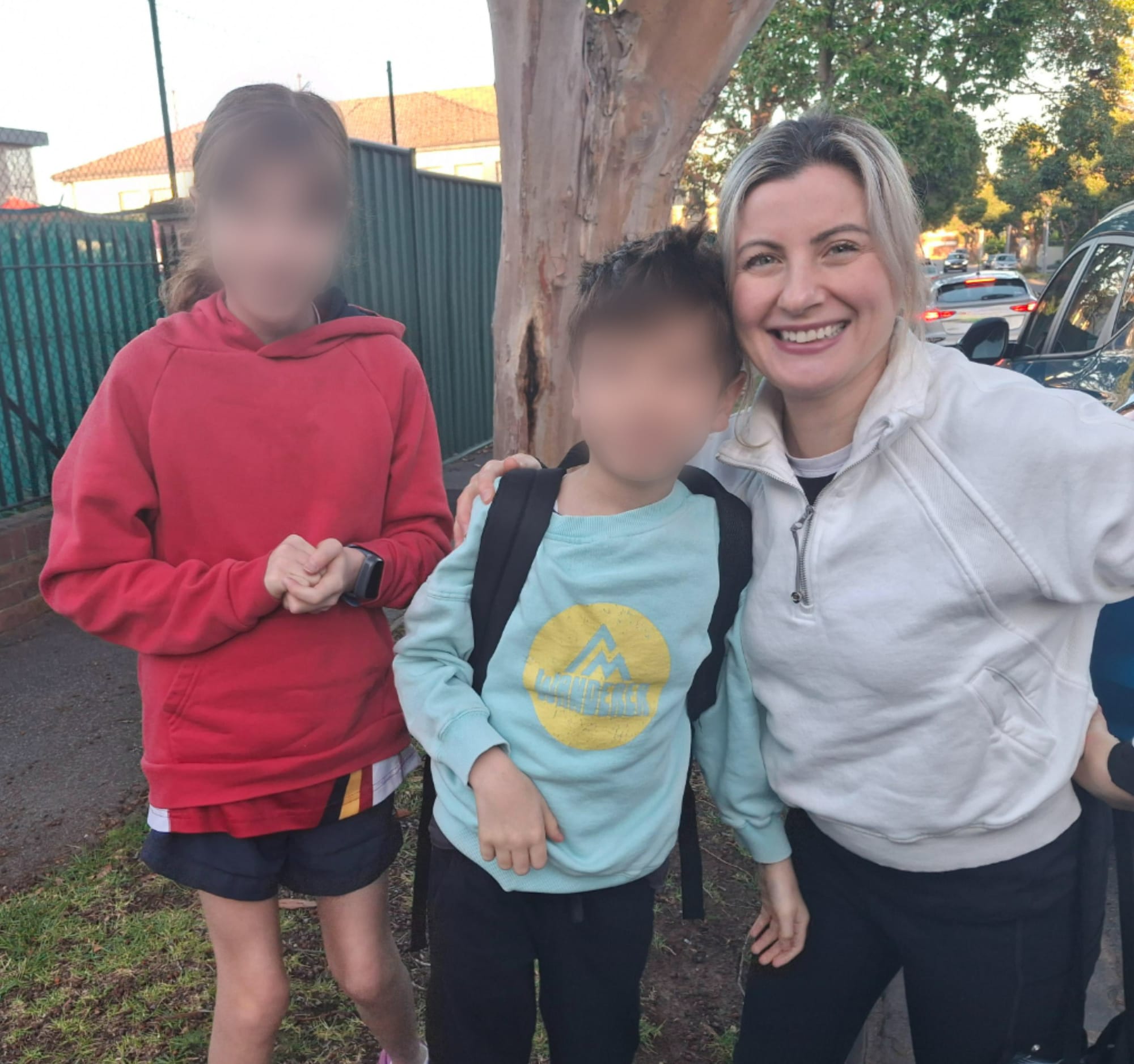
Holding everything together ... until I couldn’t
When I returned to clinical work, in a Melbourne hospital, it was destabilising. The radiation oncology field had evolved in my absence. Workflows were faster, expectations higher and technologies increasingly advanced.
I felt like a beginner again, highly aware of my own vulnerability and wavering confidence. I masked exhaustion, migraines and emotional fatigue behind professionalism and a forced calm, carrying a lingering fear that the confidence and professional footing I once possessed might not return.
I remember the first person outside my immediate family I confided in about my daughter was a patient. She was receiving RT, and she shared her story of raising a neurodivergent child, and suddenly – for the first time – I felt understood as a person, not just a professional.
Speaking those words aloud released a breath I hadn’t realised I had been holding.
Read more: Voices of impact: Celebrating women in academia
But eventually, the balancing act cracked. My daughter’s paediatrician suggested redistributing my working hours across shorter days to give my daughter a break from the long days at kindergarten and to help her navigate the day with greater ease – a simple, practical lifeline.
When I presented this recommendation to my manager at the time, approval came with a cost – I could keep my hours, but only if I relinquished my senior title.
It was a position I had earned, still fulfilled and valued deeply. Exhausted and vulnerable, I agreed. The following week, my name on the roster no longer included my senior title, though my responsibilities remained unchanged.
When the system doesn’t bend
Colleagues eventually noticed, and their concern gave me courage. With support from Fair Work Australia and my union, I lodged a formal complaint. Months later, my senior position was reinstated, and I was backpaid.
The reinstatement brought relief, but the experience had shifted something inside me; I no longer recognised myself in the clinical world, and the sense of safety I once took for granted had vanished.
This quietly nudged me to explore other ways to contribute to my profession.
During this time, I had been dabbling in a secondary role as an RT teaching associate at Monash University, teaching online one afternoon a week.
I often reflect on how profoundly grateful I am to have a job that allows me to be present for my children while still making a meaningful contribution to the RT profession.
Slowly and quietly, that role opened a new door. Eventually, I was offered a more permanent position as a senior teaching fellow in the Department of Medical Imaging and Radiation Sciences, teaching across both undergraduate and postgraduate RT courses.
Monash was where I had gained my Bachelor of Biomedical Sciences and my master’s back in the early 2000s, and now I was back there teaching.
Accepting the role meant stepping away from clinical work, a decision filled with mixed emotions. I loved clinical practice; I had shaped my identity around it.
But academia offered something I hadn’t realised I needed – sensitivity, flexibility and genuine understanding woven into the culture. I was incredibly fortunate.
Finding flexibility and rebuilding
As I settled into academia, now mothering two neurodivergent children – my son also having been recently diagnosed – I began, slowly, to cope again. To rebuild. To rediscover purpose in a way that did not break me. To understand that I could be both an advocate for my children and a professional with impact, but only if my work life could bend where life required it to.
My current managers at Monash understand the load I carry. They check in, adjust expectations and treat flexibility as a foundation rather than a concession.
If one of my children is having a difficult day, that’s OK. There’s trust that the work will get done.
Rather than cutting corners, I’ve learned to work efficiently. I often reflect on how profoundly grateful I am to have a job that allows me to be present for my children while still making a meaningful contribution to the RT profession.
Still, the fullness of this experience leaves its mark. The constant worry, advocacy and emotional effort ... it settles into the body and lingers. I continue to navigate school refusal, sensory overwhelm, emotional storms, pre-teen pressures and the daily negotiation of whose needs take priority.
My professional drive isn’t what it once was, or what it might have been in a different life, but I’ve learnt to pace myself, to focus on what truly matters, and to hold space for both my children and my work.
What I know now
What I know now is quieter than the declarations I once made about career and ambition. It’s steadier, something earned through years of stretching, breaking and rebuilding. I no longer believe that working harder is enough to hold all the parts of life together.
Some days, despite every effort, they simply will not hold – and that’s not failure.
Life doesn’t look the way I imagined, but it’s honest. It’s full. It’s mine. Within that acceptance, I have found a kind of peace I never expected, along with a quiet readiness for whatever comes next.
This article first appeared in the Journal of Medical Imaging and Radiation Sciences and is republished under a Creative Commons licence.


