

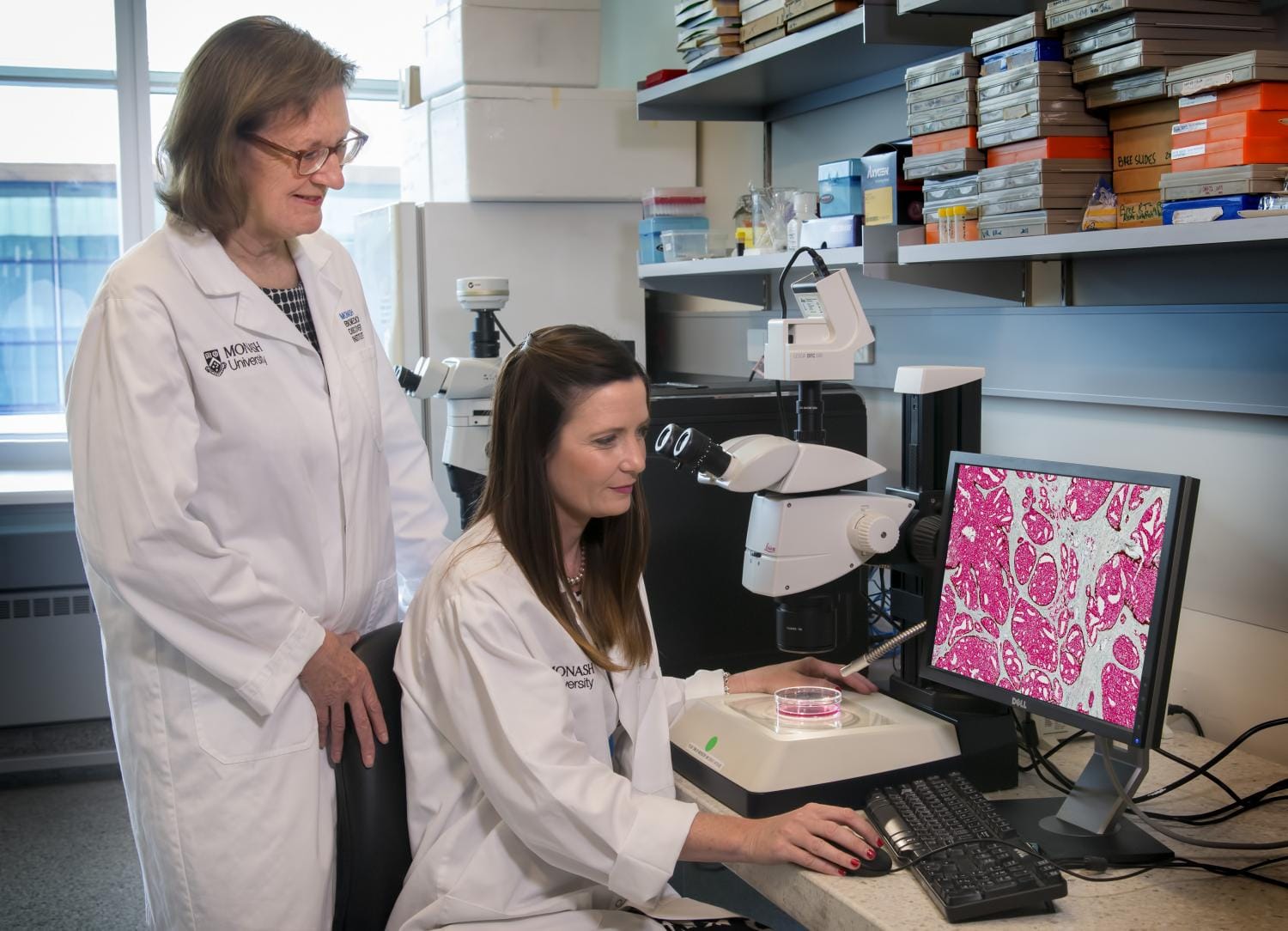
Picture the Barbie movie but set in a medical research facility. The patriarchy has been smashed. Women are running the show. Generational knowledge is passed on in a collaborative and supportive environment. They’ve garnered an international reputation for their innovative research, while enjoying themselves and promoting work/life balance. What is this Utopia?
At Monash University’s Prostate Cancer Research Group (PCRG), it’s possible to glimpse a world where gender is no barrier to a successful career in STEM. Here, the women are in charge, even while researching better treatments for a male disease.
And as it turns out, when you dismantle patriarchy, it doesn’t only empower women and liberate men, it also holds the promise for more effective treatments for the most common cancer in blokes.
The woman who was told no
In this imperfect analogy, the Barbie in a lab coat is Professor Gail Risbridger AM, an internationally renowned medical researcher and founder of the PCRG.
She forged a career in science at a time when the barriers of entry for women were very real and daunting.
“It is ridiculous, but true, that I was told I would not make a career in prostate cancer because I wasn’t a fellow of the college and because I was a woman. Look how that worked out,” says Gail, with some satisfaction.
Building a legacy
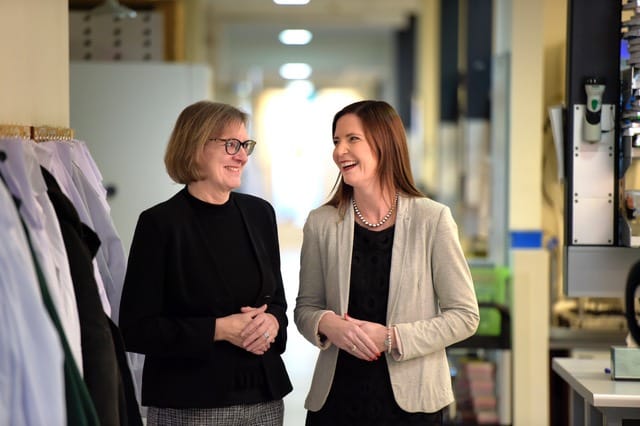
Gail and her co-director, Professor Renea Taylor, have made it their life’s work to ensure career pathways are easier for subsequent generations of women researchers.
“I take enormous pleasure in seeing this trail of women,” says Gail. “They are successful, and I take great pleasure in that, in their capabilities, and they are becoming the next generation of leaders.
“And they’ve managed to do this in a really difficult climate, to maintain your momentum and status and achievements. It demonstrates to other women it’s possible to achieve these dreams and ambitions.”
The PCRG has made its reputation not for its progressive gender politics, but for the world-leading research it carries out.
Gail didn’t set out on a feminist crusade, but a scientific one, conducting pioneering work with stem cells that lead to her focus on prostate cancer. Other women researchers were drawn to work with her because of the positive and supportive work culture she created. Come for the science, stay for the work/life balance.
She’s married to another medical researcher, Emeritus Professor Iain Clarke, head of the Monash University Department of Physiology.
“My husband was very successful and very prominent internationally. Success in my career didn’t come early like his. It came much later,” says Gail, though presumably no one has ever asked Iain how he balanced work and raising their two children.
“When I was young, the challenges for me were, I had to leave my family [in the UK] and come to Australia where I knew no one. I married a man who was very successful, we travelled overseas a lot, and it was tough.
“I was lucky to be married to someone who understood the academic research environment ... We’ve both been Fulbright scholars, members of the Order of Australia, doctors of science.”
Four generations strong
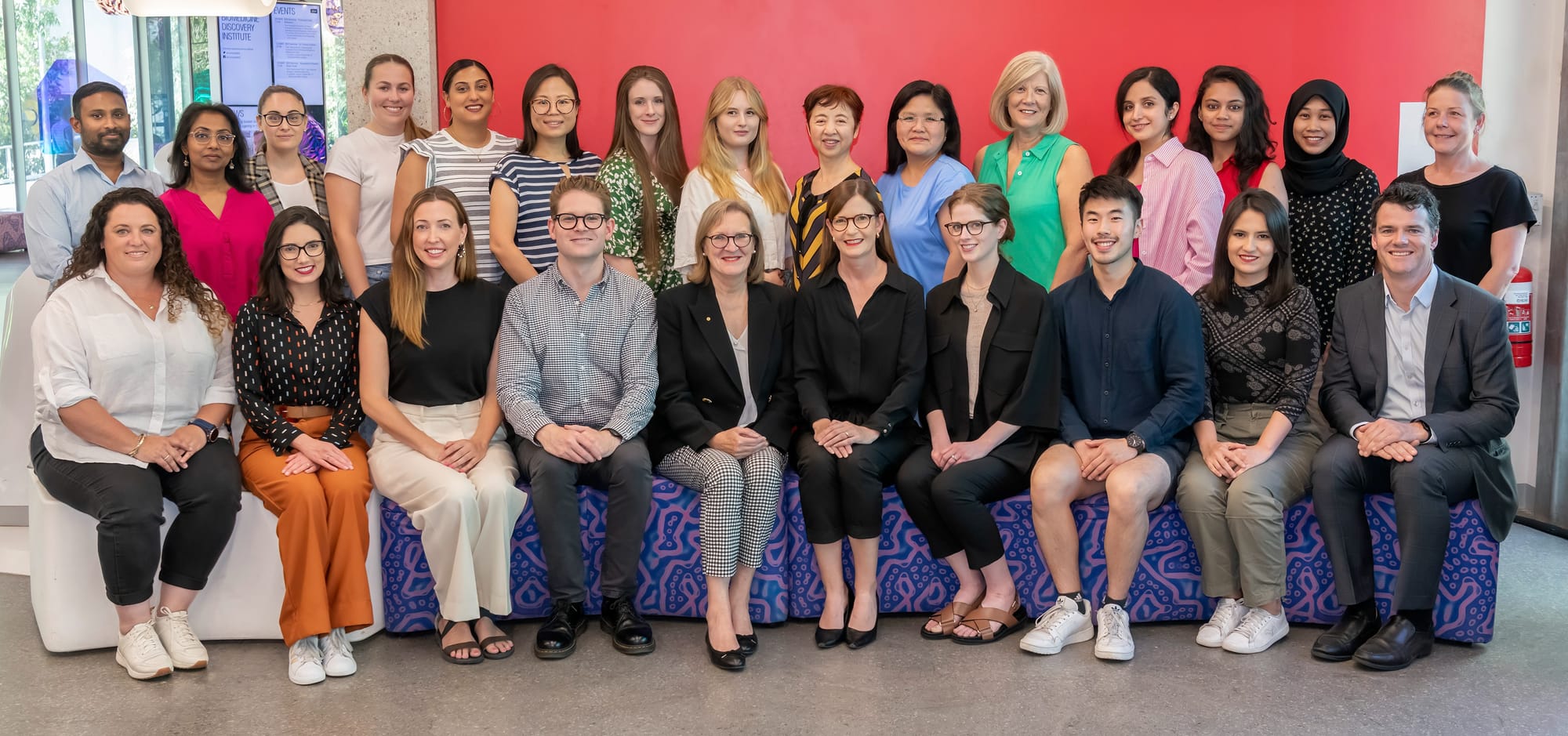
There are now four generations of women working at the PCRG, from Gail and co-director Renea, through to mid-career researchers and eager PhD candidates just starting out on their scientific careers.
When you walk into their facility, on the third floor of Monash University’s School of Biomedicine at its Clayton campus, it’s striking to see a female-dominated workforce in science. Gail believes this creates a different kind of work culture – more collaborative and cooperative, less hierarchical.
“By having people who've worked with you for so long, there’s a natural evolution, and with that evolution comes the transfer of the knowledge,” says Gail. “And the reason that’s so valuable is subsequent generations don’t make the errors that you made, so they can get to the heart of the problem more rapidly, and the whole project evolves more rapidly.”
This work culture had its beginnings in the close working relationship between Gail and Renea.
“Renea came to me as a PhD student, and what struck me about her ... was how positive it was to work with her. And she obviously wanted a career in science, and it was a partnership that worked really well.
“With people like Renea and Laura [Porter], the trust and the level of communication is so easy that you just go straight to what you need to do and then solve it. You can have the intellectual exchange without anyone feeling threatened.”
For Renea it was a case of believing she could be what she could see.
“I wasn't aware, as a young person, of the struggles that Gail was probably facing,” says Renea. “I probably never thought I couldn’t do this because I was a woman. I think it's one of those things where you believe what you see, and I could see a woman role model.”
The uncanny rapport the two researchers developed has set the template for the candid communication and supportive work culture they’ve created.
“It's so normal that we give each other robust feedback, and we seek it,” says Renea. “I don't realise how natural it is for us just to be able to give that critique in a non-challenging way.
“I never take offence to her comments, because I know it's intended to make the work better. I can't think of a time where we weren't honest with each other.
“Since I got my PhD, there’s been a very honest conversation about our intention to work together and what the next decades look like. It’s an enduring partnership.”
Gail concurs, though she would certainly let you know if she didn’t.
“I don't hold back in what my opinions are. Renea and I have very, very robust discussions about what I write and how I write it,” says Gail. “With single words or phrases, she will know exactly what I mean and how I am thinking.”
While Renea says she no longer “sees” gender in her working life, there’s little doubt her experience as a woman in STEM has benefited those who have worked under her.
“The experience that I went through having my children has helped me be a better supervisor because I remember what the pressures were, what the challenges were, but also what's important, and that’s finding the balance,” Renea says.
And they appear to have achieved a balance that encourages people to stay, rather than go off in search of career advancement elsewhere.
“I think it’s the intergenerational continuity ... It’s about a group of people who have stayed together, and chose to stay together,” says Renea. “People like Laura could be anywhere doing a postdoc. She’s brilliant and well-qualified and has capacity to take a fellowship anywhere, but she chooses to be here.”
Taking time ... and returning
Dr Laura Porter is an early-career research fellow who’s focused on the features of high-risk cancers, and the emerging field of immunotherapy for prostate cancer.
“We can identify patients who might need more aggressive treatment. We work so closely with oncologists and pathologists,” says Laura.
She’s also a mother of a three and, on the day we speak, it’s her first week back at work after taking 12 months off following the birth of her third child.
“Taking time off work – it’s hard. This is my third time doing it, but our lab group makes it easier,” says Laura. “Renea tells me, it’s a weird day, take it slowly. It’s hard to find your place again at work.”
Laura’s three children are aged 6, 3 and 1, and she’s taken a year off after the birth of each child, secure in the knowledge that her job was waiting for her when she came back.
“They encourage work/life balance. Renea has always been very supportive of my taking leave with our children,” Laura says. “Our group has always felt quite special. We always feel like a force together.”
Laura studied at Monash, and Renea was one of her teachers and encouraged her to do her honours there.
“One of the reasons was Gail and Renea, and the environment that they created. I really enjoyed that,” Laura says.
“Science is very male-dominated ... As you go higher it’s almost completely male-dominated. I know others who have had really bad experiences as students. It feels like a very safe and supportive environment.”
The group has an unusually low staff turnover, which speaks to the close relationships formed, that have become almost like family over time.
“Gail, Renea and Mitch came to my wedding,” says Laura. “They have to be very tough and strong [at work], but when you take them out of work you have these really beautiful family discussions. You see both sides of them.”
And for Laura, there’s no friction between the largely female workforce and their focus on a male disease.
“We’re all very passionate about research and invested in research. All our research assistants are female. We probably are quite unique in that way, but we have all got men in our lives,” says Laura. “You just treat it like a disease. You fall in love with the science. I just love science and biology; it looks so beautiful down a microscope.”
Cells that change lives
And there are other advantages to this feminised work force. The groundbreaking research of the PCRG has been made possible by one of the largest collections of live prostate cancer cells in the world, and Gail’s mastery of the delicate art of keeping them alive in the lab.
These tissue samples are donated by men after biopsies, prostatectomies and even posthumously. Dealing with patients and their loved ones to donate their tissue is obviously a highly sensitive matter.
“When I go to support groups I always talk to the women. When I think of consumers I don’t just think about men,” says Laura. “The women are often pushing men to talk about this more openly. We’re all very comfortable talking about it.
“Our clinical coordinators, Melissa and Jenna, one of their roles is to get consent from patients, to get their tissues after surgery and interacting with patients.”
These live prostate cancer cells allow them to test numerous treatments and drug combinations in the lab, in ways that would not be possible otherwise.
“We use patient samples to really mimic the disease. Prostate cancer is so hard to grow [in the lab], it’s a big strength to what we do. It’s not just patient sample 167, this one tumour. That was a patient, and it was his life,” says Laura.
Raising families, raising standards
Dr Natalie Lister is a senior research fellow and immunologist who joined the PCRG 10 years ago, after completing her PhD at Monash. She then travelled to Paris to do her postdoctoral training at the Curie Institute (named in honour of another groundbreaking female scientist, Marie Curie), before returning to Monash.
Like Laura, she has also had three children in the past 10 years. “It's a very supportive, more understanding environment because of the lived experience of the female leads,” says Natalie.
“I remember Gail used to talk to me about having kids, and she wanted to encourage me to actually spend more time with my children, because she only took six weeks, because she couldn't take any longer. She said to me a few times, ‘Natalie, you know, it'll be here. Just take your time. Don't worry’.”
Natalie sees a shift in attitudes and a new emphasis on work/life/family balance in her male colleagues, too.
“I feel it's a topic that’s gaining traction, affecting men, too. You know, a lot of men are taking time off to spend time with the family, so I think it's becoming more common, which is good.”
For all the talk of a supportive and understanding work culture, Gail still runs the PCRG to the most exacting standards of scientific rigour.
“She's a massive perfectionist. And so, if you come in and present something that's unpolished or half-finished, she will run through you,” says Natalie.
“You learn very quickly to give prepared and polished work. It has to be of an excellent standard ... When I go to collective presentations from other people's labs, I can tell our students, because they are wonderfully prepared and exceptional presenters.”
There are other ways the lab has distinguished itself that have nothing to do with gender balance.
“It’s the first lab I've worked in where the clinicians were embedded within the lab, like oncologists,” says Natalie. “I'm pretty sure Gail would have been one of the pioneers, or the first labs to really bring in oncologists and have them embedded in the lab. I think this has really enhanced the research and benefited probably both patients and the science as well.”
The next generation
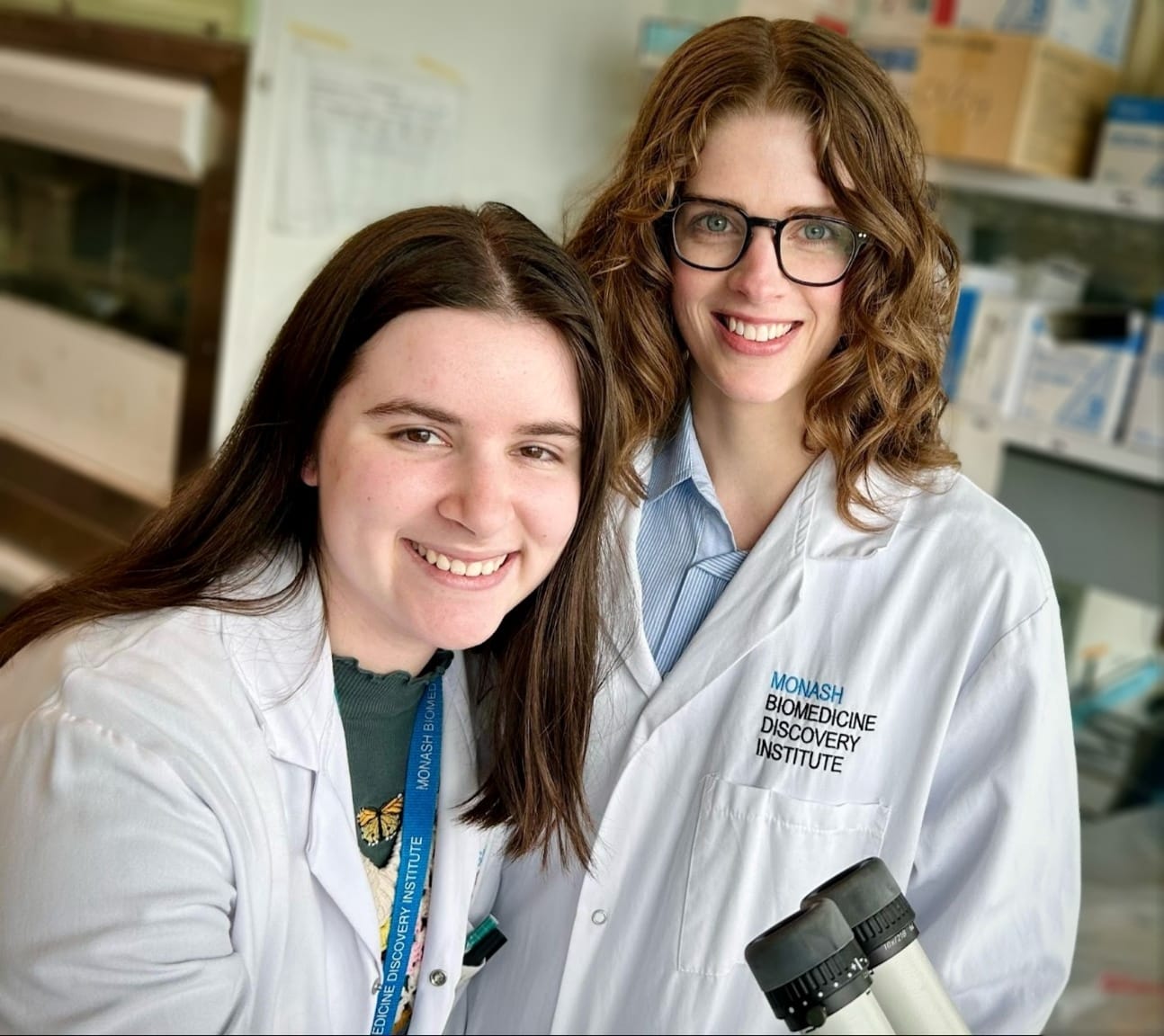
Sophie Harrison is a third-year PhD candidate working closely with Professor Renea Taylor on CAR T-cell therapy. Sophie represents the fourth generation of women to be drawn to work at the PCRG, and she’s also one of the only Australian-born PhD candidates, such is the lab’s international reputation.
Sophie studied at Monash as an undergraduate and Renea taught her pathology. When it came time to apply to a lab for her honours placement it was an easy choice.
“I had a list of labs, and my dad is a professor in physiology and when I got to Renea and Gail’s lab, he said, ‘That’s a great lab’.”
It quickly became clear to Sophie what a demanding but supportive environment it was. “All the other lab experiences I had were much smaller groups. This seemed quite intimidating, but they were so approachable, we established this like- minded connection.”
And she’s deeply aware of the legacy of innovative research she’s become a part of.
“It’s really impressive when Gail does one of her talks at the start of a conference or meeting, outlining everything she’s done. I can’t even imagine how she got to this space and created such a collaborative environment. It’s such smooth sailing; it’s quite a well-oiled machine.”
And Sophie’s convinced she’ll continue in research because of this positive lab experience.
“Research is really interesting to me. The results you generate, I don’t think another job would capture that feeling,” she says. “The supervisors and postdocs give all the students opportunities to do more. It’s always very amicable, how they deliver critiques. It’s a very rewarding environment.”
Greater than the sum of its parts
Approaching the end of an extraordinary career, having recently received her Doctor of Science (the highest academic qualification available), Gail looks back on her legacy with satisfaction.
“What do you see in that line of women? Different backgrounds, different ways that they’ve entered into the program.
“The common thing is we just really enjoy what we’re doing, the resilience and tenacity and all the things that you need. Other than Sophie, we’ve all got children, we’ve all done it with families and husbands,” says Gail.
“They are just extremely good people. They're much brighter than I am, but it's also that they're just really nice people. I enjoy their company. I like to hear what's happening in their families and what else they're doing.”
Renea says they have been very intentional about ensuring their work can carry on beyond the career span of any individual, and that has required long-term planning.
“There's a lot of people in Gail's era who are finishing up, and some of them have no one to continue their legacy. They're literally finishing their PhD students they're currently training. The lab members will stop being employed, and it stops. It just literally stops. And that's quite common in traditional academic career pathways,” says Renea.
“But this is not going to stop. You know, if Gail steps out tomorrow, there’s a team here that's going to continue what she's built ... Gail has been speaking about the idea of legacy. Fifteen years ago, she said, this is the plan, I don't want it to stop. So that's been very intentional, very deliberate over a long time.
“She just never wanted it to stop with one person. So that's where it becomes greater than the sum of its parts.”


