

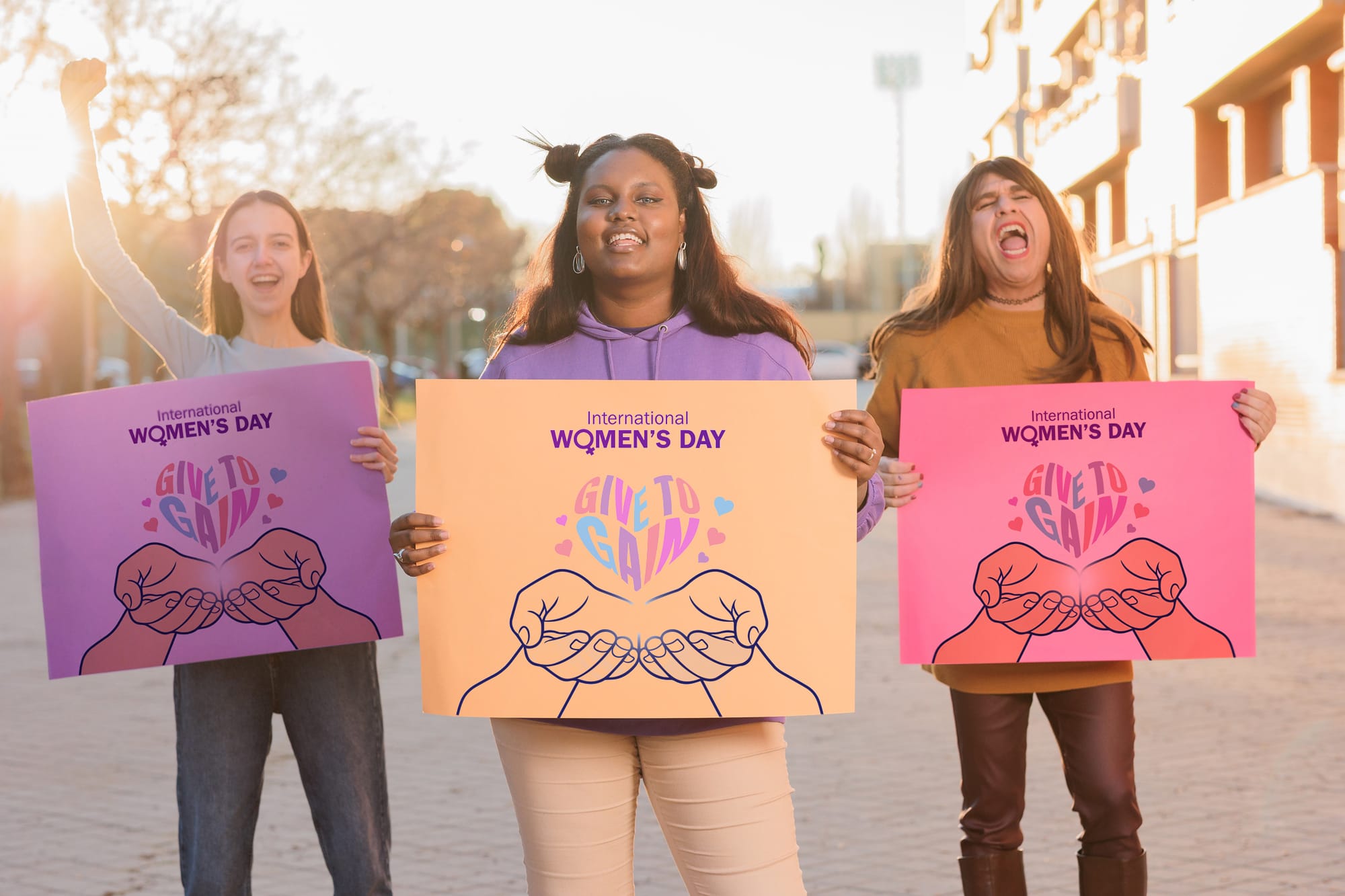
Every year on 8 March, we celebrate International Women’s Day (IWD). It’s a time to reflect on the progress we’ve made towards gender equality, and commit to dismantling the barriers that still persist.
Established more than a century ago, IWD has evolved from its roots in labour rights and suffrage movements into a global platform advocating for women’s advancement in every sphere of life.
Yet, in recent years, some are questioning whether IWD is a day that is inclusive of all women. For example, the Lesbian Action Group is pursuing a case in the Federal Court seeking a declaration that it is entitled to hold public political and social events exclusively for “lesbians born female” – that is, that it be allowed to lawfully exclude transgender women.
This IWD, we need to recognise and celebrate that both Australian law and international law recognise that trans women are women, and support them as they try to navigate the compound dual challenges of misogyny and transphobia.
In Australia, we can be proud of the fact that we have clear and strong laws that protect all women from discrimination. The Sex Discrimination Act 1984 (Cth) (SDA) was amended in 2013, to remove outdated language that cast sex as a binary (that is, there are only two sexes – men and women) and to explicitly prohibit discrimination on the basis of sexual orientation, gender identity and intersex status.
These amendments to the SDA ensure that Australia’s laws align with international law that states that the Convention on the Elimination of all forms of Discrimination Against Women (CEDAW) protects all women, including trans women.
This was most recently affirmed by the UN Committee on the Elimination of Discrimination against Women in its decision in Flamer-Caldera v Sr Lanka, when it stated: “The Committee considers that the rights enshrined in the Convention belong to all women, including lesbian, bisexual, transgender and intersex women” [9.7].
As I explore in my recent book, Sex, Gender and Identity: Trans Rights in Australia (Monash University Publishing, 2025), sex is not a rigid binary, but rather a spectrum influenced by anatomy, biology, chromosomes and hormones. The recognition of trans women as women strengthens women’s rights by highlighting how patriarchal norms and society harm all women.
Every year, IWD has a theme set by the United Nations. For 2026, it’s “Balance the Scales”. The CEO of UN Women Australia, Simone Clarke, observed that:
“Balance the Scales is a promise for every woman and girl to be safe, heard and free to shape her own future … This International Women’s Day, we are calling on Australians to join a movement for real action – to transform our justice systems, amplify marginalised voices and ensure equality is not the exception, but the rule.”
In contemporary Australia, we have many marginalised women who continue to face disproportionate rates of gender-based discrimination and violence.
“Women and girls with intersecting vulnerabilities — including trans women, First Nations women, women with disabilities, migrant and refugee women, and lesbian, bisexual, intersex and non-binary people — face increased risks of discrimination and violence.”
We all have the power to make sure IWD 2026 is inclusive of women in all their diversity. Here are a dozen simple “Dos and Don’ts” to ensure IWD events and celebrations are inclusive of trans women.
How to make International Women’s Day inclusive: What to do
- Use inclusive language in all messaging and social media posts. Make explicit reference to trans and gender-diverse women being included and welcomed.
- Prioritise intersectionality. Highlight the specific challenges faced by trans women, First Nations women, women with disabilities, migrant and refugee women, and other marginalised groups.
- Amplify trans voices. Invite trans women to speak as keynote presenters or panellists and ensure they hold meaningful roles in the event.
- Offer name and pronoun options on registration forms and name tags to respect individual identities.
- Create space for respectful learning. Encourage open, good-faith dialogue about gender diversity, recognising that some attendees may be unfamiliar with trans experiences.
- Ensure inclusive and accessible venues, including gender-neutral bathrooms and physical accessibility for people with disabilities.
How to avoid undermining inclusion: What not to do
- Don’t tokenise trans women. Inclusion must be genuine and ongoing, not a symbolic, one-off gesture.
- Don’t appropriate trans struggles. Avoid using trans issues as talking points without trans-led input or meaningful follow-through.
- Don’t frame trans rights as a threat to women’s rights. Equality is not a zero-sum game; protecting trans women strengthens protections for all women.
- Avoid offensive or dismissive language such as “gender ideology” that misrepresents transgender identities.
- Don’t gate-keep womanhood. Avoid defining women solely by sex recorded at birth, reproductive anatomy or presumed chromosomes.
- Don’t tolerate hate speech. Allies have a responsibility to call out transphobic comments and behaviour.
By following these 12 tips, we can all contribute to an IWD that embraces solidarity and combats the systemic sexism that harms all women; cis and trans alike.
Those who assert that trans women are not women,are outliers. While some male leaders – such as Donald Trump and Viktor Orbán – are intent on vilifying trans women, they’re the exception, not the rule.
Key international organisations have unequivocally stated that trans women are women, including the European Parliament, the UN Office of the High Commissioner for Human Rights, the International Women’s Development Agency (IWDA) and UN Women.
And in Australia, leading experts on women’s rights similarly recognise that trans women are women, including, the Australian Sex Discrimination Commissioner, Dr Anna Cody, and the CEO of Equality Australia, Anna Brown.
Exclusionary rhetoric risks fracturing the women’s movement at a time when backlash against reproductive rights and gender equity is intensifying.
Including trans women amplifies all women’s voices against the true adversaries –patriarchal structures, economic disparities and the perpetrators of gender-based violence.
Although IWD happens just once a year, our commitment to advancing the rights of all women must be ongoing. There’s much work to be done to achieve gender equality in Australia, and it requires a commitment to dismantling systemic discrimination against all women that spans the entire year, not just one day.


