


Each year on 21 February, the United Nations marks International Mother Language Day, an observance dedicated to linguistic diversity and multilingual education.
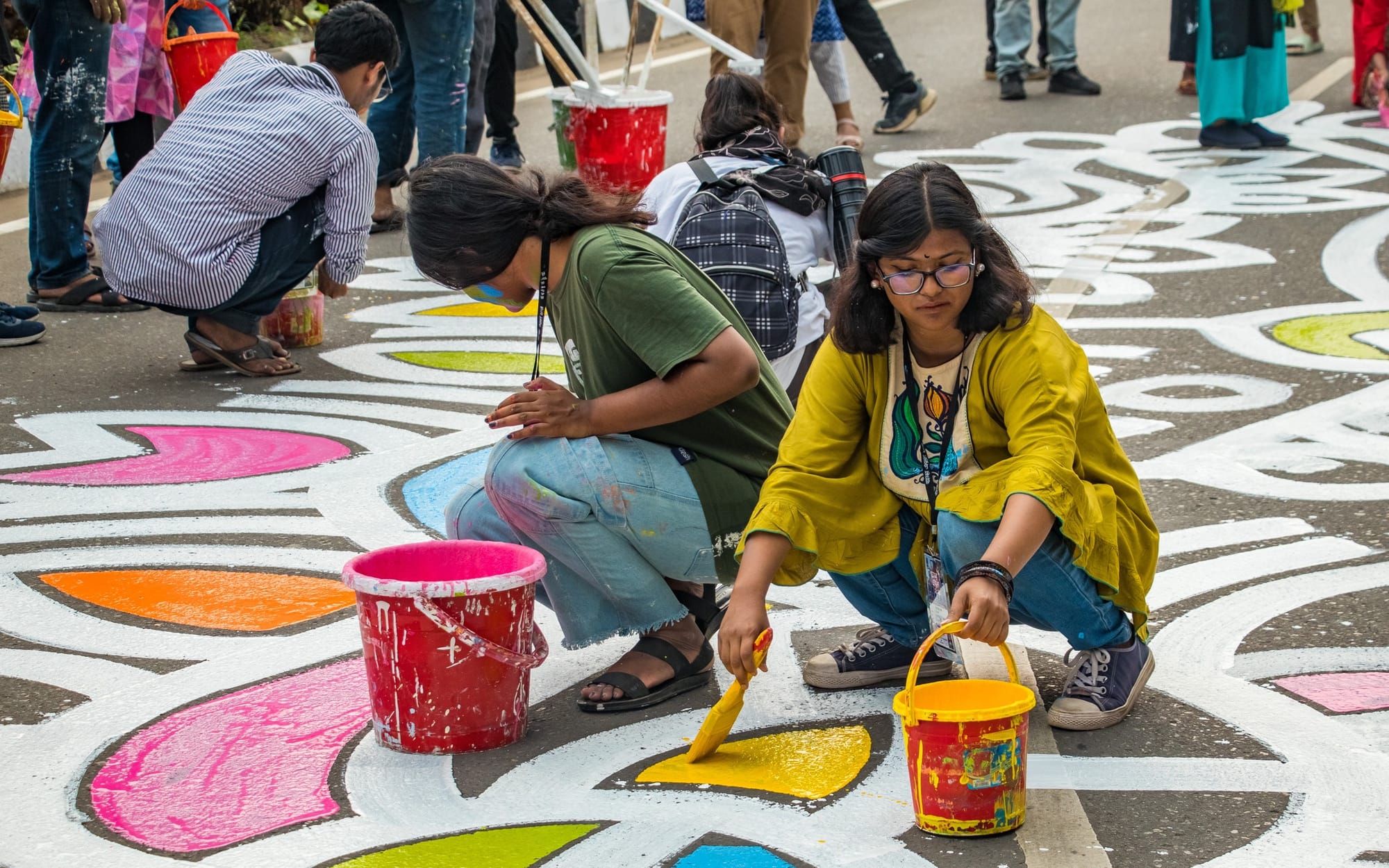
The date commemorates the 1952 Language Movement in Dhaka, a pivotal political and cultural protest by East Pakistani Bengalis, when students were killed defending the right to speak Bangla. Their protest left a lasting legacy – language is never merely a tool of communication. It is bound to dignity, identity and the right to belong.
As This Is International Mother Language Day Week, Sharing A Clip From 2019 Bangladeshi Film Fagun Hawa Based On 1952 Language Movement.
— বাংলার ছেলে 🇧🇩 (@iSoumikSaheb) February 18, 2026
Cinematography Is Very Tough On Such Period. The Team Did Well.
Such Historic Films Are Great #Bangladesh pic.twitter.com/uicWyKl5Eq
In Southeast Asia, one of the most linguistically-diverse regions in the world, this legacy resonates deeply.
Across the region, hundreds of languages and dialects shape everyday life. Bahasa Melayu intersects with Mandarin and Tamil in Malaysia. Indonesian coexists with vast regional vernaculars across the archipelago – Thai, Burmese, Khmer, Tagalog and English circulate through migration, tourism and trade.
Along borderlands and in cities, languages travel with workers, students and families, reshaping linguistic landscapes in quiet, ordinary ways.
Here, multilingualism is not exceptional. It is daily reality, but it’s not neutral.
Language and the politics of belonging
Language does more than describe who we are. It participates in defining who counts.
Collective identity is not fixed; it’s produced through relations of power, within schools, media, institutions and everyday interactions. Certain languages are elevated as symbols of national unity or social legitimacy.
Others are framed as informal, marginal or even suspect. In moments of political or social tension, linguistic difference can become shorthand for deeper divisions.
At the same time, communities use language to assert dignity and imagine alternatives. A dialect once dismissed as provincial may be reclaimed as local pride. A minority language may become an emblem of survival. A regional lingua franca can signal cosmopolitan belonging.
The meanings attached to language are never stable. They shift with context, with who is speaking, who is listening and what social moment they inhabit.
An accent may signal sophistication in one setting and exclusion in another. A language associated with opportunity can also carry the weight of aspiration, loss or displacement.
Language is therefore a site where belonging is continuously negotiated. International Mother Language Day reminds us that these negotiations are not simply cultural. They are shaped by power.
Migration and language shift
Across Southeast Asia, mobility reshapes language within a generation.
A child of Filipino parents growing up in Singapore may speak English at school, Tagalog at home and absorb Mandarin from classmates.
An Indonesian worker in Sabah may move between Bahasa Indonesia, Malay and local dialects depending on context. Over time, heritage languages may soften or fragment as families prioritise dominant languages linked to education and economic mobility.
Language shift is rarely dramatic. It unfolds quietly, a shrinking vocabulary, a story shortened, a joke that no longer travels easily between generations.
Research consistently shows that strong foundations in a first language enhance cognitive flexibility and learning outcomes. Multilingual children are not linguistically confused; they are cognitively adaptive.
Yet beyond cognition lies something less measurable but no less significant –emotional anchoring. Language carries humour, affection and memory. It holds ways of seeing the world that do not translate seamlessly.
When a language fades, what disappears is not only grammar. It’s a rhythm of belonging.
Hierarchies in a connected region
In a region shaped by trade routes and migration long before modern borders, linguistic plurality is a historical fact. Yet not all multilingualism is valued equally.
English often functions as economic capital, enabling access to higher education and global employment. National languages anchor civic identity and institutional life.
Meanwhile, rural dialects, minority languages and migrant tongues may be tolerated socially while remaining marginalised structurally.
Many people learn to adjust their speech in formal settings to signal competence. Accents are softened. Dialects are suppressed. Linguistic adaptation becomes a pathway to opportunity – and a subtle negotiation of self.
These hierarchies are increasingly reproduced in digital spaces. Artificial intelligence systems and online platforms disproportionately privilege dominant global languages, shaping whose knowledge becomes visible, searchable and preserved.
Meaningfully celebrating mother languages therefore requires attention not only to heritage, but to inequality.
From celebration to responsibility
International Mother Language Day is often framed as a celebration of diversity. Celebration matters. It affirms that languages, large and small, deserve recognition.
But recognition alone is not enough. If belonging is shaped through power, then linguistic diversity must be supported structurally, not only symbolically.
This includes strengthening first-language foundations in education; supporting Indigenous and minority language revitalisation; ensuring digital technologies do not sideline smaller linguistic communities; and rejecting the assumption that multilingualism weakens social cohesion.
Southeast Asia has always been shaped by movement of traders, pilgrims, labourers, students and storytellers. Words crossed seas long before passports existed. Languages met, mingled and endured.
Plurality is not a fracture. It is continuity. The students who marched in Dhaka in 1952 understood that recognising language is recognising humanity. To deny a language is to narrow the terms of recognition itself.
Belonging is not secured by narrowing the range of acceptable speech. It strengthens when institutions create space for linguistic complexity.
A mother language is more than a first vocabulary.
It is the cadence of memory.
The archive of childhood.
The grammar of home.
Languages will evolve. They will travel. They will change.
They should not – and will not – disappear.


