

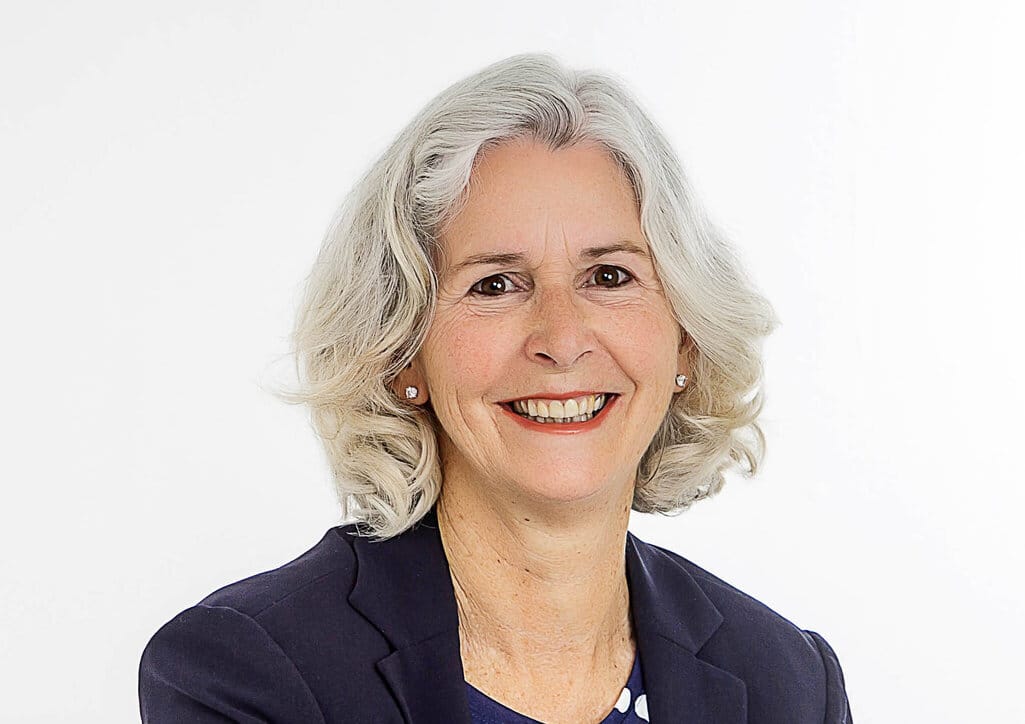
Professor Jenny Gamble came to Monash as a senior academic appointment last year, lured back to Australia as Professor of Midwifery from Coventry University in the UK. She’s also an Emeritus Professor from Griffith University in Queensland.
But when she was 16 in 1975, she left school before completing her final year. It turned out to be transformative, despite the challenges.
She left home, too, and rented a flat and landed a job at a cake shop in Adelaide’s Rundle Street (now Mall).
“I was lonely at times,” Professor Gamble says. “But I had made choices, and this was the way forward.”
Next, she got a job at Katies, a clothes store. The older woman she worked with, without prying about her situation, brought in home-cooked food with enough leftovers to take home.
One day they suggested she should try nursing. At that time, entry didn’t require final-year school certificates, and it paid more than retail, even as a student. This seemed like a good idea.
“Then all of a sudden I was a registered nurse,” she says. “I did a year at the Royal Adelaide Hospital after registering and then I took a leap into the big unknown and went to work as a remote-area nurse in an Indigenous community in the Kimberly [in Western Australia].”
This profound experience changed her forever and put the future professor on a path that continues 50 years on.
PROFESSOR GAMBLE’S guiding principle, as a global leader in midwifery, is that all women should have the choice of continuity of midwifery care through pregnancy, childbirth and in the early days of motherhood.
Continuity in midwifery means the same midwife with the same backup midwife during pregnancy, labour, birth and postnatal care – all loaded in with the right medical support if required.
“When providing continuity of midwifery care, the midwife helps women navigate through the system,” she says.
The “system”, despite good intent, is depersonalised and institutionalised. It also leads to medicalisation and associated high rates of intervention such as induction of labour and caesarean section.
Professor Gamble also established an independent midwifery practice in 1990, the Brisbane Independent Midwives, providing women with this continuity of midwifery care and birth at home or in hospital. She was the first midwife in Queensland to gain admitting rights to hospital, and later became head of midwifery at Griffith University in Queensland.
She’s past president and past director of the Australian College of Midwives.
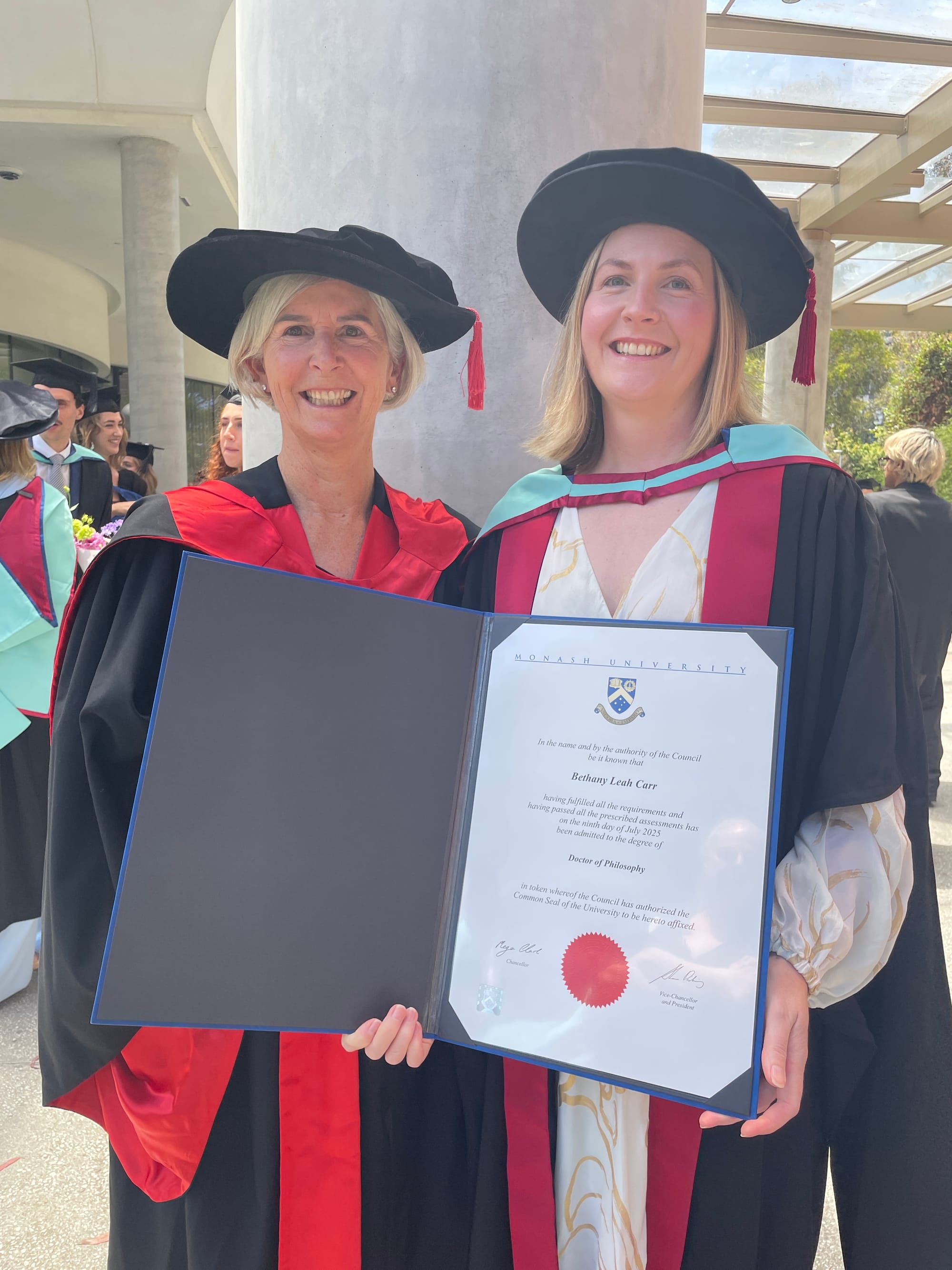
The path from Bidyadanga
It was the Kimberley job, straight after becoming a registered nurse in 1981, that set her on this path towards being a global leader in her field. The work was at an Indigenous community called Bidyadanga, an old Catholic mission 180 kilometres south of Broome, with unsealed roads, a school with six teachers, a store and a clinic.
There was another health professional there, but she left after a few months:
“So I was the only Western health service in the place except for the flying doctor. No doctors, no police. Me and six teachers, they had a priest, they had a church and some lay missionaries.”
The population was about 400. Professor Gamble spent 14 months at Bidyadanga. The women were mostly flown out to give birth. She drove the long-wheelbase 4WD through country, went fishing, learned about bush tucker from the women and worked as the sole registered health professional with three Aboriginal health workers. There were no phones, just two-way radio.
“It blew my mind,” she says. “What can I say?”
The clinic saw all sorts – wounds and infections, sick kids, worms and scabies, and a full range of chronic diseases.
Professor Gamble says the experience was “the making of me” because of the stark realisation that people in her own country lived with such disadvantage and inequality.
She began to see how Western systems of maternity and birth can become “deeply institutionalised, deeply bureaucratised and deeply prescribed” even though birth is an everyday event – about 370,000 babies are born somewhere in the world every day.
From Australia to Edinburgh
When she left Bidyadanga – not yet qualified as a midwife – she travelled around Australia, before embarking for Europe by ship out of Perth to Athens, through Israel, Italy, Germany, England and finally to Scotland.
There, in Edinburgh, Professor Gamble studied to be a midwife, in a hospital program. Newly-qualified, she came back to Australia and a job in Brisbane at the Mater Mothers’ Hospital.
“I had a year’s experience as a midwife in Scotland and then arrived in Brisbane still feeling that there had to be a better way to provide maternity care,” she says. “I didn't know exactly what the better way was, but it had to be better. It was too brutalising and too insensitive to the particular needs of each woman.
“I’d had experience in the Bidyadanga community, where babies had been born. I wasn’t anything useful in that space, but babies had been born. A head-down full-term baby is generally going to go OK.
“Then I’m in a hospital setting that is heavily procedural. In Scotland, for example, women would be shaved, they’d have enemas, they’re on beds and rarely given the option to get into different positions. It was standard to have an episiotomy if it was your first baby.
“Having a baby is both a monumental life event,” she says, “and an everyday life event.” It should be special. The care provided should be special.
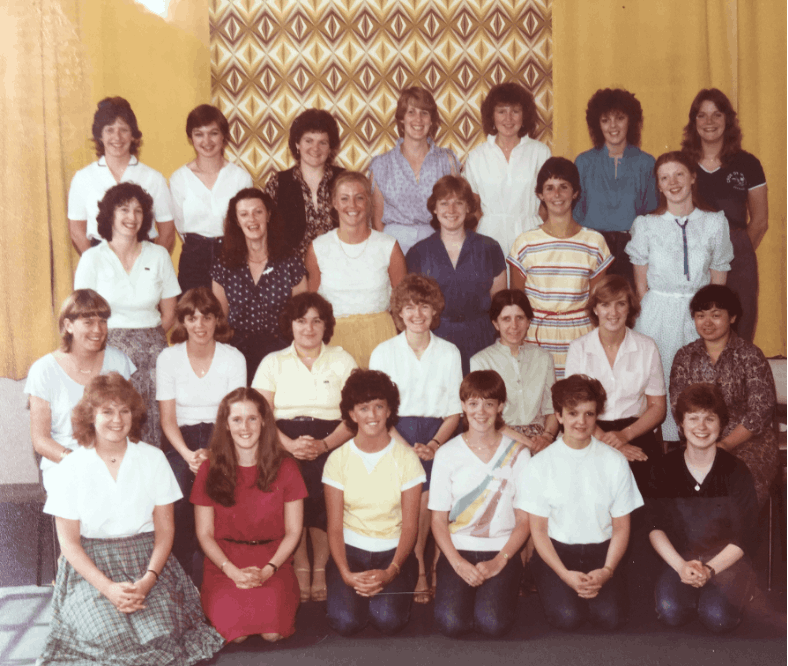
WHEN SHE turned 28, Professor Gamble went to university for the first time, to study a diploma in nursing education at the Queensland University of Technology (QUT).
She set out wanting to be a clinical educator in the birth suite, then called the labour ward to “help students and newly-graduated midwives get up to speed clinically”, but instead got a job at the Princess Alexandra Hospital in Brisbane, teaching student nurses in the last of the hospital-based certificate program.
“I loved working with students to help them learn and be better. It was a great job, but I knew I didn’t want to stick with a nursing career.
“I knew midwifery was my thing.”
The barriers to private practice
In 1990, Professor Gamble set up a private practice in Brisbane. She wanted to provide continuity of care regardless of whether the woman planned to birth at home or in hospital. This model has midwives operating autonomously, with backup midwives and also supportive obstetricians.
She found there were significant barriers to private midwifery practice in the 1990s, such as no Medicare or policy support.
“It was politically challenging and part of the problem was nobody was ready for this,” she says. “There was no cultural norm that acknowledged the legitimacy of this model.”
For her master’s degree a little later, Professor Gamble honed in on women’s birth preference.
“The private obstetricians at the time were saying, ‘Women choose caesarean sections; we are in the age of choice, and that accounts for the climbing caesarean section rates’. I thought, ‘Do they?’ It wasn't my experience as a woman, or as a midwife.
“Some women will choose a caesarean section, but they may also be scared, or previously traumatised, or simply consenting to the advice from the doctor. So, do they?”
Then, for her subsequent PhD, she looked closely at post-traumatic stress disorder (PTSD) following birth.
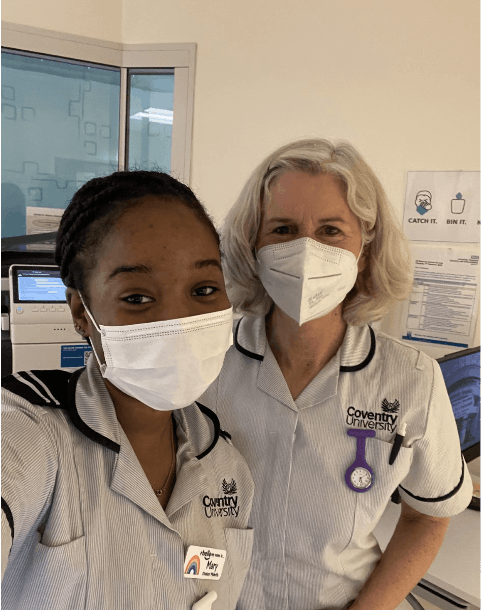
Challenging the midwife misconceptions
At times, she says her work can be as an activist, lobbyist or advocate for women and for midwives. At Griffith she set up a bachelor of midwifery program and had the name of the university’s school changed from Nursing to Midwifery and Nursing. She says there’s still a common misconception that midwives are nurses when they are not.
The other misconception Professor Gamble rails against is that only vulnerable women or socioeconomically-disadvantaged women need continuity of midwifery care.
“Every woman needs it,” she says. “Health needs and circumstances can change across pregnancy, during birth or following birth.
“All of the available research says women want continuity of midwifery care, and all my clinical practice has confirmed it. There’s tons of data on this.”
While in Queensland, she led the co-design of a program that overlaid her ethos with a cultural thread in the vulnerable suburb of Logan. It was a continuity of midwifery care scheme for refugee Aboriginal and Torres Strait Islander, Maori and Pasifika, and young women.
Now at Monash, the work for women and their babies continues. Her brief, she says is “capacity-building and leadership for midwifery within the School of Nursing and Midwifery.
“To lead,” she says. “And as a midwife, that means contributing to improving maternity services.”


