

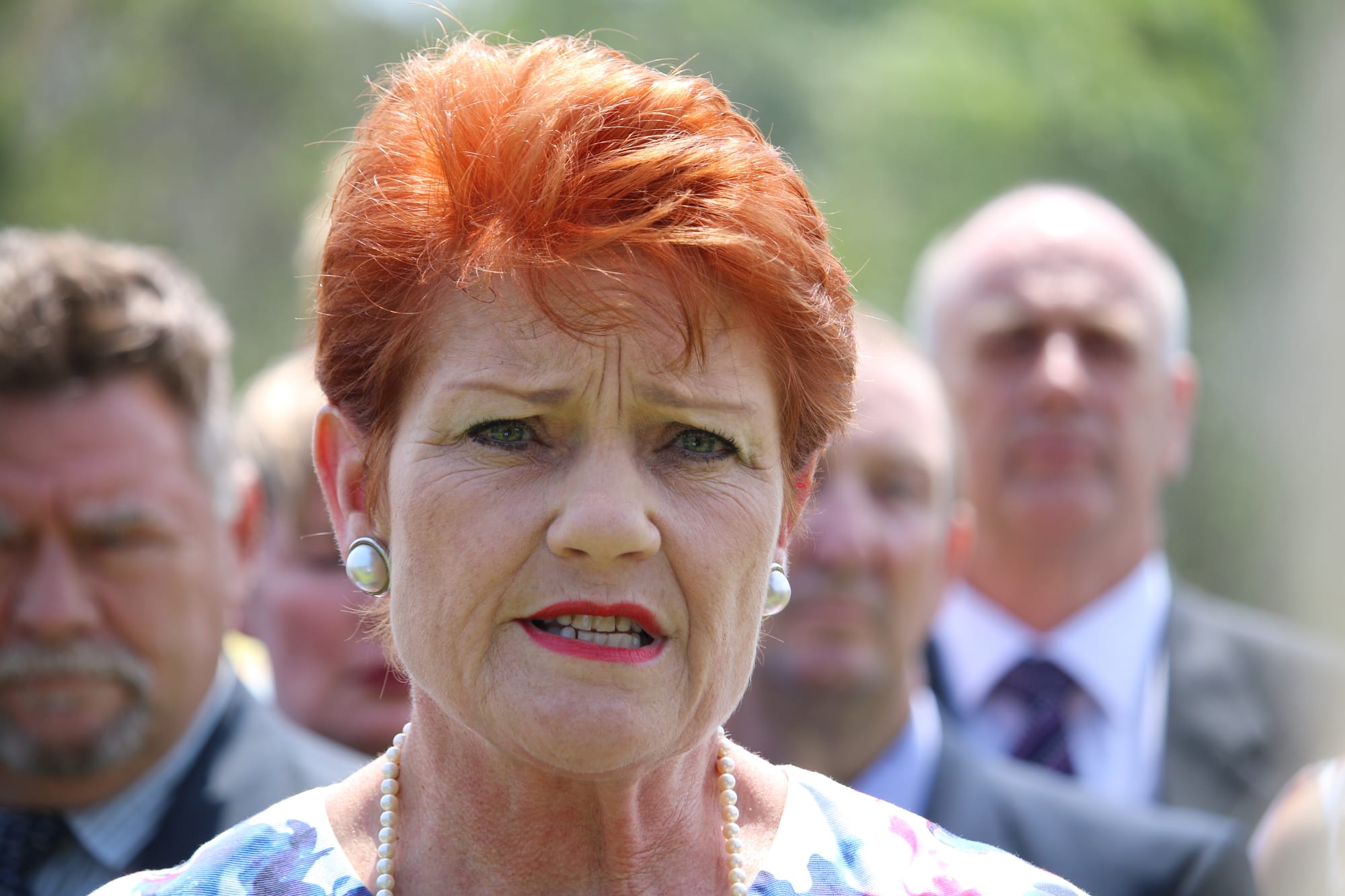
The weekend's South Australian election result has confirmed what many opinion polls have been indicating for several months: One Nation, the party that first emerged in the late 1990s, has become a popular choice for right of centre voters in Australia.
So much so, that it outpolled the Liberal Party in South Australia, a feat many observers could not have imagined a few years ago.
Labor’s Malinauskas secures second term in landslide despite significant One Nation surge https://t.co/UrbIZuHbXy
— The Sydney Morning Herald (@smh) March 21, 2026
This is a remarkable turnaround from the early 2000s when it seemed One Nation’s chance for electoral impact had dissipated. Back then, the party was in disarray. Hanson had been convicted and imprisoned for electoral fraud (which was later overturned by the Queensland Court of Appeal), and the Australian Democrats and Greens appeared to be the key challengers to the major parties’ domination of the Senate. The result over the weekend indicates that the difficult days are seemingly a distant memory for the resurgent party.
From boom to bust
Things were looking up for One Nation in the late 1990s. One Nation’s first electoral foray was in the Queensland state election in 1998 when it won almost 23% of first preferences and 11 seats, a remarkable result for a new party.
It couldn’t back this result up in the federal election held later that year. While winning more than 8% of the national primary vote in the House of Representatives, the major parties’ tactic of putting One Nation last in preferences meant the party could not win a single seat.
The Coalition split and the re-emergence of One Nation. Lessons on what a 20% vote for One Nation looks like from the only other election to produce such a result, Queensland 1998. https://t.co/2VYBvcy4x8 pic.twitter.com/trWUeuFsAA
— Antony Green - elections (@AntonyGreenElec) January 22, 2026
Following its initial triumph, One Nation struggled to remain a cohesive entity and could not replicate sustained success. It did, however, have an impact on the 2001 Western Australian election as it was able to win three upper house seats.
Since that time, Hanson has never really left public life and continues to maintain her high public profile. For example, she was a contestant, and runner up, on the popular show Dancing with the Stars in 2004, and in 2007 tried to reboot her parliamentary career by running for a Senate seat in Queensland.
By 2010, it seemed that Hanson was willing to give up on her political aspirations. In one interview, she vowed to leave Australia for the UK, arguing that she “will never be given a chance to re-enter Parliament again”.
Hanson, however, demonstrated tenacity and her return to parliament was made just a bit easier by Malcolm Turnbull’s decision to hold a double dissolution election in 2016. Since all Senate seats are up for grabs in a double dissolution election, the electoral threshold needed to win was halved. This helped Hanson who was able to win a seat in the chamber along with three other colleagues from Western Australia, New South Wales and Queensland. Since then, Hanson has remained a consistent presence in national politics and lightning rod to those right of centre voters who are turning away from the Coalition.
South Australia and beyond?
The result in South Australia demonstrates One Nation is a clear threat to the Liberal Party. As the ABC’s figures demonstrate, Labor’s primary vote has been hovering around 38 to 40% since the 2018 election. The Liberal’s primary vote, however, has fallen from 35.7% in 2022 to just 18.9% in 2026.
This is not a mere hint that some voters were unimpressed with the Liberal Party. It is a clear indication that voters are now much more agreeable to voting for a non-major party candidate. While Australian politics in the post-war period has been dominated by the major parties, voters are seemingly happy to support a challenger if they feel it is worthy of their vote.
As predicted, the Liberals capitulated in the South Australian election. But as election analyst @PollBludger writes, One Nation's strong showing offers a warning to Labor as well. https://t.co/neWQ6z834L
— Crikey (@crikey_news) March 22, 2026
In the early days of One Nation, the coalition parties were concerned about how the party could impact their support bases, especially in rural and regional electorates. They sought to mitigate the threat by appearing unified and seeking to address concerns from these communities.
Today, however, the coalition parties at the national level have struggled to maintain that discipline. Divisions between socially progressive and conservative members has also provided an air of instability and uncertainty about its policy and personnel settings.
One Nation, in contrast, has been looking more like the stable right of centre party. Hanson’s consistent presence in Australian public debates, as well as the recruitment of two prominent former coalition MPs (Corey Bernardi and Barnaby Joyce) have aided the party’s aspiration to position itself as a ‘viable party of government’.
National polling showing One Nation’s popularity should now be taken seriously. As has been noted, One Nation’s challenge is to present the policies it would implement if given the opportunity, rather than remain the party who garners the support of those upset with the major parties.
The Coalition in the early 2000s had the good fortune of One Nation disintegrating soon after its emergence. Now, it seems One Nation is on the charge. Its next challenge will be the Victorian state election due in November. If the party’s support continues on this trajectory, the party may have its biggest impact on the state in its 30 year history.


