

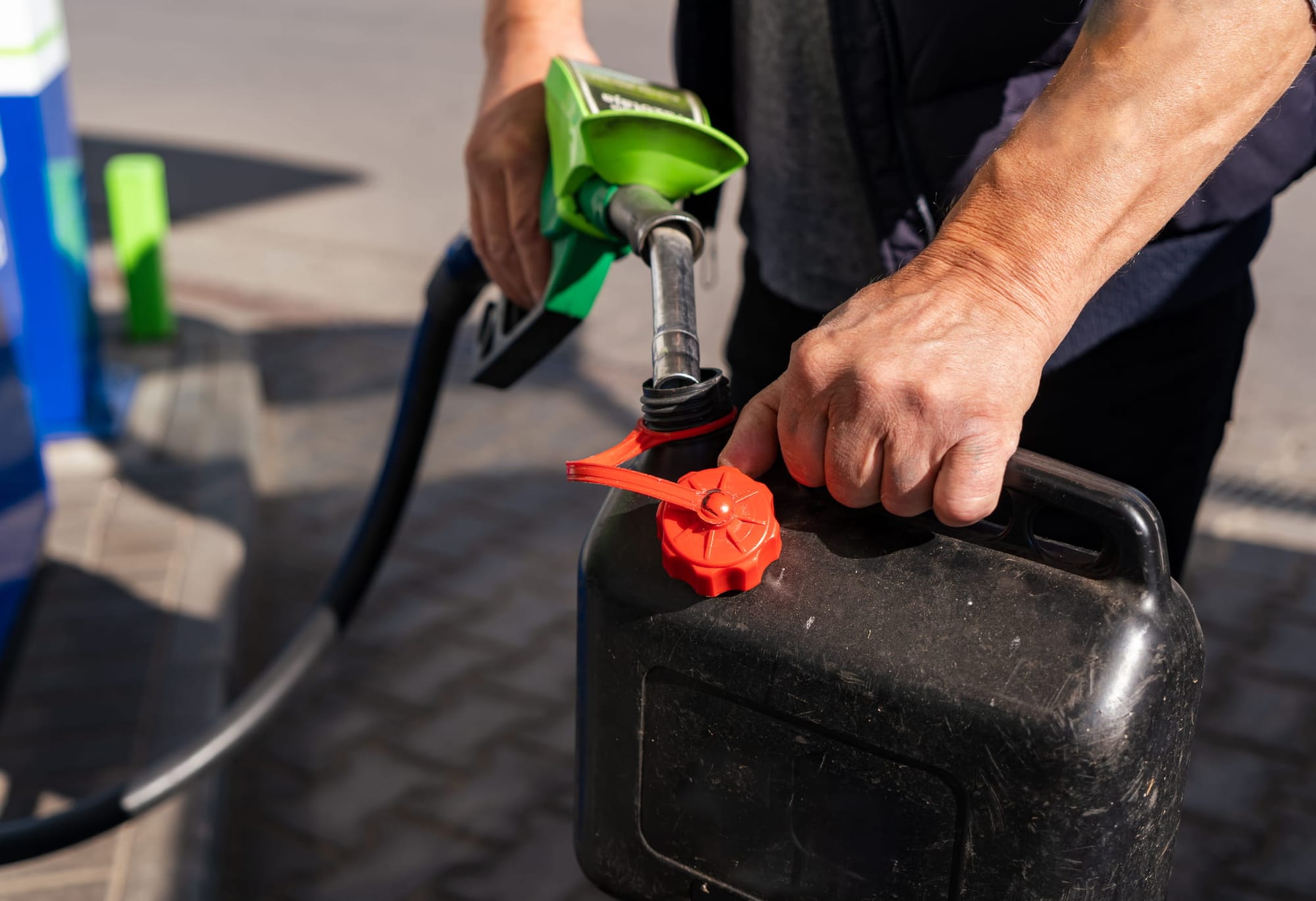
People are experiencing déjà vu as media reports of “panic buying” of jerry cans and petrol emerge in the wake of the war on Iran and surging fuel prices.
At such times, it’s common for the media to look to us at BehaviourWorks to explain why people do this.
For example, during the COVID-19 pandemic, The Guardian asked BehaviourWorks’ Liam Smith and Celine Klemm to explain the psychological drivers of hoarding behaviour, and more recently ABC Radio spoke to Brea Kunstler regarding fuel shortages.
But most events can’t be explained by looking at behaviour alone. You have to look at the interaction between behaviour and systems. What’s been missing here is the other side of the picture – the systems that keep our shelves stocked (or not).
Our investigations show the overwhelming majority of people don’t “panic buy” or “hoard” (cue the image of the doomsday prepper), they simply buy a little extra “just in case”.
The problem is that when even a small handful of “just-in-case” people meet a “just-in-time” supply chain, the system can break.
So, BehaviourWorks and Monash University’s Department of Management have teamed up to look at what that means and how it plays out.
Rational preparation meets fragile systems
When media commentary regarding the Strait of Hormuz suggests fuel could be 40% more expensive tomorrow, or even unavailable at the pump, it’s not unreasonable to act.
In that context, buying a jerry can or two and filling up some extra at today’s prices is a rational economic choice. (And if I run a business that relies on a vehicle, it’s almost irrational not to.)
Similarly, it seems rational to stock up on groceries at current prices when the media highlights potential rising grocery prices by April due to higher costs of the delivery.
This isn’t about “panic”, it’s about experience. Many Australians have developed a kind of “scar tissue” from supply chains that actually fail in the face of external shocks, whether it was $15-per-kilo bananas after Cyclone Larry, vanishing eggs after last year’s bird flu, or extreme weather events in the NT.
But then this behaviour collides with our modern supply system. Australia has spent decades pursuing “lean efficiency” in supply chains, with a particular focus on just-in-time inventory and minimal buffers. This means stock is on trucks, not in back rooms.
It’s a hyper-efficient system that uses sophisticated demand forecasting to keep costs low. But it also quietly assumes that tomorrow will look exactly like today.
In this context, even a small shift in demand can look like a total system failure, because supplies are optimised for predictable demand, not surge capacity.
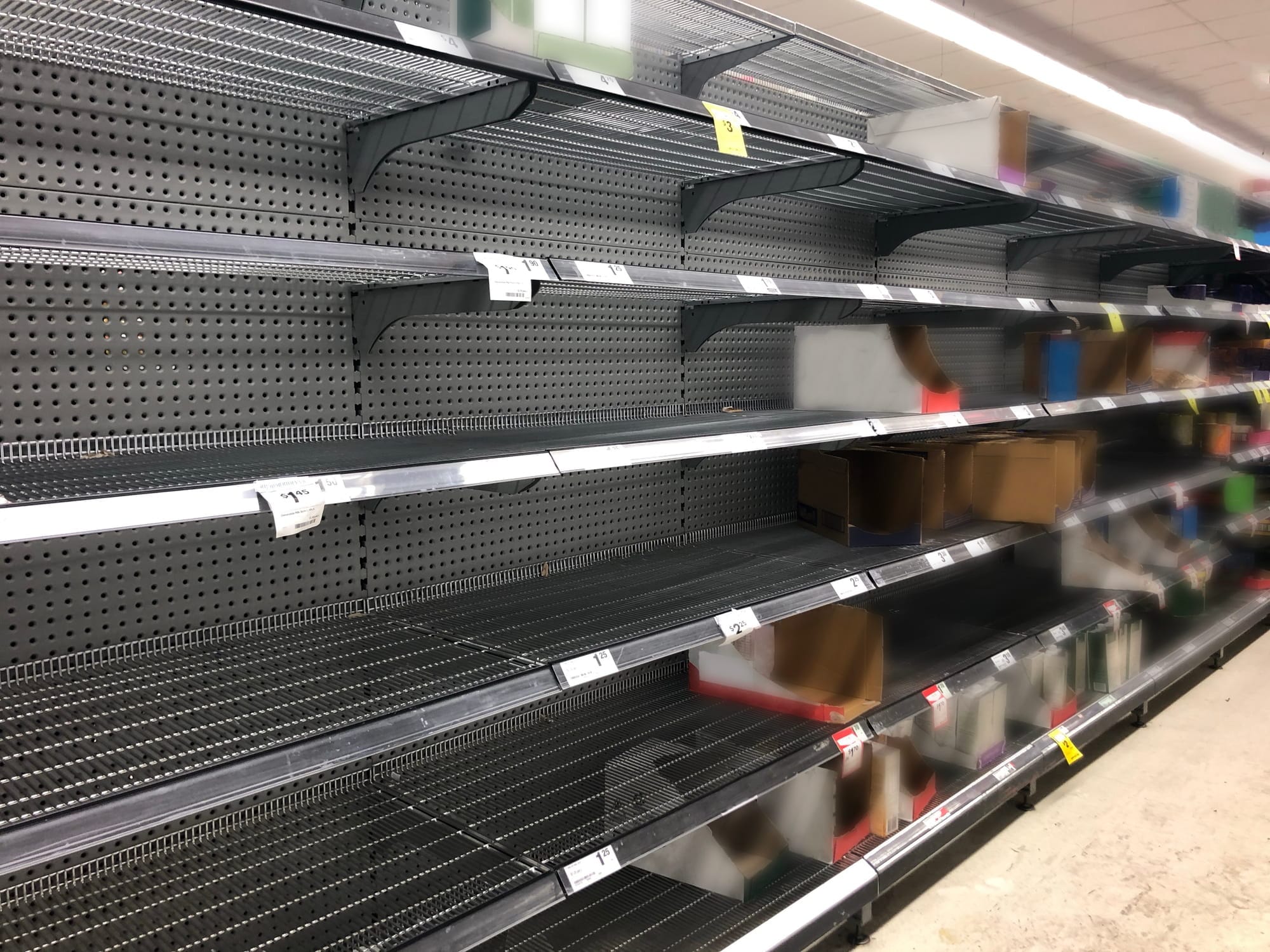
In practice, it only takes a small percentage of shoppers buying one extra item (the “just-in-case” crowd) to wipe out the shelf stock intended for that day.
And it only takes one person to snap a photo for empty shelves to hit the socials – exactly the kind of vivid, shocking images that go viral.
Social signals amplify the behaviour
Now, imagine someone didn’t buy extra initially, but then sees photos of empty shelves. Suddenly, something changes. Now there’s a concern that supplies will run out due to others’ panic-buying or hoarding – and a nagging sense that those people might know something they don’t.
At that point, even if it’s clear the shortage is partly being created by other shoppers, it’s still rational to join the queue to protect one’s own interests. And, of course, that further depletes the shelves.
Then, media coverage and political warnings kick in. And when headlines announce that “everyone is panic buying”, they give the rest of us both a rational reason – and social permission – to do the same.
In this way, the media’s warning becomes the instruction manual for the very behaviour they’re trying to prevent. Sometimes the media uses specific words (for example, “latest modelling suggests…” or “businesses are panicking…”) to convince customers about the reliability of their study and attract customers’ attention.
This is exactly what happened with toilet paper during COVID. There wasn’t a shortage of trees or paper mills. Despite the odd picture of a person pushing a trolley full of toilet paper, for the most part it was simply people buying one extra pack because they didn’t want to be stuck in a “crap situation”, so to speak.
Likewise, this happened with frozen meals during COVID-19 and recently in Darwin following flooding in the Northern Territory.
So, rather than labelling people queuing at petrol stations or filling supermarket trolleys as irrational panic buyers, we need to acknowledge people’s reasonable fears of wanting to be well-prepared “just in case”.
Individually rational equals collectively irrational
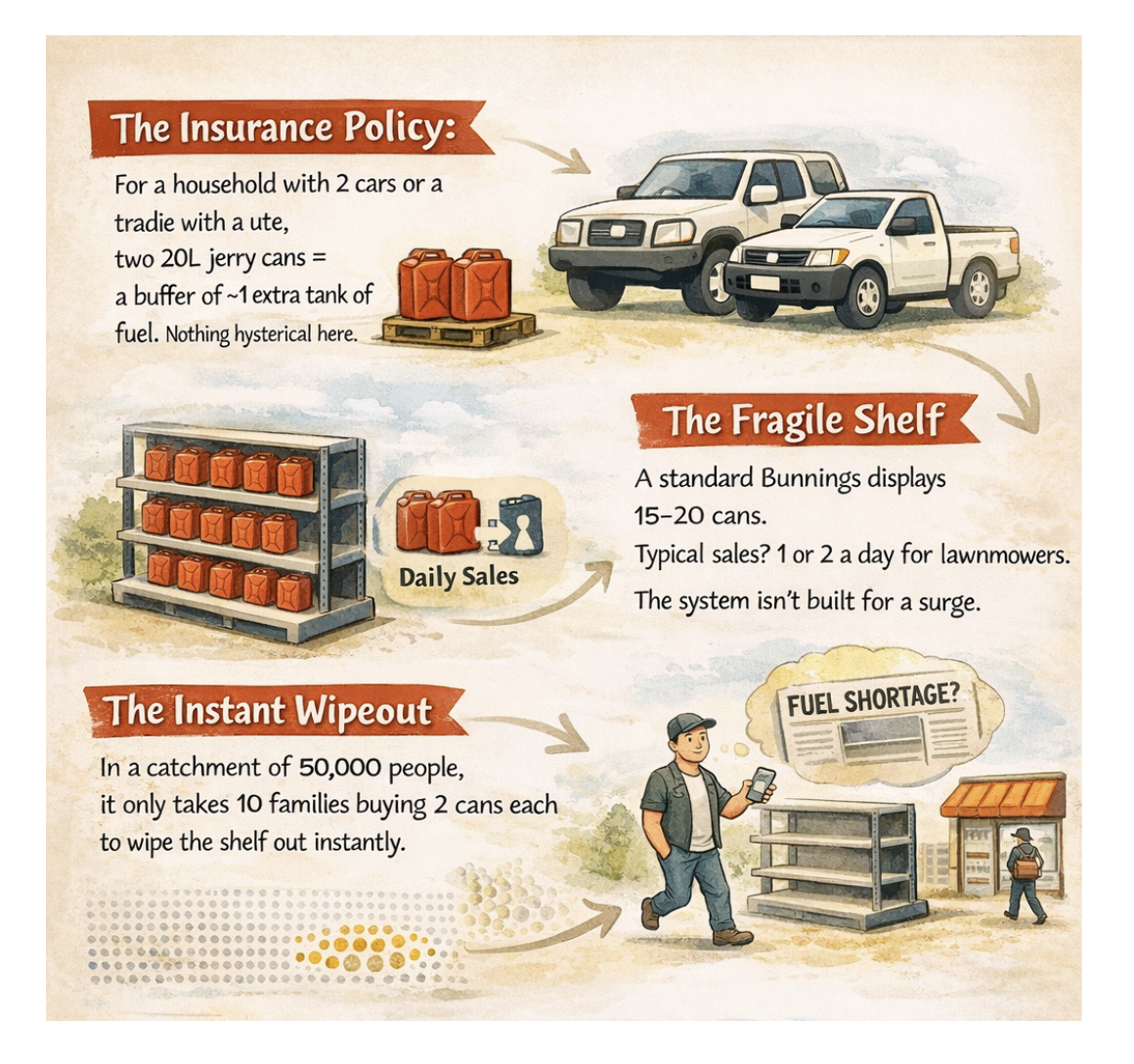
The problem is that what starts out as a handful of fairly sensible people making small protective decisions can quickly become many people making these decisions at the same time, the collective action that overwhelms the system.
By trying to mitigate a feared shortage in supply, a small proportion of people collectively trigger a shortage through demand.
In other words, individually justifiable decisions become damaging when everyone does the same during unexpected shocks, because our stock forecasting didn’t predict it.
For the system to keep working, we need to resist the instinct to buy extra, unless a genuine need actually exists (such a cyclone heading your way). We need to individually and collectively shift from “just in case” to “just when needed”.
Finding a better way
If we want to avoid repeating the mistakes of COVID, communication needs to change. Our work, and that of others in behavioural theory research suggests three things:
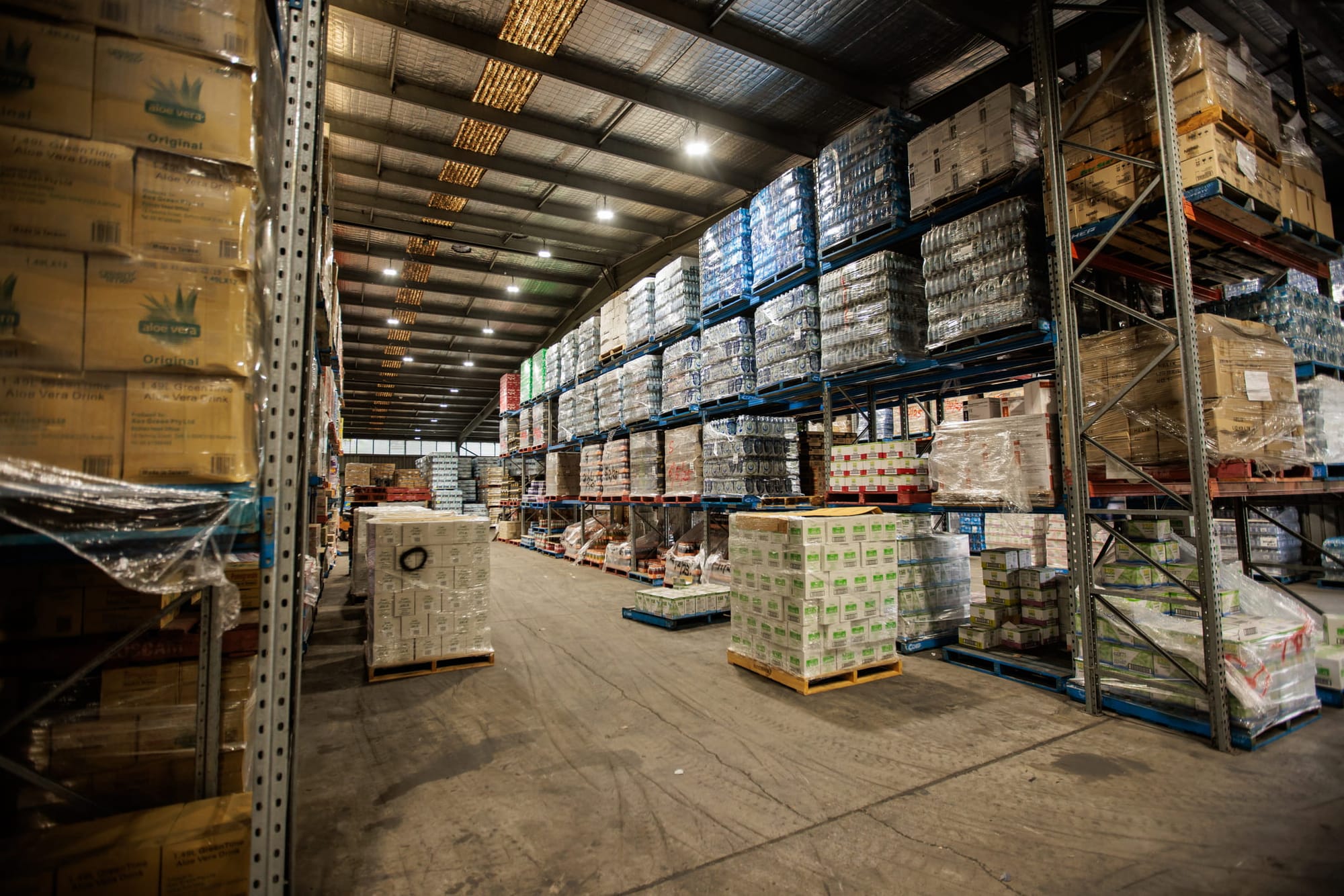
First, change the visuals. Instead of endless images of empty shelves, reassure people by showing trucks unloading, warehouses full of stock and the steady flow of supply. Images of scarcity can trigger defensive behaviour; images of abundance can calm it. This is particularly important for news and social media.
Second, highlight the majority. Most Australians are still shopping normally. But when headlines focus on the minority who aren’t, they accidentally create a powerful, negative social norm that can amplify problematic behaviour. Highlighting sensible behaviour normalises and stabilises it.
Third, appeal to people’s collective responsibility. Acknowledge the desire for small protective decisions, but emphasise the need for collective effort to keep supplies available for everyone when they need them. Activating shared responsibility can reduce fear-driven buying and support calmer, more considered choices.
But these strategies can only get us so far, because the real lesson of empty shelves isn’t that people are irrational and panicking – it’s that perfectly rational individual behaviour can overwhelm a fragile system.
So the most important thing to do is to build resilience into the system itself. For decades we’ve designed supply chains for maximum efficiency. Now we need to balance that with flexibility and adaptability, such as local sourcing, supplier diversification strategy and supply chain automation to respond quickly.
Essentially, we need a system that accounts for the likelihood of external shocks, (and reasonable human nature in response), rather than blaming humans for having a nature.


