

Can one hour of darkness change anything about a warming planet?
Each year during Earth Hour, cities across the world dim their skylines as buildings switch off their lights in a symbolic gesture of environmental commitment.
At 8.30pm local time, Kuala Lumpur’s Petronas Twin Towers, the Sydney Opera House, London Bridge and the Empire State Building fade into darkness. Social media fills with candlelit photos, and for one hour, the world pauses.
Critics sometimes dismiss the event as little more than symbolic. After all, can 60 minutes without electricity meaningfully alter the trajectory of climate change? The power of Earth Hour may lie less in the electricity saved than in what the act makes visible.
Launched in Sydney in 2007, Earth Hour was a bold experiment to demonstrate that individual actions could scale to collective momentum.
By switching off non-essential lights for just one hour, the city saw a 10.2% drop in energy consumption across the Sydney central business district.
The initiative, coordinated by the World Wildlife Fund (WWF), quickly expanded into a synchronised global campaign inviting millions to “give an hour for Earth”.
Last year, more than 118 countries or territories “banked’ more than three million hours. But the more hidden value of this participation lies in the visibility it creates – signalling concern, raising awareness and encouraging public engagement with climate issues.
For many people, climate change can feel abstract or distant, unfolding in glaciers or in the decades to come. Events such as Earth Hour can help bridge that psychological distance by making the issue tangible in everyday spaces such as homes, neighbourhoods and city skylines.
#EARTHHOUR2026 Over 190 countries take part annually, making it one of the world's largest environmental movements. In 2025, participation grew to include nearly 3 million "hours given for the planet" in the "Hour Bank." At 8:30 pm wherever you live unplug & turn off for 1 hour! pic.twitter.com/BjLmPiNbjp
— Ariaa ® (@AriaaJaeger) March 25, 2026
The vision for Earth Hour was “to create positive environmental impacts through the power of the crowd”.
By making participation visible, the campaign turns private worry into a shared community concern. It reminds us that our lives are connected through a variety of complex energy systems that link and support our households, cities and nations.
The campaign now extends to Beyond the Hour and encourages individuals, communities and organisations to commit to ongoing environmental action.
As a grassroots campaign for the environment, the success of Earth Hour has been celebrated by its creators. As a strategic campaign, there’s no doubt it’s engaged the public in collective action creating a sense of a global community.
But does this imagined global community include those most impacted by climate change?
Does it highlight lived experiences and acknowledge the inequalities and power imbalances inherent in complex social and environmental issues?
“Earth Hour raises critical questions about whose experiences of climate change are made visible, particularly in warming cities across Southeast Asia where adaptation is already a daily necessity rather than a future concern.” – Dr Linda Hunt, Associate Director (Southeast Asia), Monash Climate Communication Hub
We write this article from the Monash campus based in Kuala Lumpur, a city facing more intense and prolonged heat. Like residents in many warming urban environments, people here adapt to life in an increasingly warm concrete jungle.
For those who can afford it, relief from rising temperatures is often as simple as switching on the air-conditioner. But that option isn’t available to everyone.
Among Indigenous communities such as the Orang Asli in Peninsular Malaysia, access to reliable electricity is highly variable, with many communities relying on costly diesel generators. And although the Orang Asli represent less than 1% of Malaysia's population, these disparities highlight how exposure to heat is unequally experienced and shaped by longstanding inequities in infrastructure, income and access to basic services.
Technology has brought many comforts to modern life. With a flip of a switch our homes are lit and cooled, and food arrives at our doorstep via a phone app. The conveniences can sometimes obscure the environmental systems that support them.
Evidence shows that human activity is driving changes to the climate system and these changes represent the material consequences of our daily choices.
Across Southeast Asia, particularly Malaysia and Indonesia, climate impacts are no longer abstract future risks but are immediate, lived realities, with communities already adapting to heat, floods and food insecurity.
In Malaysia, the impacts are increasingly visible.
Findings from the Monash Climate Communication Hub (MCCH)’s national survey found that 85% of Malaysian respondents report experiencing warmer weathers compared with a decade ago, and that a majority have directly or indirectly experienced the effects of extreme rain, heat and floods.
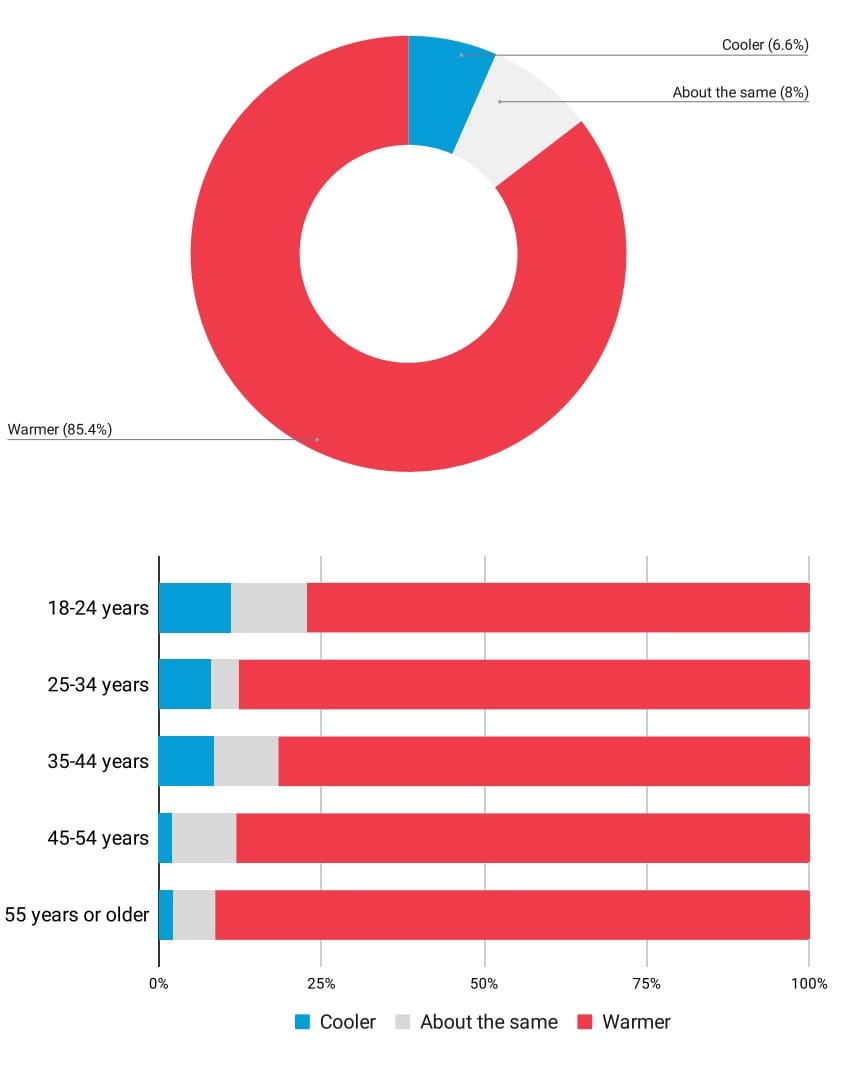
While Malaysia is no stranger to wild weather, the increasing frequency and intensity of extreme weather events has led to the displacement of entire communities, disrupted livelihoods, and affected the health and wellbeing of young people.
In this context, the researchers at MCCH (Malaysia) seek to make the impacts of climate change more visible while elevating the voices of those most affected. Using culturally-grounded, evidence-based approaches, they aim to translate awareness into informed, locally-relevant responses that empower communities.
“Localising climate responses requires us to centre diverse culture, socio-economic and geographic realities, because climate solutions are only effective when they reflect the lived experiences of communities.” – Dr Azliyana Azhari, Lecturer, School of Arts and Social Sciences, Monash Malaysia
The lights will come back on after Earth Hour. The electricity grid will hum again. The question is not whether a symbolic hour can solve climate change, but whether it provides a valuable platform for communicating the challenges and solutions on a local, national and international scale.
Moments like these invite reflection. What actions can households, communities, institutions and governments take to respond to the realities people are already experiencing? And how can we communicate in a way that increases agency and gives people the tools to make more informed decisions?
Learn more about the Monash Climate Communication Hub via our website and social media.
LinkedIn: https://www.linkedin.com/company/monashclicomm/
Instagram: https://www.instagram.com/monashclicomm/
Facebook: https://www.facebook.com/monashclicomm/


