

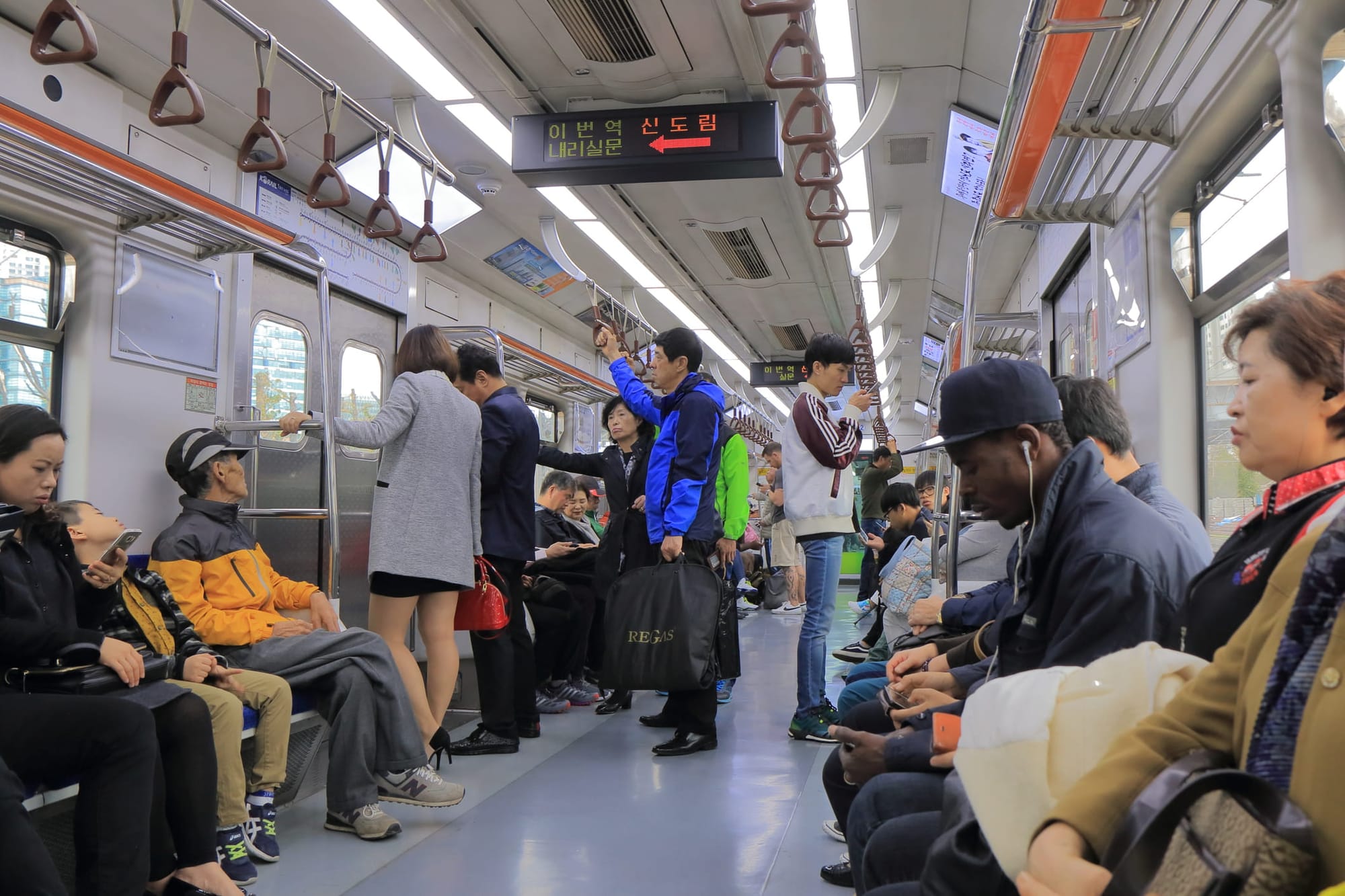
South Korea, once assumed to be one of the most ethnically homogenous countries in the world, is now, according to official metrics, a multicultural society.
It’s estimated there are approximately 170,000 to 180,000 so-called damunhwa gajok (the Korean term for “multicultural families”), including a growing number of Korean-citizen children born to migrant parents, and that 4.8% of Korean residents were born overseas – a figure considerably higher than neighbouring countries such as Japan (3.2%).
Yet the question remains whether South Korea actually embodies multiculturalism in practice, given that government narratives tend to emphasise the assimilation of immigrants over the promotion of cultural diversity, and given the lack of government policies and anti-discrimination laws to protect migrants,
To date, only 0.1% of bills related to migrants have passed the National Assembly. Writing in Korean, Professor Hyun Mee Kim from Yonsei University argues that “South Korea is a multicultural society without multiculturalism”.
But is this approach to immigration and multiculturalism sustainable? And what needs to change?
An temporary approach to migration
The fundamental issue, we argue, is that South Korea continues to treat multiculturalism as a stop-gap measure to address demographic and labour pressures rather than as a long-term social reality.
Since the early 2000s, labour shortages in Korea's 3D (dangerous, dirty and difficult) jobs – for example, the construction industry and manual labour – have been met by recruiting workers from Southeast Asia on visas that restrict job mobility and offer few prospects for longer settlement.
From about the same time, the shortage of marriage partners for predominantly rural men, driven in part by the gender imbalance caused by selective abortion (which persisted up to the early 1990s) was addressed by recruiting so-called “foreign brides” from China and Southeast Asia. These women were expected to assimilate into South Korean society to the point of erasure, and raise their mixed-race children as model Korean citizens, with little recognition of their cultural backgrounds.
More recently, as Korea enters super-aged society, as 20% of the population is over 65, policy responses to care deficits and the low birthrate have included the recruitment of Filipino caregivers and piloting an “affordable” foreign nanny program that legally permits wages below the minimum rate.
Across these cases, migrants are positioned not as future members of society but as temporary solutions to domestic problems. Their presence is judged primarily through economic utility, and acceptance is conditional on immediate policy priorities.
This mindset sets the conditions under which all subsequent treatment of migrants unfolds.
Precarity and discrimination
The effects of this policy mindset are evident in the precarious legal and social position migrants occupy. While the pilot Filipino caregivers program run by the Seoul Metropolitan Government ended unsuccessfully, in August 2024, the South Korean Ministry of Justice announced the selection of 24 universities to train international students as caregivers.
This reflects an ongoing reliance on short-term labour fixes that fail to address structural issues in the care sector, including poor working conditions, workplace discrimination and the absence of comprehensive protections for migrant workers.
This industry has historically been gendered in its workforce; however, migrant men who are unable to work in 3D sectors are increasingly entering the care industry to meet basic living needs.
Migrant workers’ precarious working conditions persist, reinforced by systems such as the Employment Permit System (EPS). By tying residency directly to employment, the EPS restricts workers’ freedom to change workplaces and leaves them dependent on their employers, with no pathway to alternative visas and meaningful exit from exploitative conditions.
As a result, workers face loss of legal status when leaving abusive employment, and a heightened risk of becoming undocumented – a system many critics describe as a form of “modern-day slavery”, particularly in light of detention and deportation practices, including the detention of children, that contravene international human rights norms.
Marginalisation meets structural inequality
These inequalities are further magnified for migrants with marginalised identities, including those with disabilities. For instance, Korea excludes people deemed unable to work from migration pathways, and those who acquire disabilities while in Korea often lose both employment and legal status.
As a result, disabled migrants remain largely invisible – excluded from disability rights frameworks, overlooked in migrant rights advocacy and positioned outside the boundaries of recognised citizenship.
These conditions raise a fundamental question: Will Korea continue to view migrants solely as units of labour, or will it recognise them as equal members of society deserving of rights and dignity irrespective of their work capacity? Without decoupling migration status from labour ability, these systemic injustices will persist.
Despite the range of challenges faced by migrants, public awareness of racism within South Korean society remains relatively low. Although overt racial violence is uncommon, other explicit forms of discrimination continue in everyday life, including the exclusion of foreigners from certain businesses, and entrenched structural inequalities that limit migrants’ opportunities.
Anti-migration protests sometimes display unmistakably racist elements, including the use of racial slurs at anti-Chinese rallies and “pork parties” staged to oppose the construction of a mosque.
These reflect deep patterns of xenophobia that are often downplayed, or simply not recognised by many Koreans as manifestations of racism.
A rights-based policy approach is needed
South Korea’s future depends on whether it can shift from viewing migrants as temporary, expendable labour to recognising them as equal members of society. The current immigration system perpetuates a power imbalance and harm between employers and people on precarious visas, leaving them with little to no protection.
Global comparisons – including Australia’s own failures under the Pacific Australia Labour Mobility (PALM) scheme – show that exploitation is not uniquely a Korean issue. But unless Korea makes a meaningful shift towards a rights-based approach that decouples migration status from labour capacity, its demographic challenges will deepen, and its growing migrant population will remain excluded from the rights and protections others may take for granted.
A critical first step is to ensure migrant workers themselves are at the centre of policy development and implementation, something almost entirely absent in the Korean policy landscape today.
Ending discriminatory policies and institutionalised exclusion, and embedding human rights and equal protection as core principles, is the only sustainable path forward.


